
Country Selector

What is clubroot?
Clubroot or Plasmodiophora brassicae is a serious soil-borne disease that affects brassica crops such as oilseed rape, cabbage, cauliflower, broccoli and brussels sprouts.
Clubroot is widely distributed and thrives in warm, moist, acidic soils, particularly in long-standing brassica growing areas.
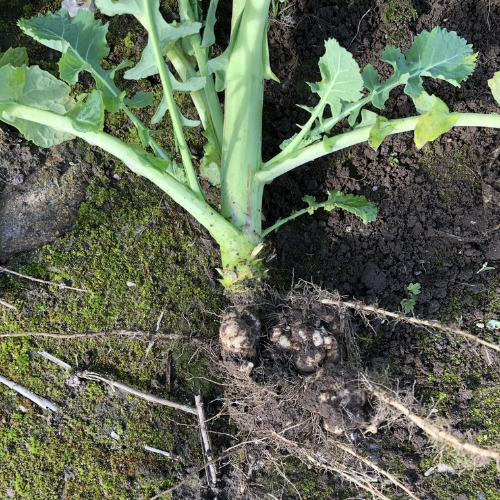
The disease causes characteristic swollen galls on the roots, which restrict water and nutrient uptake. This weakens the plant, reduces vigour, and ultimately results in stunted growth, wilting, and significant yield losses.
Clubroot is especially damaging in oilseed rape crops, where early infection can result in widespread crop failure.
An integrated disease management approach is crucial for managing clubroot pressure and protecting future crop productivity.
What causes clubroot in brassicas?
Clubroot is caused by P. brassicae, a microscopic soil-borne pathogen that infects the roots of brassicas. The pathogen persists in the soil for up to 20 years in the form of long-lived resting spores.
The main factors contributing to clubroot development include:
- Acidic soil – pH below 7.0 favours disease development. Clubroot thrives in soils with pH 5.5–6.5.
- Wet conditions – Waterlogged soils or poorly drained fields promote spore movement and infection.
- Brassica cropping frequency – Short crop rotations with frequent brassica crops increase spore load.
- Infected transplants or contaminated machinery – Spread can occur via soil movement, infected seedlings, or equipment.
Once established, clubroot is extremely difficult to eradicate from a field.
How do you identify clubroot in crops?
Signs of clubroot can mainly be seen on the root system, which becomes massively swollen and distorted, with a loss of the finer roots. The early symptoms of clubroot are often difficult to detect above ground. However, as the disease progresses, the following signs may be observed:
- Wilting and yellowing of leaves, especially on warm days
- Stunted or uneven crop growth
- Poor plant establishment in affected areas
Below ground, characteristic symptoms include:
- Swollen galls on roots, misshapen, or club-like roots
- Root rot in severe cases, often accompanied by secondary infections
- Poor root development and fewer fine roots
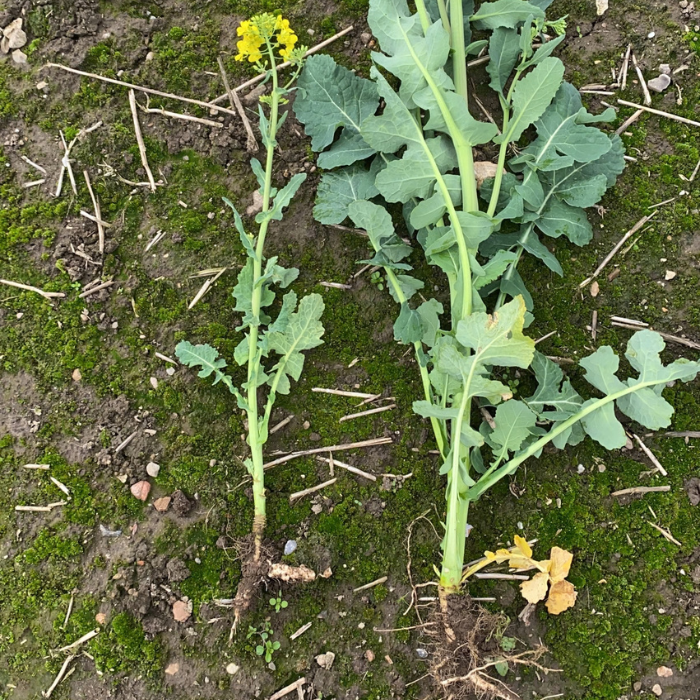
Symptoms often appear in patches, particularly in lower-lying or poorly drained areas of the field. Root inspection is essential for confirming clubroot presence
What is the lifecycle of clubroot?
The lifecycle of clubroot revolves around long-term soil survival and root infection:
Resting spores in soil – Clubroot survives in soil as durable resting spores, which can remain viable for up to 20 years.
Spore germination – Under warm (15–25°C), moist, and acidic conditions, spores germinate to release primary zoospores.
Root hair infection – Zoospores infect root hairs, causing secondary infections in the main roots.
Gall formation – The pathogen multiplies in root cells, triggering abnormal root swelling and gall development.
Spore release – As roots rot and break down, new resting spores are released into the soil, completing the cycle.
This cycle is heavily influenced by soil pH, temperature, moisture, and cropping practices. The most damaging infections typically occur early in the growing season when conditions are most favourable for spore germination and root colonisation.
Why is clubroot a problem?
Clubroot is a significant problem for UK growers due to its persistence, rapid development under suitable conditions, and potential to cause severe yield loss, especially in young plants.
Resting spores can survive for up to 20 years in the soil, making eradication extremely difficult, and infected crops experience poor root development, leading to water stress, reduced nutrient uptake, and stunted growth.
Yield losses of 10% are common in infected oilseed rape fields but can exceed 50% in severe outbreaks, and clubroot infection in vegetables like cauliflower or cabbage can result in total crop failure. There are currently no options for controlling clubroot with fungicides or biocontrols.
How do you control clubroot?
Effective clubroot management requires long-term, integrated strategies aimed at reducing soil spore loads and limiting disease development. Key measures include:
- Raise soil pH - Clubroot thrives in acidic conditions. Aim to maintain a soil pH of at least 7.0 through the application of lime. Targeting a pH of 7.2–7.5 in known hotspots can significantly suppress infection.
- Improve soil drainage - Avoid waterlogging by enhancing field drainage. Raised beds, subsoiling, or other practices that prevent standing water will reduce spore movement and infection pressure.
- Lengthen crop rotation - Avoid growing brassicas in the same field more than once every five to seven years. Longer rotations help reduce spore levels in the soil over time.
- Use resistant varieties - Where available, choose clubroot-resistant brassica hybrids. Note that resistance may break down in fields with high spore loads, so this should not be the sole management strategy.
- Avoid spreading soil - Clean machinery and boots thoroughly between fields to prevent cross-contamination. Avoid using infected transplants or manure from animals fed infected crops.
- Monitor and test soil - Regular soil testing for pH and clubroot spore load can help guide management decisions and identify high-risk areas.
- Consider brassica-free cover crops - Non-host cover crops such as cereals or legumes can be used in rotation to improve soil structure without increasing inoculum levels.
- Use Hybrids - Hybrid resistance products may help manage clubroot disease by limiting pathogen establishment, severity, and yield loss, and they also contribute to limiting the buildup of resting spores in the soil.
Content sources
- https://ahdb.org.uk/knowledge-library/targeted-management-of-clubroot-in-oilseed-rape
- https://www.rhs.org.uk/disease/club-root
- https://ahdb.org.uk/knowledge-library/targeted-management-of-clubroot-in-oilseed-rape
- https://ahdb.org.uk/knowledge-library/an-introduction-to-clubroot-and-its-management-in-oilseed-rape
- https://ahdb.org.uk/knowledge-library/how-to-identify-clubroot-symptoms-and-map-infested-land
- https://www.bspp.org.uk/combatting-clubroot-disease-a-plant-pathology-highlight/