
Country Selector
Spray ragwort early before flowering
Treating ragwort with herbicide will be most effective in May and June when the plant is at the rosette stage and is actively growing. Waiting until flowering can result in poorer control and takes longer for the plant to decay and disappear.
If consumed, ragwort poses a serious poisoning threat to cattle and sheep. It becomes even more attractive and palatable when cut for hay or silage.
“Common ragwort is normally biennial, with the seed germinating in the first year and forming a small rosette of leaves 10-12cm in diameter,” explains Corteva field technical manager Ryan Came-Johnson.
“In its second year the rosette grows and forms a central stem which elongates to a height of 30-90 cm high. Additional leafy side branches form and flowering buds develop on the top branches.
“Spray application timing is crucial to achieve good levels of control. Late spring and early summer are usually the best months to do this.”
Best way to control
Mechanical topping and pulling up ragwort plants by hand is time consuming and is not practical with larger populations. Treating with an effective herbicide which translocates throughout the plant, reaching down into the roots, is preferred.
Forefront® T is particularly active on ragwort and gives fast control. It also works on many other problem weeds, including docks, nettles, thistles, buttercup and dandelions. It has an application rate of 2 litres (l)/ha in 300l of water, or 200l where drift reduction nozzles are being used.
Forefront T must only be applied to ground grazed by cattle or sheep which, in the absence of ragwort, need only be removed from the field for seven days.
“But if there was ragwort in the treated field, livestock must be kept out until all the ragwort has died and completely rotted down or removed,” says Ryan. “This is because it is even more poisonous at this stage.”
Ragwort from neighbouring farms
The Weeds Act 1959 allows the government to serve a notice requiring the occupier of land with extensive amounts of ragwort growing on it, to stop it encroaching onto neighbouring land or grazing areas.
Following a suspension of the complaints process late last year, Natural England reopened the process regarding ragwort enforcement from 1 April 2026.
This will remain open until 30 October 2026. While not a legal notifiable weed, there is a legal requirement not to allow it to spread and so it must be effectively controlled.
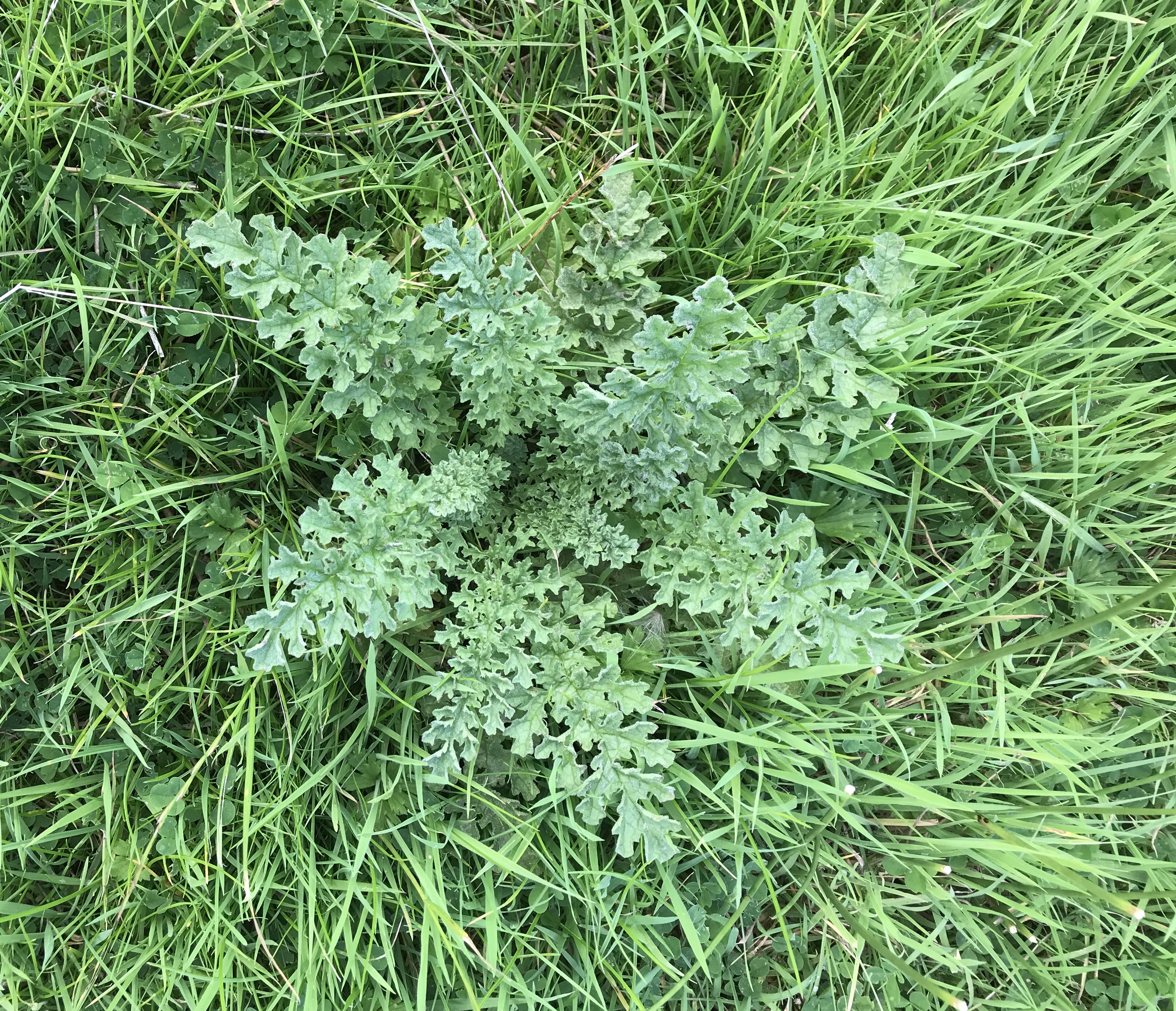 Ragwort at the ideal stage for treating with Forefront T
More information from
Ryan Came-Johnson, Field Technical Manager for Grassland, Corteva M: 07795 256896. E: ryan.camejohnson@corteva.com
Notes to editors
Use herbicides safely. Always read the label and product information before use. For warning signs and symbols refer to the label.
Forefront T contains aminopyralid and triclopyr.
About Corteva
Corteva, Inc. is a publicly traded, global pure-play agriculture company that provides farmers around the world with the most complete portfolio in the industry - including a balanced and diverse mix of seed, crop protection and digital solutions focused on maximising productivity to enhance yield and profitability. With some of the most recognised brands in agriculture and an industry-leading product and technology pipeline well positioned to drive growth, the company is committed to working with stakeholders throughout the food system as it fulfils its promise to enrich the lives of those who produce and those who consume, ensuring progress for generations to come. Corteva Agriscience became an independent public company on June 1, 2019, and was previously the Agriculture Division of DowDuPont. More information can be found at https://www.corteva.com/uk
Follow Corteva on Facebook LinkedIn, Twitter and YouTube.
™ ® ℠ Trademarks and service marks of Corteva Agriscience and its affiliated companies.
Media Contact:
Sara Gregson
Sara Gregson Marketing Communications
t: 01799 530934 m: 07768 764062 e: sara@saragregson.co.uk