
Country Selector
Thistlex Herbicide
Thistlex® is a very effective translocated product for the control of creeping thistles in established grassland for grazing only and is very safe to grass.
Thistlex® is a very effective translocated product for the control of creeping thistles in established grassland for grazing only and is very safe to grass.

Thistles biology & control
Thistles compete with grass for space, light, nutrients and water, and they are unpalatable to stock.
Thistles compete with grass for space, light, nutrients and water, and they are unpalatable to stock.
What are thistles?
There are 150 species of thistles worldwide, with 20 species in the UK. The two most common and damaging are creeping thistle – Cirsium arvense – and spear (Scotch) thistle – Cirsium vulgare.
Creeping thistle
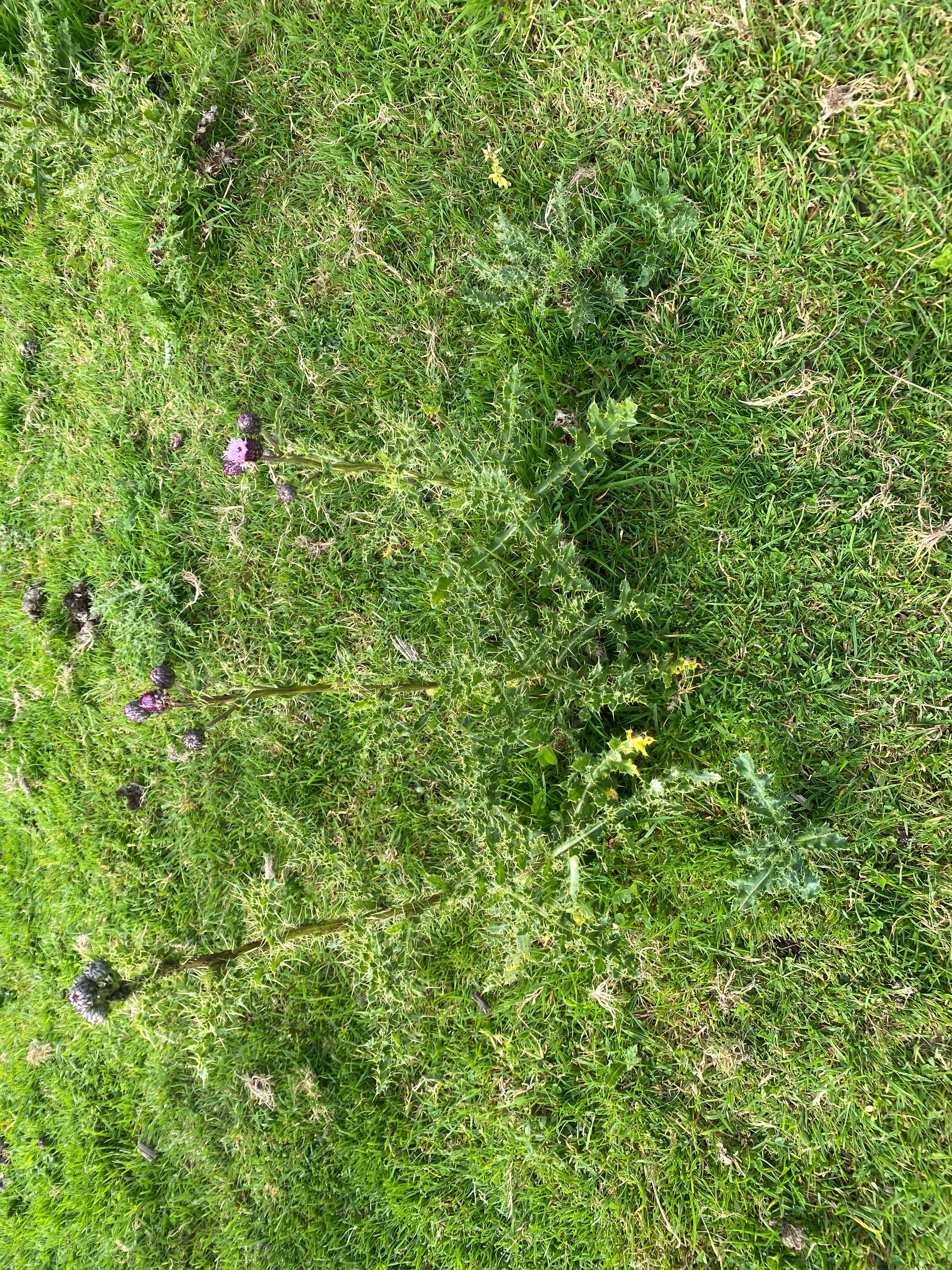
Creeping thistle (Cirsium arvense) is a perennial that grows from seed or from root sections in the soil. Once established, the root mass can be greater than the plant above ground, competing effectively with the grass.
Seed
- Creeping thistles can produce 40,000 seeds per plant
- Viable seed sets 6 days after the flower opens
- Seed is viable in the soil for 10-21 years
Root
- Vertical roots are used for storage of nutrients
- Horizontal creeping roots spread the infestation
- Adventitious buds give rise to new infestations
- Fragments of root can lay dormant for many years
Seedling
- In the first year a creeping thistle seedling can produce a root system covering 5 m2
- In the second year the rooting area can extend to 80 m2
- The roots can weigh up to 2 tonnes per hectare
- The roots extend over a vast area – over 12 metres per year
Spear thistle
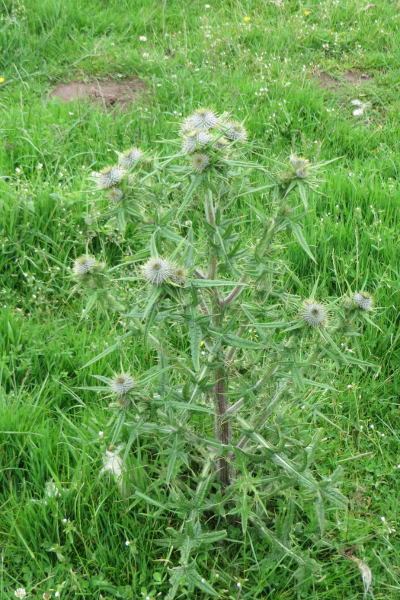
Spear thistle (Cirsium vulgare) is a biennial that grows from seed, and in the first year often goes unnoticed, since it produces only a small rosette. In the second year the plant can grow to over a metre in diameter before flowering, posing a serious threat.
Seed
- Creeping thistles can produce 40,000 seeds per plant
- Viable seed sets 6 days after the flower opens
- Seed is viable in the soil for 10-21 years
Root
- Vertical roots are used for storage of nutrients
- Horizontal creeping roots spread the infestation
- Adventitious buds give rise to new infestations
- Fragments of root can lay dormant for many years
Seedling
- In the first year a creeping thistle seedling can produce a root system covering 5 m2
- In the second year the rooting area can extend to 80 m2
- The roots can weigh up to 2 tonnes per hectare
- The roots extend over a vast area – over 12 metres per year
- Spear thistles are typically biennial; completing their life cycle in two years
- They grow from seed, forming a rosette and a tap root that is 70 cm in length.
How do I control thistles?
Thistlex Herbicide
Thistlex® is a very effective translocated product for the control of creeping thistles in established grassland for grazing only and is very safe to grass.
Thistlex® is a very effective translocated product for the control of creeping thistles in established grassland for grazing only and is very safe to grass.
Forefront T Herbicide
Forefront® T delivers the highest levels of control of docks, thistles, nettles, ragwort, buttercups and dandelions.
Forefront® T delivers the highest levels of control of docks, thistles, nettles, ragwort, buttercups and dandelions.