
Country Selector
Delivering answers to weed and disease resistance in cereals
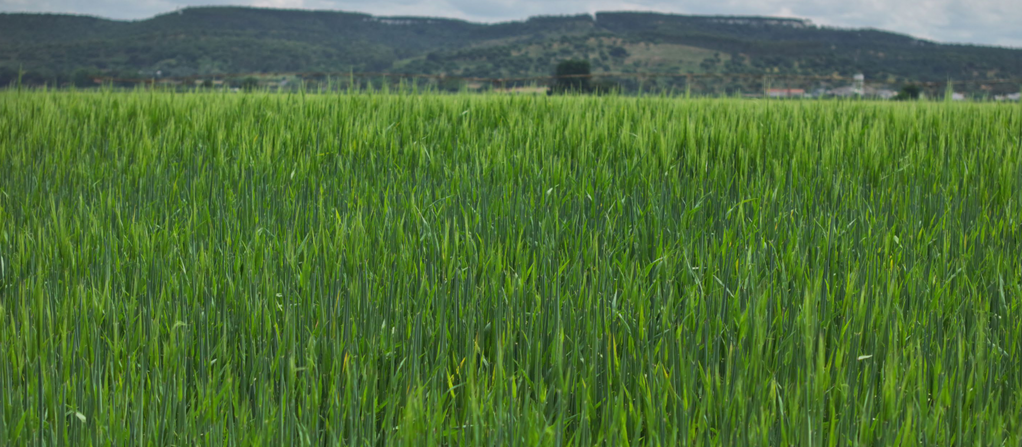
Across cereal farms in Europe, resistance is on the rise. Diseases like Septoria are becoming increasingly difficult to control. And keeping fields clear of weeds such as poppy, blackgrass and italian ryegrass is requiring higher rates and more frequent applications of herbicides. European cereal farmers are well-versed in good management practices to help reduce weed and disease pressures. Crop rotation, planting resistant cultivars, changing sowing dates and deploying mechanical practices can all be helpful interventions before herbicides and fungicides need to be used. Once a farmer decides to implement a spray programme, the best strategy is to use multiple modes of action in a season and to introduce new modes of action whenever possible. However, with shrinking options for treatments and long lead times for the approval of new products, many farmers feel stuck. As they make do with available crop protection products, resistance may worsen.
Looking out over a wheat field in Belgium, Veerle Van Damme, Corteva Project Leader for Cereal and Oilseed Rape Herbicides, contemplates contemplates the pressure cereal farmers are under.
“At this site, you see blackgrass. If you don’t control it, you have more blackgrass than wheat,” she says. “Before, we had a reasonable amount of active ingredients to control all these grass weeds, but one by one, we are losing important actives and we are likely to lose more.”
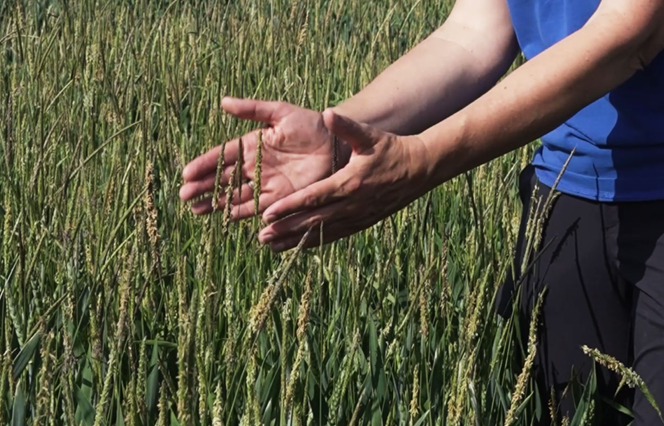
Resistant blackgrass, seen here in a field in Belgium, has become one of the biggest challenges for wheat growers in recent years. When typical herbicide treatments fail, some farmers resort to killing off heavily infested fields to keep resistant seed from regerminating.
Fewer options for control
From 2018–2022, 82 chemical active substances were removed from EU registration. During this same period, only four chemical active substances were approved.1 These figures are across all categories of active substances, including fungicides, herbicides and insecticides. Approvals have increased for biological products, which certainly offer advantages to cereal farmers by helping to improve plant efficiency, health and resilience. However, biological products typically do not completely replace conventional crop protection. Cereal farmers need innovative solutions across many categories to help them combat resistant weeds and diseases that threaten their livelihoods.
Corteva Agriscience understands the need for new solutions and has continued to seek registrations to help address resistance challenges. From 2014–2019 — the same period when the EU removed dozens of chemistries from registration — Corteva successfully launched eight active substances in Europe.
This builds on a long-standing commitment to delivering solutions to Europe’s cereal farmers that dates back 50 years and includes innovations in auxin and ALS herbicides. Products such as Pixxaro®, Starane™ and Broadway™ herbicides have helped farmers tackle significant weed challenges, including cleavers, poppy, chickweed, speedwells, brome grass and rye grass, while extending the useful lives of these technologies.

With a continuing need for new active ingredients, Corteva has invested in researching resistance and developing novel solutions that can be integrated with biologicals, seed treatments and good management practices to reduce resistance risks. Corteva is also seeking EU approval for five more active substances within the next three to five years, with a special focus on herbicide and fungicide innovation.
Solutions for weed resistance
A few years ago, Mauricio Morell, Global Pipeline Development Leader, Herbicides, Corteva Agriscience, witnessed one farmer’s battle with blackgrass in the UK. “The problem was so severe that the grower had to destroy the crop because he was not going to get anything out of that part of the field. He had to lose his cereal crop because he needed to kill the blackgrass,” Morell says. “It was difficult to think that the grower had gone through the entire process of preparing the land, planting the crop, fertilising and spraying, only to realise there was nothing else he could do because he did not have a tool to control that weed.”
A single chemical solution to resistant blackgrass isn’t available to farmers yet, but it’s among the concerns topping the list for Corteva field scientists like Mark Fairfax, who studies resistance issues across the continent.
“Corteva is constantly monitoring the resistance shifts in diseases, weeds and insects,” he says. “This gives us an early warning sign to then develop a management strategy to fight that resistance. We work with a network of field scientists to understand how these products work and to develop approaches that can be effective and consistent across Europe.”
In the battle against resistant broadleaf weeds, one advance has been the introduction of Arylex™ active. Arylex builds on Corteva’s experience in auxin herbicides to bring farmers a different option. “Arylex is a strong example of a product designed with European cereal farmers in mind,” Morell notes. “With Arylex, farmers get a differentiated mode of action, broader spectrum control and different premix options that address various situations.”
These premix products further extend utility for farmers. Manhattan™, for example, combines Arylex with two other herbicides to capture more weed species, introduce a second mode of action and provide flexibility for crop rotation.
Addressing fungal disease resistance
Septoria is one of the most costly wheat diseases and is highly prone to developing resistance. A major agronomy milestone came in 2004, when resistance rendered strobilurin fungicides ineffective against Septoria, removing an important tool from farmers’ fungicide programmes. “Strobilurins remain highly effective against rust, but they no longer control Septoria,” explains Andy Leader, Global Fungicide Leader for Corteva Agriscience. “Resistance caused the mode of action against Septoria to collapse suddenly and completely within the space of a couple of years.”
Today, most cereal farmers rely on applications of azole and SDHI fungicides to combat Septoria, but with enough use over time, these options may also eventually stop working. “We have seen less-sensitive isolates developing,” Leader says, “and even though we are not seeing field failure, it’s a warning sign.”
“Novel modes of action are exceptionally rare,” notes Tony Trullinger, Crop Protection Pipeline Development Leader, Corteva Agriscience. “Our R&D group has really been focused on new and underexplored modes of action. We’ve tried to break the mold and focus on things that are completely new.”
Inatreq™ active, a novel fungicide active ingredient made available to farmers in 2020, is one option that can help delay resistance development to keep azole and SDHI options working for longer. Inatreq has a mode of action which targets a specific target site in fungi and it has no known cross-resistance to other fungicides. In 2026, ADAS, an independent agriculture consultancy in the UK, recommended farmers include a product containing Inatreq, such as Univoq® fungicide, in their Septoria programmes to reduce selection pressure on SDHI and azole products. Adding a product containing Inatreq and a multisite fungicide into a spray programme could potentially triple the useful life of SDHI products.2 To further defend against resistance, products containing Inatreq are labelled for application only once per season.
Another solution, currently under regulatory review in Europe, is Adavelt™ active, which works at the same target site as Inatreq, but has broader use across multiple crops and diseases, including Septoria. Looking ahead to Adavelt, Leader says, “It offers curative activity and good protection activity. Combine that with its low use rate, and it offers a very good solution for farmers in the future.”
A long-term strategy for cereal farmers
While cereal farmers are finding some relief from resistance with newer options, Corteva researchers remain focused on arming farmers for what comes next.
“I am responsible for gathering the biological data for the solutions farmers will have in 10 or 15 years. I see what the future is holding,” says Cécile Richet, Principal Biologist, Corteva Agriscience. “The weeds that are important now might not be as important in the future. I want to study what is going to be very important to farmers years from now.”
“Long-term disease resistance management is a key focus of my role, so growers can maintain the tools in their arsenal of products for longer,” explains Leader. “The best way for farmers to manage resistance is to give them access to several modes of action, including new ones. But it’s also important that they develop integrated control strategies, particularly with varieties and planting dates. We want to help farmers really recognize the challenges on their farm and adapt their solutions to what’s ahead of them.”
What does it take to help cereal growers succeed today and for generations to come?
In this video, Corteva Agriscience experts from across Europe and beyond share how innovation, research and long-term investment are helping tackle some of the biggest challenges facing cereal production.

How Innovation Is Helping Cereal Growers Boost Yield and Manage Resistance
How Innovation Is Helping Cereal Growers Boost Yield and Manage Resistance
1 Patricia Marchand, “Evolution of plant protection active substances in Europe: the disappearance of chemicals in favour of biocontrol agents,” Environmental Science and Pollution Research 30, (2023): 1–17, https://doi.org/10.1007/s11356-022-24057-7.
2 Richard Allison, “How two changes can triple the lifespan of SDHI fungicides,” Farmers Weekly, March 6, 2026, https://www.fwi.co.uk/arable/crop-management/disease-management/how-twochanges-can-triple-the-lifespan-of-sdhi-fungicides.
Arylex™ active and Inatreq™ active are registered active ingredients.
Registration is being sought for Adavelt™ active. This is not an offer for sale.
Broadway™, Broadway™ Plus, Pixxaro®, Starane™ and Univoq® are not registered for sale or use in all countries. Contact your local regulatory agency to determine if a product is registered for sale or use in your area. Always read and follow label directions.