
Country Selector
Tackle problem weeds in grassland now
Seasonal challenges throw up different weed problems every year, and the weather last year and this, are no exceptions.
Following a relatively dry spring in 2025, autumn and winter were extremely wet, with cumulative totals for the past six months generally above normal, and in some areas of the south-west and north-west of England, exceptionally high.
January 2026 was the fourth wettest in almost 120 years, with Cornwall reporting its wettest January ever at 267.6mm. The heavy rainfall has resulted in extensive, ongoing flooding and saturated field surface conditions.
This means tractor work of any kind is likely to be delayed this year – probably not starting in many places until March.
“If and when the rain stops, the first weed a lot of farmers will see growing in their grass will be chickweed,” says David Gurney, field technical manager for Corteva.
“Chickweed, both common and mouse-eared, the two most common species in the UK, loves growing in cultivated ground and thrives in cool, damp conditions. It has shallow roots and grows very fast. It will quickly colonise any open swards and bare patches and can quickly smother grass. It needs to be dealt with now.”
Chickweed grows at relatively low temperatures and is likely to have kept growing through the winter.
In newly sown leys it is important to control chickweed plants at the seedling stage by applying herbicide before first grazing. Cultural solutions include grazing or topping the weed, provided the grass is not too high or too dense.
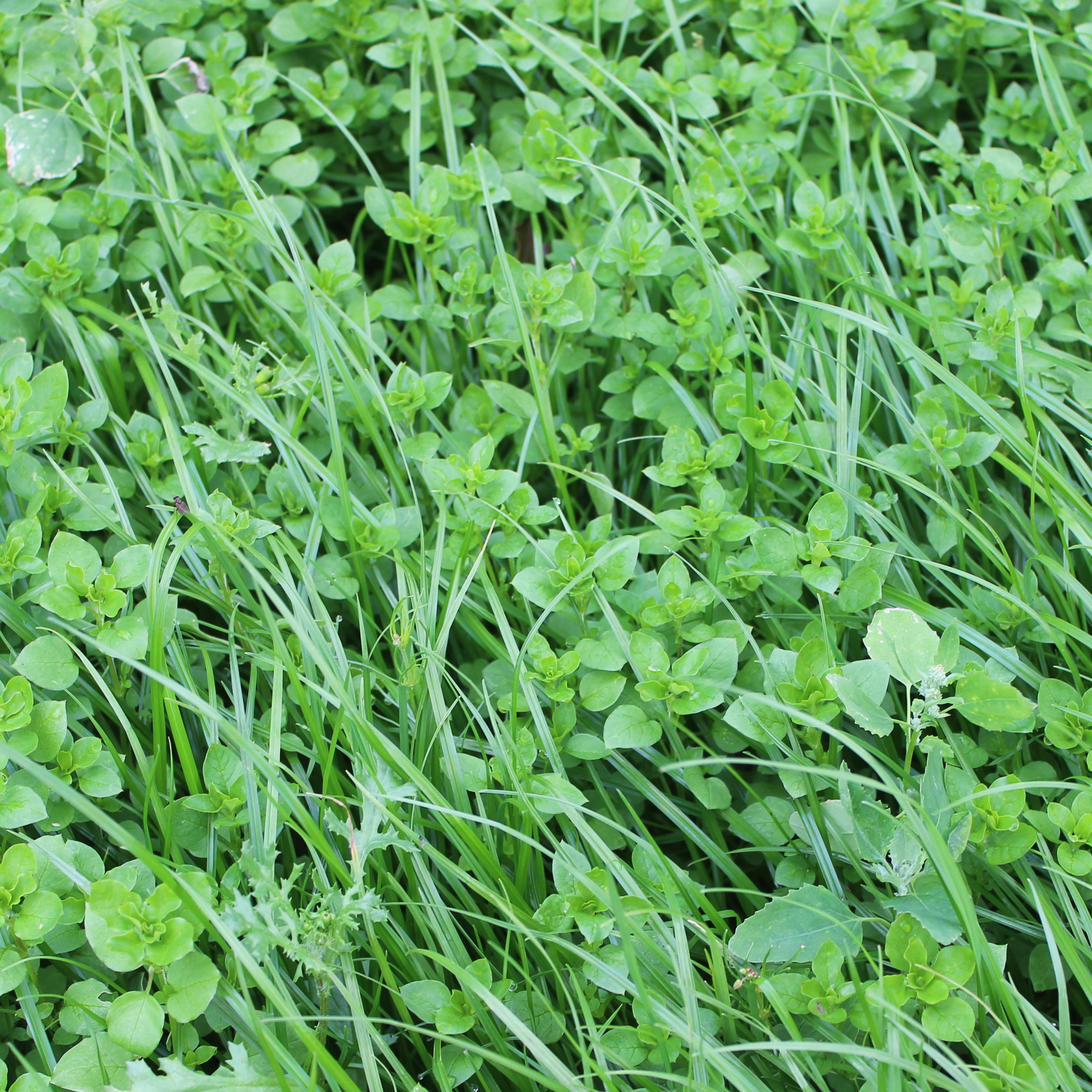 Dense chickweed in grassland
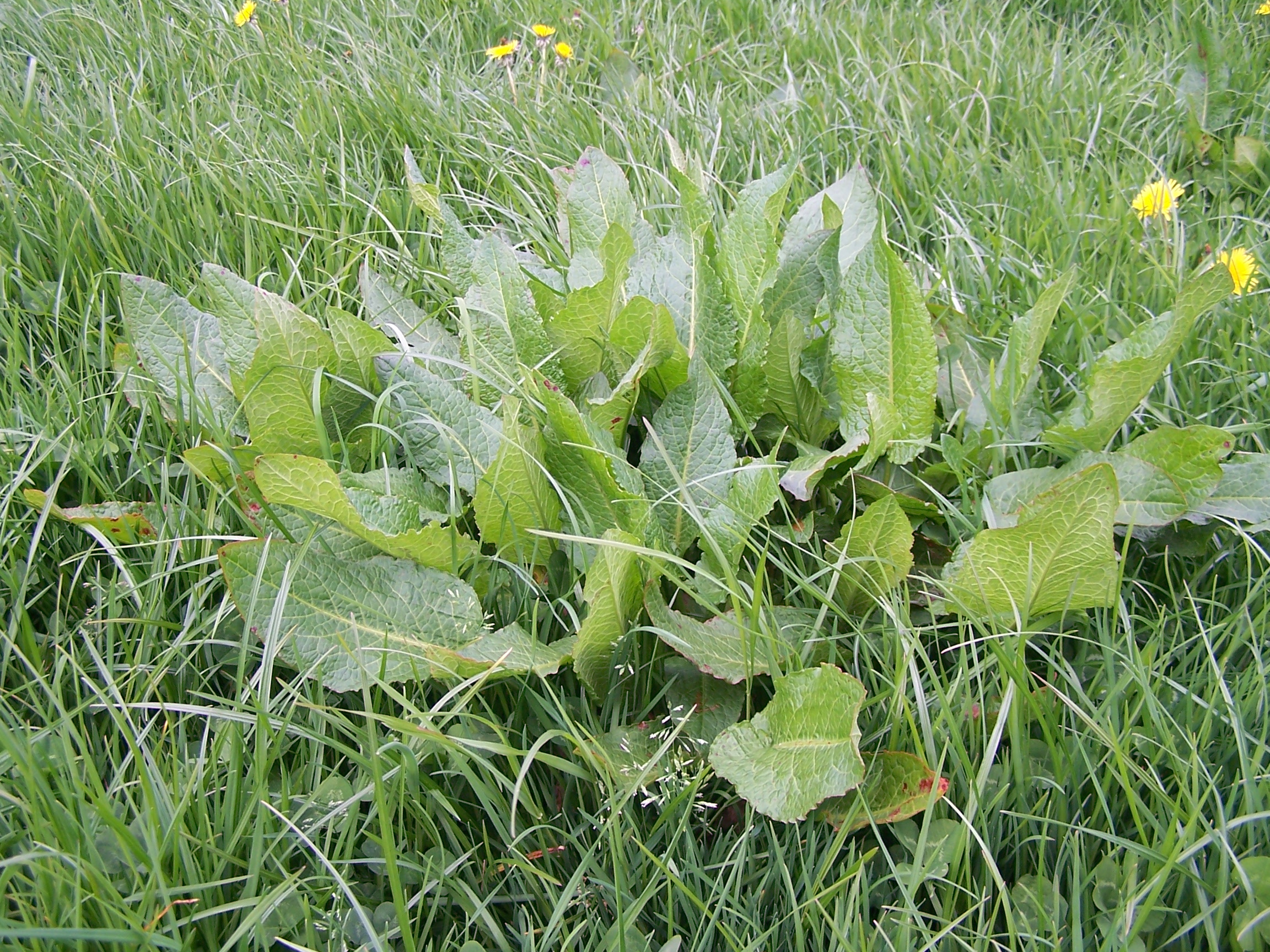 Dock at the perfect time to spray
Docks
Docks are one of the most damaging weeds in productive grassland, with a 10% infestation rate typically leading to a 10% reduction in grass dry matter yield.
Docks are aggressive and can easily outcompete grass for light, water and nutrients, particularly nitrogen and potassium, reducing the overall yield and quality of the pasture. They typically have 65% of the nutritional value of quality forage.
Their deep, strong tap roots, which can grow through compacted, waterlogged, oxygen-poor soil, allow them to regenerate easily even after cutting, grazing or drought. They have high reproductive potential – a single dock plant can produce up to 60,000 seeds a year, which can survive in soil for up to 60 years.
“The ideal time to spray docks in a silage situation is between cuts,” David explains. “It takes around three weeks for docks to grow back to the preferred size for treatment with a translocated herbicide. They should have a rosette of fresh, healthy leaves and be between 15 to 25cm wide – or dinner plate size. If they have been hammered by dock beetle, ravaged by ramularia disease or have started to produce a flowering stem, then control will be less than what it should be – this is a good reason to spray fresh new clean regrowth after a cut”
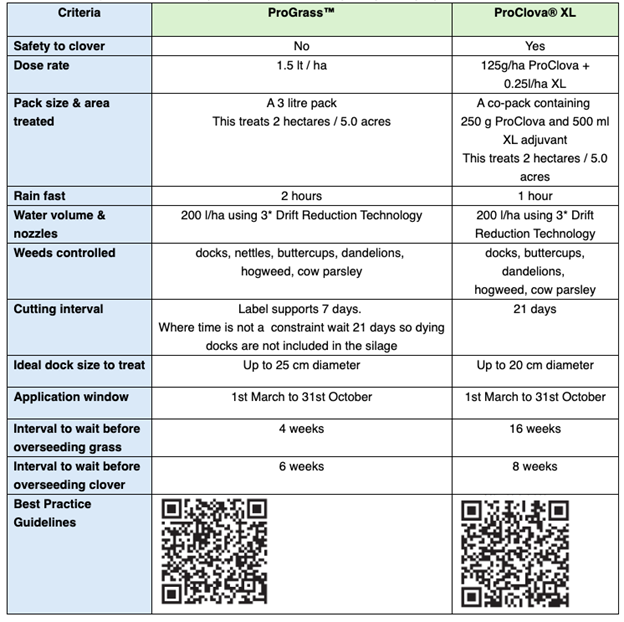
Multi-cut silage programmes can start by the end of February, although this seems unlikely for many this year. In these systems, five week cutting intervals are typical which puts pressure on most products, which tend to need at least 28 days before the next cut can be taken. However, a new product launched by Corteva last year called ProGrass™, has a seven day cutting interval (Table 1).
“Despite this very short potential period between cutting and spraying, we would recommend leaving 21 days if possible, particularly when it is sprayed ahead of first cut,” says David. “This means that the docks can die and disappear and will not be left in the silage to lower its feed value.
“This year, if spring is late, spraying with herbicide might be left until after the first or even second cut. After cutting, a three-week gap should be left to allow dock recovery before treatment. This then allows two weeks for translocation of the chemical into the dock roots.”
ProGrass can be used from 1 March until 31 October, at a dose rate of 1.5 litres/hectare (l/ha) in 200 litres of water/ha using low drift nozzles.
Clover safe
Last year, as well as ProGrass, Corteva launched a new product which farmers have been asking for for years - a systemic herbicide that will kill broadleaved weeds but not clover.
Spraying with ProClova® XL protects the £600/ha plus investment in reseeding and allows the clover to add quality to the forage, while potentially reducing the need to apply nitrogen fertiliser.
ProClova must always be used in a tank mix with XL adjuvant. For optimum results spraying needs to happen when overnight temperatures are forecast to be more than 8o centigrade for a period from three days before, to three days after application date. Application is spring is recommended for quicker recovery of the clover.
After application, livestock must be excluded for a minimum of seven days and if cutting for silage or hay wait at least 21 days before doing so.
Table 1: Dock control options for use on grassland used for silage, hay or haylage, with or without clover
Grazing fields are more likely to be sprayed in mid to late April, depending on the level of dock infestation and their readiness for treatment. Use a herbicide that is designed for use on fields where animals have been grazing and where they can return seven days after application.
Book the contractor
Over fifty per cent of grassland herbicides are now applied by contractors, up from 40% five years ago. Farmers value the expertise and skill of specialists, who often have access to the latest spray machinery. Booking the preferred contractor needs to be planned well ahead of time before they get booked up for spring work.
About Corteva
Corteva, Inc. is a publicly traded, global pure-play agriculture company that provides farmers around the world with the most complete portfolio in the industry - including a balanced and diverse mix of seed, crop protection and digital solutions focused on maximising productivity to enhance yield and profitability. With some of the most recognised brands in agriculture and an industry-leading product and technology pipeline well positioned to drive growth, the company is committed to working with stakeholders throughout the food system as it fulfils its promise to enrich the lives of those who produce and those who consume, ensuring progress for generations to come. Corteva Agriscience became an independent public company on June 1, 2019, and was previously the Agriculture Division of DowDuPont. More information can be found at https://www.corteva.com/uk
Follow Corteva on Facebook, LinkedIn, Twitter and YouTube.
™ ® ℠ Trademarks and service marks of Corteva Agriscience and its affiliated companies.
Product information
ProGrass contains halauxifen-methyl (Arylex™ active), fluroxypyr and triclopyr.
ProClova® contains florpyrauxifen-benzyl (Rinskor™ active) and amidosulfuron. XL adjuvant is an EC formulation containing 94% w/w fatty acid esters. ProClova MUST ALWAYS be used in tank mix with XL adjuvant.
Media Contact:
Sara Gregson
Sara Gregson Marketing Communications
t: 01799 530934 m: 07768 764062 e: sara@saragregson.co.uk