
Country Selector
Please enter a valid location
Sudden Death Syndrome: Causes, Symptoms, Control

Soybean leaf showing classic symptoms of sudden death syndrome infection, with yellow and brown areas contrasted against a green midvein and green lateral veins.
Sudden death syndrome (SDS) is a top soybean killer in the U.S. The name itself speaks volumes about its ability for widespread and economically significant damage. First reported in Arkansas in the early 1970s, SDS has now invaded 29 states. In severe cases, it can slash yields by up to 50%.1 Between 2020 and 2024 alone, SDS caused the loss of over 100 million bushels.2 What’s worse is that there are no available rescue treatments once SDS shows up. The bottom line? To protect yields — and profits — it’s important to know this disease and how to manage it early. Let’s take a closer look.
Life cycle
In the U.S., SDS is caused by Fusarium virguliforme, a soilborne fungal pathogen capable of surviving for years in the soil as spores that can withstand freezing temperatures and drought. Once soil warms in the spring, the spores germinate and infect nearby soybean root tissue. Later in the season, the fungus creates a toxin that moves up the plant and causes foliar damage. Reproduction occurs during summer via spores that form on the root surface and then shed off into the surrounding soil to infect nearby plants. Unable to travel far on their own, these spores rely on the movement of soil or water to spread further afield.
Symptoms
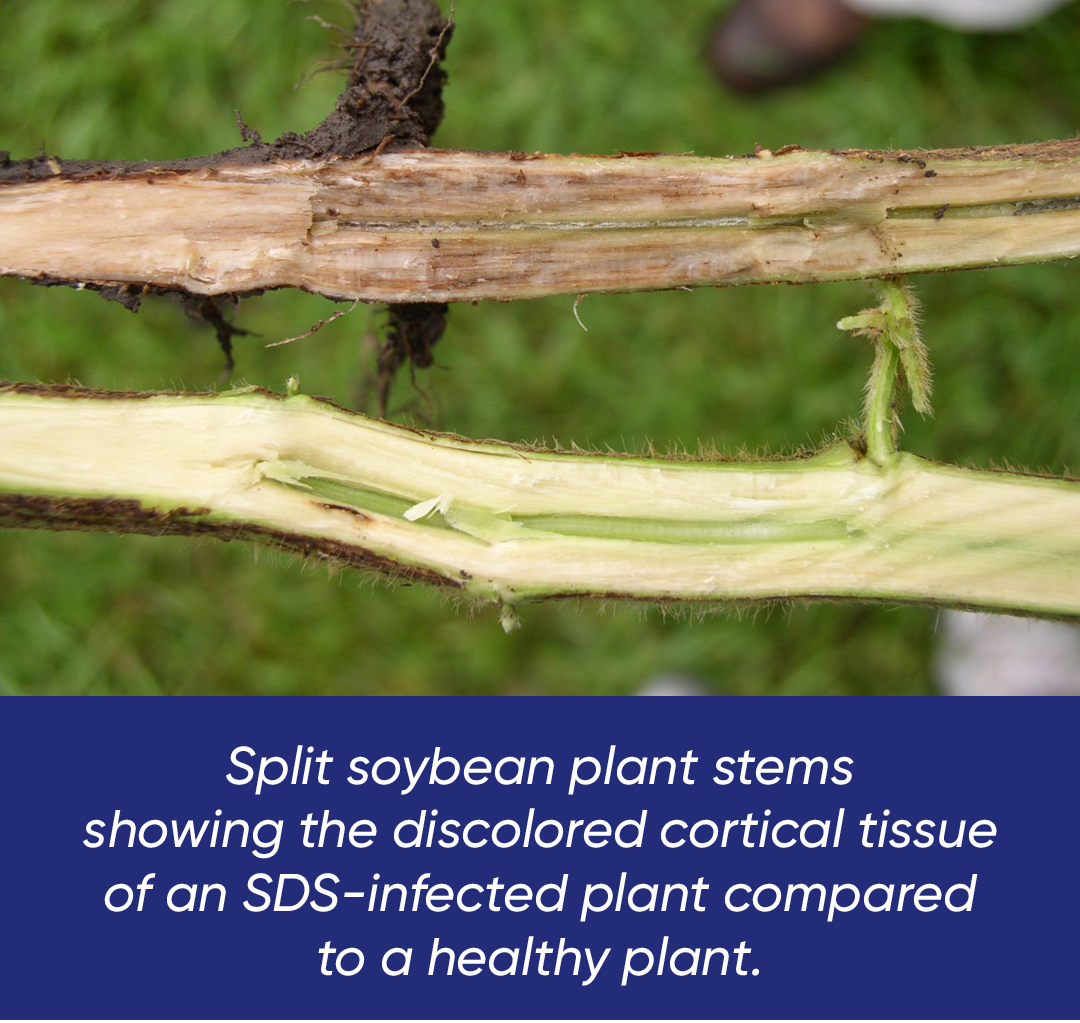
The initial effects of SDS — stunted root development and deteriorated roots and nodules — are not readily visible, yet they harm the plant by limiting water and nutrient uptake. Coloration of internal root and lower stem tissue also changes, an effect that can be seen by splitting stems open to reveal their white pith, now surrounded by gray-brown outer cells.
The most identifiable symptom of SDS is a type of foliar injury called interveinal chlorosis and necrosis. It initially presents on soybean leaves as yellow blotches. The blotches gradually grow and spread across the leaf tissue until all the tissue is either yellow or brown while the veins remain green. This effect doesn’t become visible until mid- to late summer, well past the point of initial infection. Affected leaves may curl up and/or drop from the plant prematurely, but sometimes the whole plant may yellow and die prematurely without having shown the signature foliar injury of SDS infection.
Yield-related symptoms can include frequent loss of flowers and pods, seeds that don’t fully develop, small seeds and unfilled pods.
Identifying SDS vs. other diseases
When is SDS not SDS? Quite often, actually. A number of other soybean diseases mimic SDS symptoms — yellowing and necrotic leaves, root discoloration — making it easy to misdiagnose out in the field. Knowing how to tell the imposters apart from the real thing can save on wasted treatments, lost time and reduced yield.
Sudden death syndrome
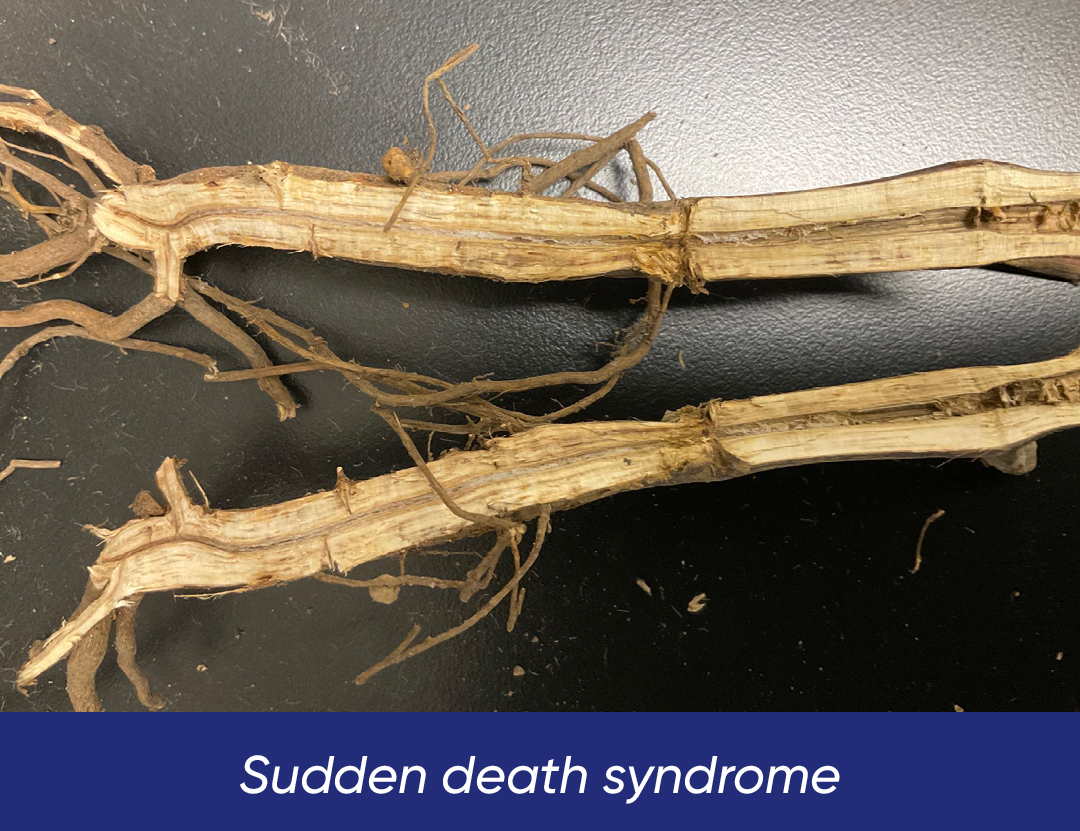
White stem pith with grayish-brown outer tissue.
Brown stem rot
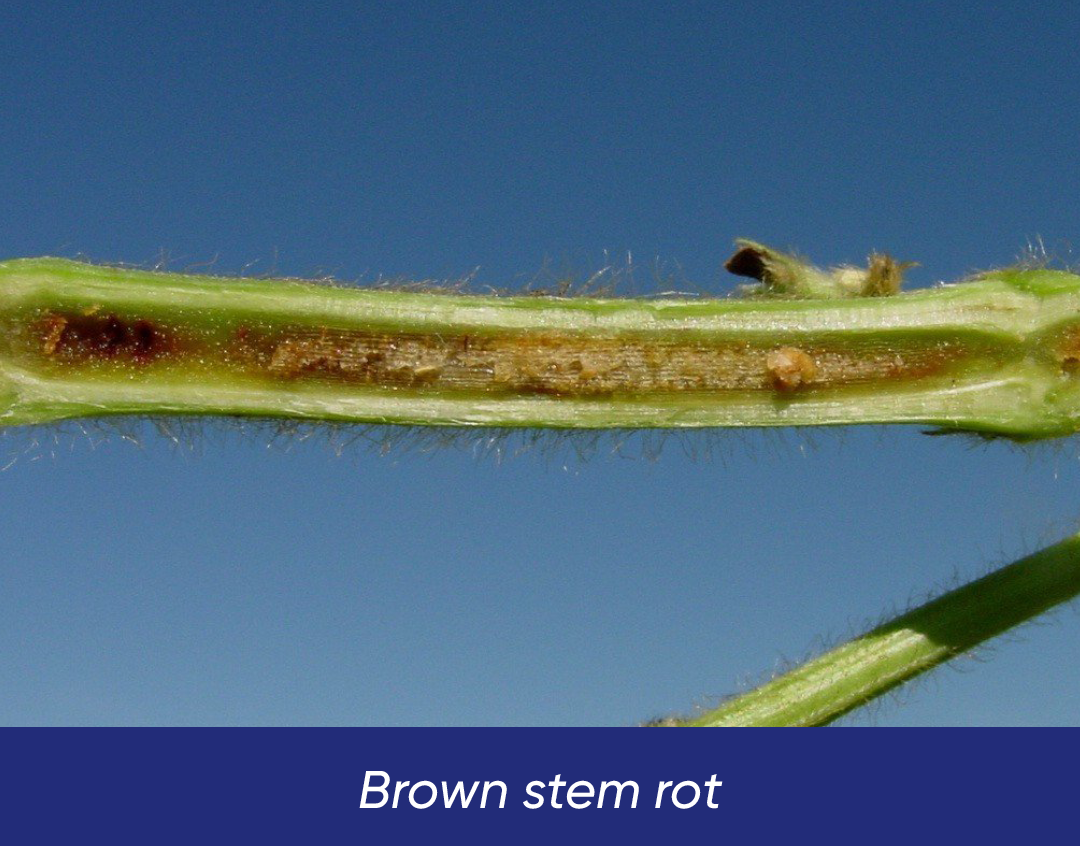
Dark brown stem pith with green outer tissue.
Charcoal rot
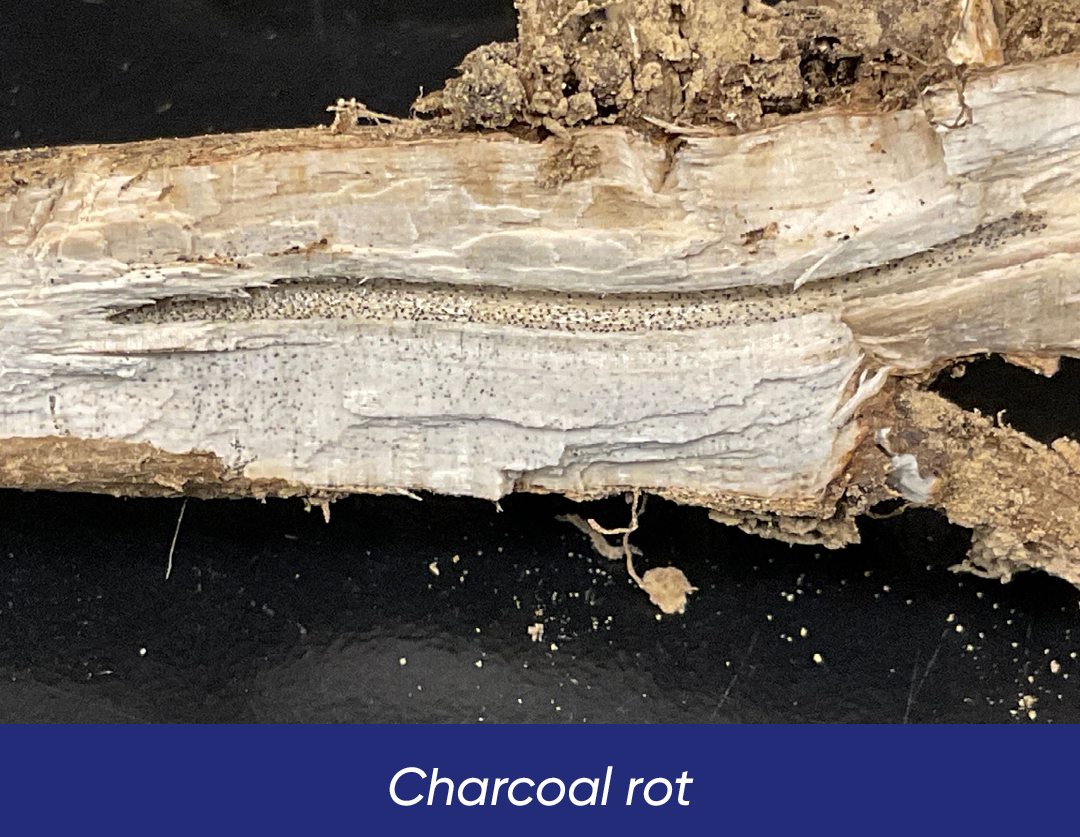
Outer tissues of roots and lower stem are light gray. Scraping the surface tissue creates a black, dusty powder.
Red crown rot
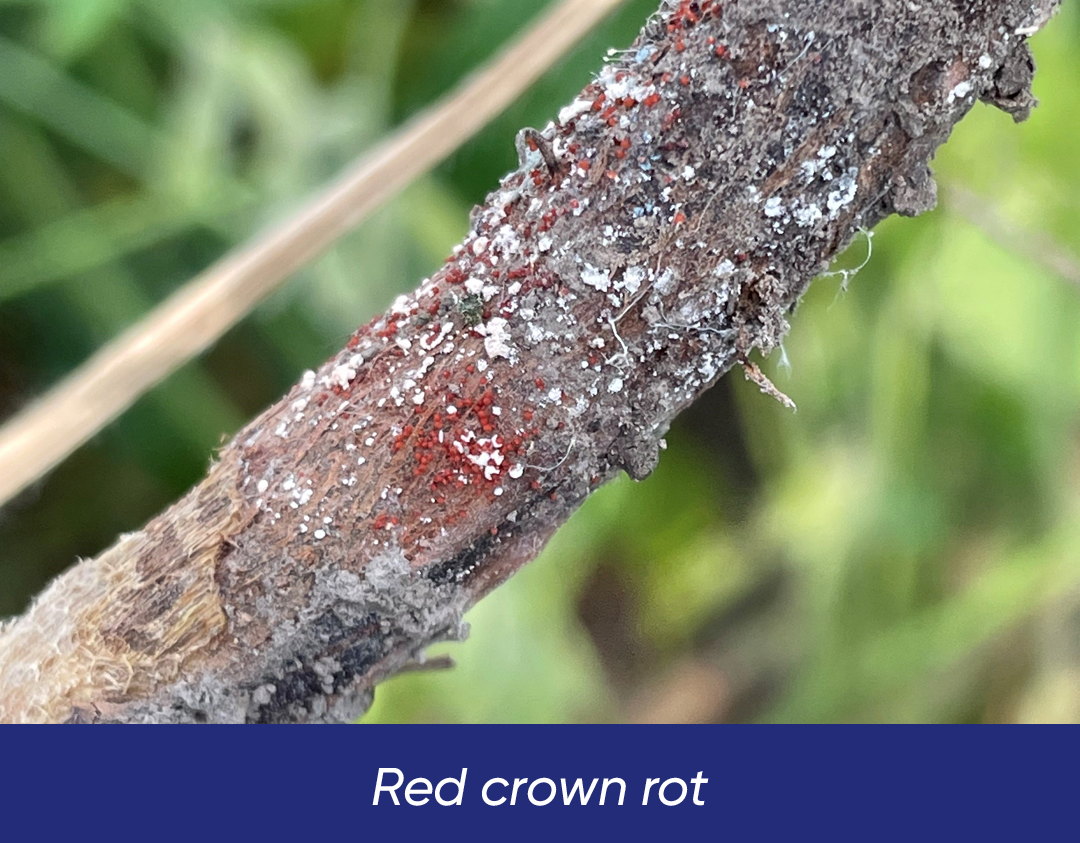
Stem is reddish colored on the crown and roots just below the soil.
Stem canker
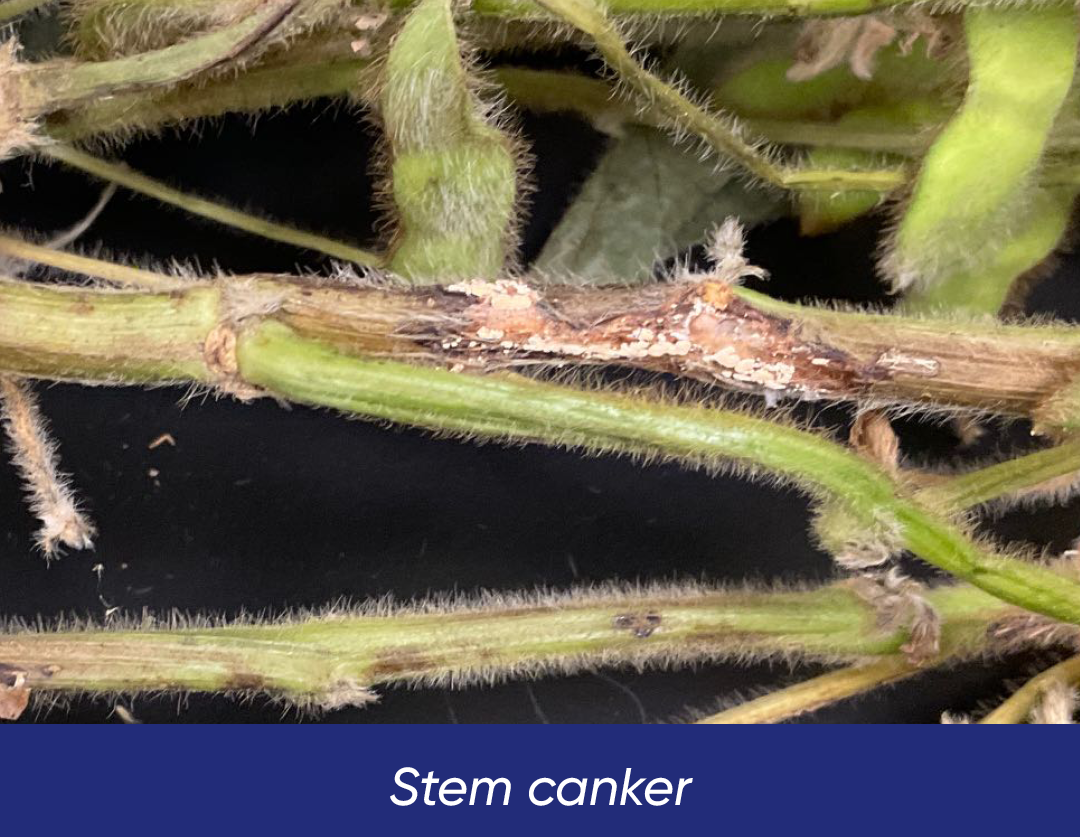
Large brown-black sunken lesions on the surface of the stem.
Favorable conditions
SDS favors cool, moist soil conditions, such as areas of early planting, as well as low, poorly drained or compacted areas. In addition, soybean cyst nematode (SCN) infestation can increase SDS pressure by stressing plants and creating more entry points for the SDS pathogen.
Management
There are no effective rescue treatments against SDS, so management should focus on methods that help reduce infection in future crops. Field scouting combined with GPS mapping of SDS-susceptible areas can help farmers determine the severity of infection and decide whether additional management measures should be taken. Strategies include planting varieties with tolerance to SDS, using appropriate seed treatments and managing SCN.
Tolerant soybean varieties reduce the intensity of symptoms and represent a primary safeguard against SDS. Corteva Agriscience offers a number of SDS-tolerant soybean varieties to help in selecting the right seed for fields where SDS is a concern.
Any practices that help reduce moisture levels in the soil are also beneficial. This includes improving drainage, lessening compaction and tilling. Minimizing plant stress overall – including inadequate soil fertility, poor weed control, insect pressure and other diseases – can help plants resist SDS.
SDS is a serious problem that can have significant negative effects if it is allowed to infect fields. No rescue treatments are available once infection is noticeable, so it’s important for farmers to employ relevant agronomic practices to reduce the chances of infection. Choosing tolerant soybean varieties is an important part of managing SDS. Following these practices can allow farmers to better withstand the effects of this potentially destructive disease and contribute to healthy, productive crops.
* 2020 data are based on average of all comparisons made in 76 locations across MN, ND, SD, IA, MO, IL, IN and OH through Dec 1, 2020. Multi-year and multi-location data is a better predictor of future performance. Fluopyram use rate of 0.15mg ai/seed.
1 Dean Malvick, “Sudden death syndrome on soybean,” University of Minnesota Extension, 2018, https://extension.umn.edu/soybean-pest-management/sudden-death-syndrome-soybean.
2 Darcy E.P. Telenko et al., “Estimated Soybean Yield and Economic Losses Caused by Diseases in the United States and Ontario, Canada, from 2020 to 2024,” Plant Health Progress 27, no. 2 (2026): 269-282, https://apsjournals.apsnet.org/toc/php/27/2.