
Country Selector
Please enter a valid location
Forage Management Vital to Cope Family Farms

Forage management isn't just about producing feed for the coming year; it's about protecting the future of the operation. Across the country, cattle producers face different challenges, from persistent drought to excess rainfall, but many share the same long-term priority: leaving the land in the best shape possible for the next generation. Fall is an ideal time to evaluate management strategies and set goals for the upcoming growing season.
Andrew McCrea of McCrea Family Farms has relied on Range & Pasture products from Corteva Agriscience for more than 30 years. He adapts the pasture management plan on his family’s stocker cattle operation northeast of St. Joseph, Missouri, to fit production goals and enhance forages.
Recently, McCrea traveled south to Aurora, Missouri, to visit Glen Cope of Cope Family Farms and compare notes. Cope manages the century-old farm with his brother, Matt, and his father, O.D. The Copes run a commercial cow-calf and stocker operation.
“Like a lot of farmers, we’re standing on the shoulders of giants,” Cope said. “We’ve got a long legacy here in these hills, and they aren’t for everybody. It’s steep and kind of rough, but we call this home. And it’s been good to us. It’s been good for our family. And cattle do well in these hills.”
Cope’s grandparents settled on the property in 1910, and the determination of the generations of Copes has built the business into what it is today. When the family first purchased the land, it was untouched.
“A dozer would have been the main tool that they used to clear this and then, later on, a bush hog to keep the brush down,” Cope said. “That’s been the challenge here in these hills is fighting brush and weeds.”
Years of hard work on the unmanaged land has transformed the farm into a productive and beautiful piece of property. Cope uses UltiGraz℠ Pasture Weed & Feed and DuraCor® herbicide to keep it that way.
“Pasture management is such an integral part of our operation. Whether it’s applying fertilizer, controlling weeds, harvesting hay or feeding that hay in the wintertime, forage production is extremely important to our business. If we’re going to have the kind of cattle herd that we need to sustain multiple generations on our farm, we’ve got to produce quality forages. These products allow us to do that.”
—Glen Cope of Cope Family Farms
“We’ve had a lot of success with UltiGraz,” Cope said. “DuraCor kills those thistle rosettes. Thistles have always been our nemesis, but we’ll have residual protection that takes care of ragweed later. We’re also seeing a lot of perilla mint encroaching from the wooded areas. We can spread the impregnated fertilizer into those areas — those hard-to-get-to places. It’s been a game-changer for us. DuraCor also has excellent residual coverage that is extremely important to our operation. It has been the tool in our toolbox that we use the most.”
Cope understands the importance of soil health and fertility when it comes to forage production. He also emphasized the economic returns he’s witnessed from raising quality forages for his herd.
“We need to be feeding grass rather than weeds if we’re going to spend time and money applying fertilizer,” Cope said. “We’re going to have the expense of spreading fertilizer, and we’ve found that UltiGraz is a good tool to help enhance soil health and increase our stocking rates at the same time, which is incredibly important — especially with cattle at record-high prices. It allows us to put some more money toward our bottom line.”
McCrea applies NovGraz™ herbicide on his operation to treat broadleaf weeds while maintaining white clover and annual lespedeza. Cope takes a different approach due to the existing forage types on his farm, but he’s open to exploring the benefits a legume could bring to his pastures.
“There’s a lot of advantages to lespedeza and white clover, but we found that the tonnage from the fescue and orchardgrass is something that we’re really looking for,” Cope said. “Certainly, fescue produces a lot of tonnage, but the nutritional quality isn’t as good as we could get from a legume. Lespedeza or white clover would be a good option for us.”
When it comes to brush control, Cope consults with Corteva Agriscience Range & Pasture Specialists to determine a plan based on species and timing to get the most success out of an application. Cope scouts and treats weeds in the fall to help keep pastures clean going into spring.
“Early fall typically is our best window to control brush,” Cope said. “We want a good canopy on the brush so all the leaves soak in the product.”
In certain pastures that have more level ground, Cope occasionally harvests fescue seed. In that instance, he relies on Grazon PD3™ herbicide to treat weeds while maintaining grass seed production.
McCrea and Cope discussed the importance of stocking rates and productive forages and how those relate to the bottom line and sustainability of this business.
“You’ve got to manage grasses similar to corn or soybeans,” McCrea said. “You wouldn’t dream about not having weed control in corn or soybeans. We don’t always think about it like this, but we’re growing a pretty good crop.”
“When we’re not feeding weeds and we’re actually feeding the grass, we can increase our stocking rates,” Cope said. “With the kind of forage production that we see from using these products, we can increase our stocking rates, which puts more dollars in our pockets. This also creates more opportunities for our kids to return to the farm with the land that we have. Really, strategically managing these pastures has been a great opportunity for us to grow the operation and increase our income.”
Cope has seen excellent results and added production with the products he and his family have been using on the farm, but they’re always prepared to adapt with emerging technologies and differing management needs.
“We’re in the cattle business and we spend a lot of our time managing our cow herd; at the same time, I think we would argue that we probably spend more time managing our forages,” Cope said.
Like a lot of cattle producers, Cope’s primary goal is to continue the legacy of Cope Family Farms for generations to come.
“Pasture management is such an integral part of our operation,” Cope said. “Whether it’s applying fertilizer, controlling weeds, harvesting hay or feeding that hay in the wintertime, forage production is extremely important to our business. If we’re going to have the kind of cattle herd that we need to sustain multiple generations on our farm, we’ve got to produce quality forages. These products allow us to do that.”
Contact your local Corteva Range & Pasture Specialist to learn more about industry-leading pasture management solutions.
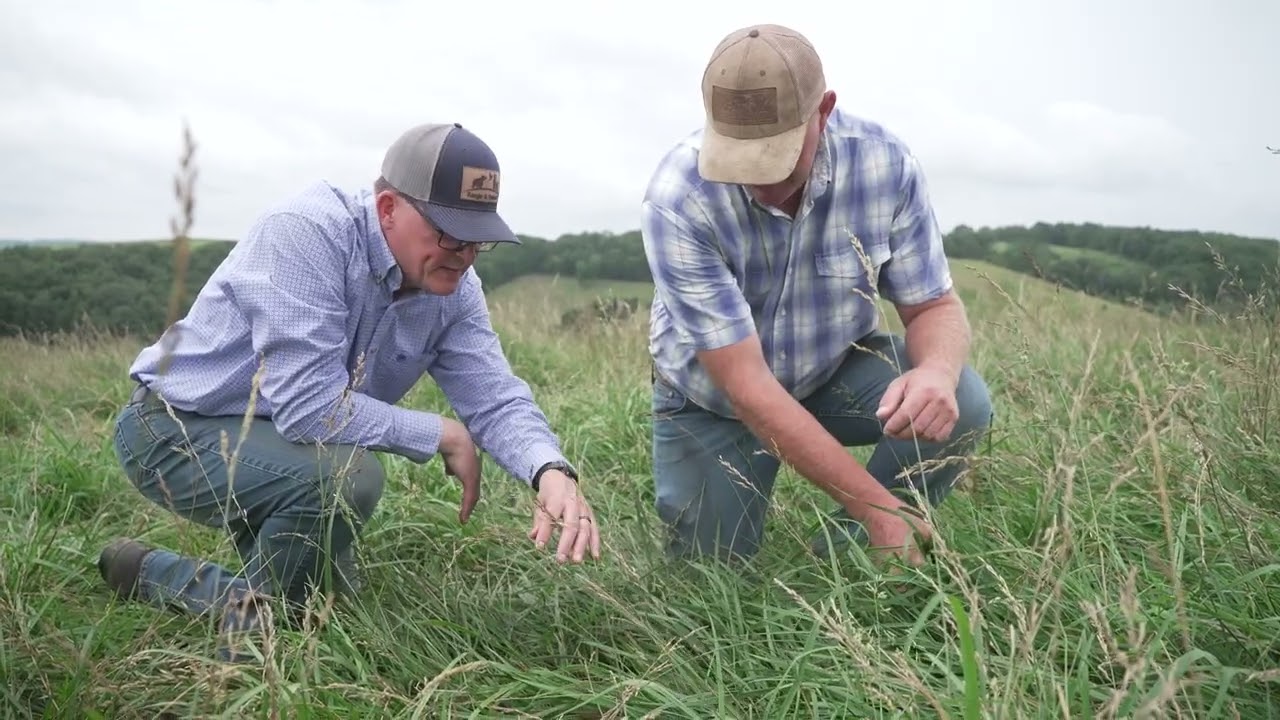
Where the Green Grass Grows | Fall 2026 | Pasture Management at Cope Farms
Andrew McCrea visits with Glen Cope about the pasture management program at Cope Farms in southwest Missouri. The Copes call UltiGraz℠ Pasture Weed & Feed with DuraCor® herbicide a "game-changer" to help soil health and control troublesome weeds.
Where the Green Grass Grows | Fall 2026 | Pasture Management at Cope Farms
Andrew McCrea visits with Glen Cope about the pasture management program at Cope Farms in southwest Missouri. The Copes call UltiGraz℠ Pasture Weed & Feed with DuraCor® herbicide a "game-changer" to help soil health and control troublesome weeds.
GrazonPD3™ is a Restricted Use Pesticide.
White clover and annual lespedeza exhibit some initial injury (such as lodging and loss of vigor) with NovaGraz™ but recover. Under normal field conditions, DuraCor® is nonvolatile. DuraCor has no grazing or haying restrictions for any class of livestock, including lactating dairy cows, horses (including lactating mares) and meat animals prior to slaughter. Label precautions apply to forage treated with DuraCor and to manure and urine from animals that have consumed treated forage. Consult the label for full details. DuraCor and NovaGraz are not registered for sale or use in all states. GrazonPD3 is not for sale, distribution or use in Nassau and Suffolk counties in New York state. UltiGraz℠ with fertilizer is available for use with specific herbicides in the states of AL, AR, CO, FL, GA, HI, IA, ID, KS, KY, LA, MN, MO, MS, MT, NC, ND, NE, NV, OK, OR, SC, SD, TN, TX, UT, VA, WA, WI, WV and WY. Contact your state pesticide regulatory agency to determine if a product is registered for sale or use in your area. Always read and follow label directions.