

ProClova® XL Best Practice Guidelines
Scroll down to find out how to optimise applications of ProClova XL, or download the information in PDF format here.
Maximising the effect on docks
ProClova® XL will deliver ‘susceptible’ levels of control. This means a control level of between 85% and 100% when assessed at the end of the season on docks present at time of spraying.
For an optimal effect, leaf area, leaf health and active growth are key.
The following factors can limit the actual level of control achieved:
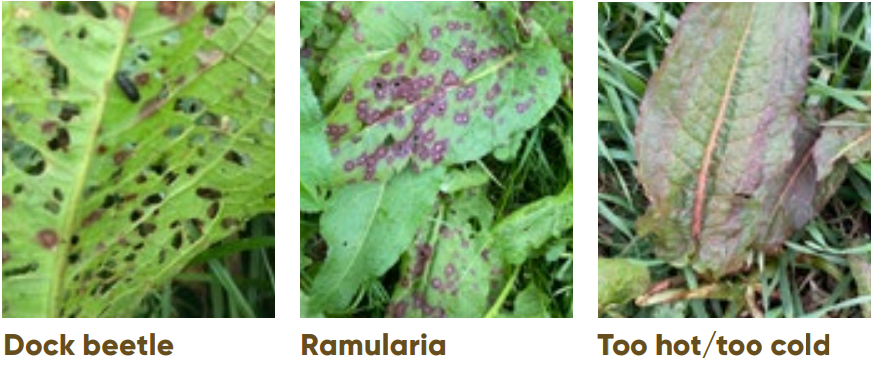
- Disease and pests – ramularia and dock beetles.
- Cold temperatures (below 8oC) and overly dry conditions: active growth is unlikely. Wait for weather to change and positive signs of active growth emerge.
- Spraying too soon after cutting - leaves are too small relative to the size of roots.
- Spraying docks that have started to flower or docks with many older leaves that lack active growth.
- Too many docks may shade some, preventing targeting of spray. Shading by an excessive amount of grass will also have an effect.
Topping and spraying dock re-growth once it reaches optimal size improves the levels of control if these factors are present.
This practice ensures all plants are at a similar size with leaves that are free from disease and dock beetle damage.
Protect water quality. Follow the 1-2-3 when using ProClova® XL
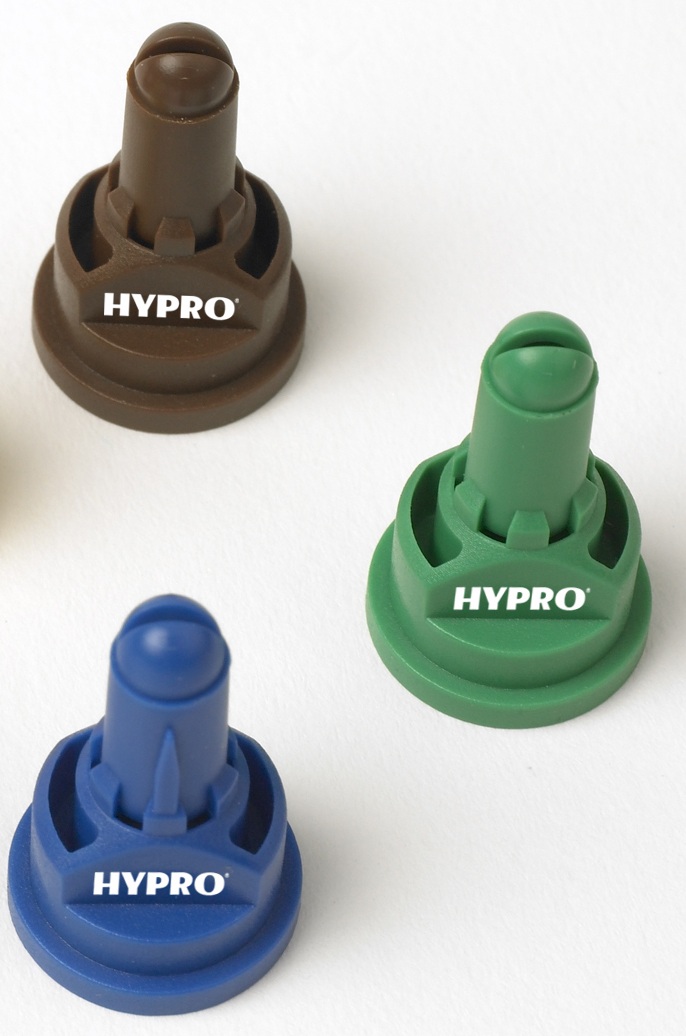
1. Use drift reducing nozzles
- Drift reducing nozzles must be used.
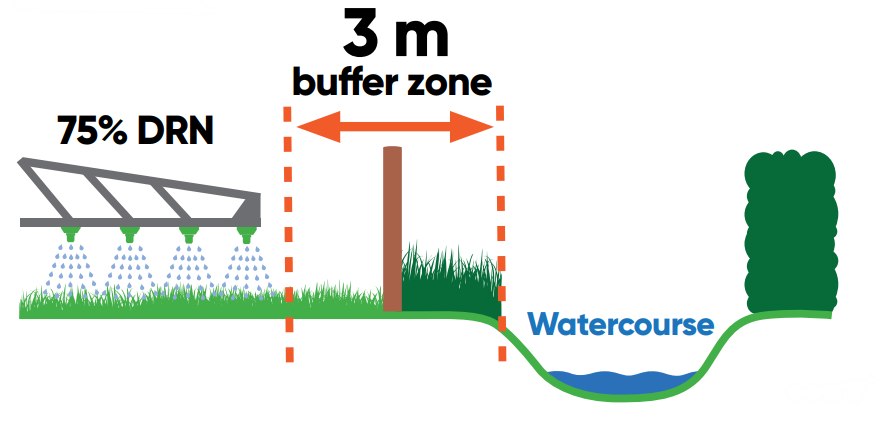
- Minimum 75% drift reducing.
- Check the DAFM STRIPE nozzle listings www.pcs.agriculture.gov.ie and search STRIPE (Department of Agriculture and Marine).
- Air inclusion nozzles are ideal - these create larger droplets with small bubbles of air. On impact, bubble bursts leaving small droplets across the leaf surface for better absorption. This creates less drift.
- Use minimum 200 litres water per hectare.
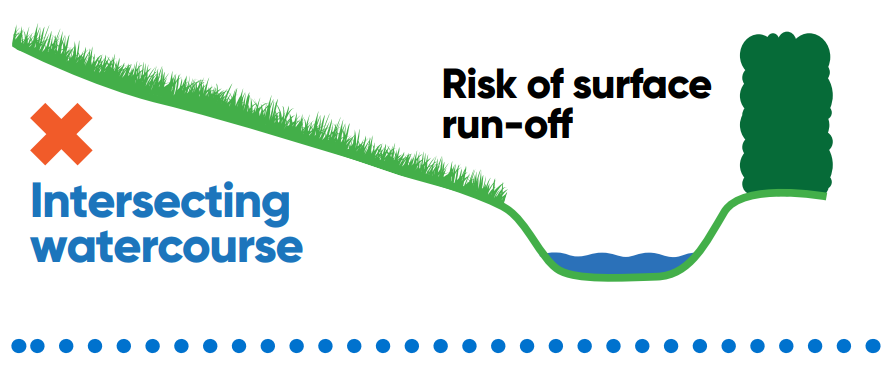
2. Avoid intersecting water courses
Do not apply to fields where an intersecting watercourse is present (this means where the land parcel slopes towards a watercourse and any surface water run-off would drain into that watercourse).
3. Maintain strict buffer zones
When spraying fields with watercourses respect an unsprayed buffer zone of 3 meters to these watercourses.
Temperature Check
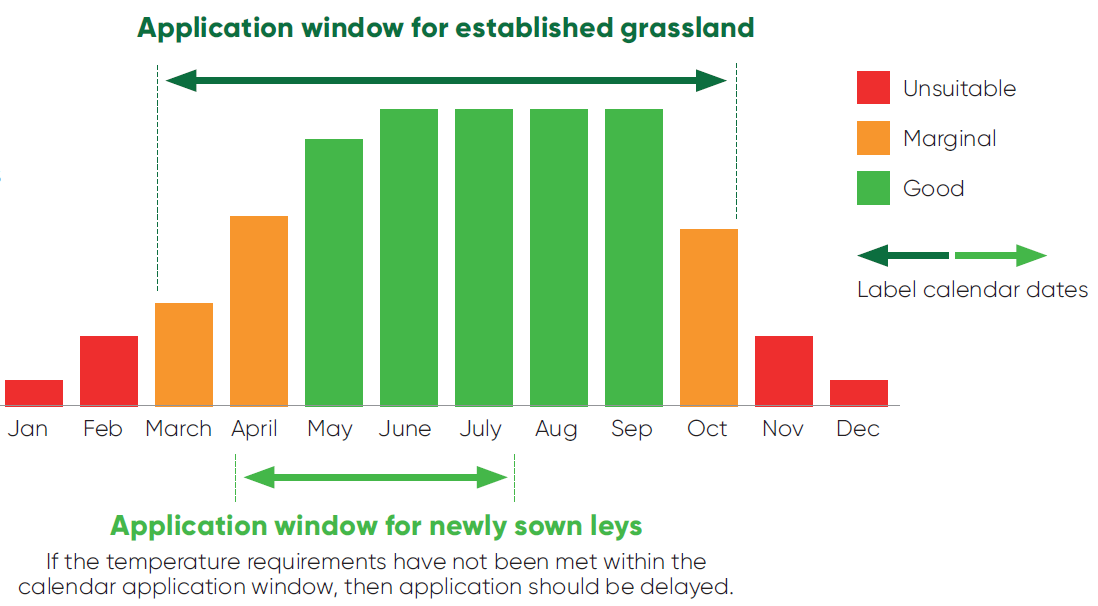
For optimum results, spray when overnight temperatures are forecast to be above 80C for a period from 3 days before to 3 days after proposed application date.
Use Temperature Check, which can be found in the Best Practice section of the Corteva Forage App.

Speed of kill
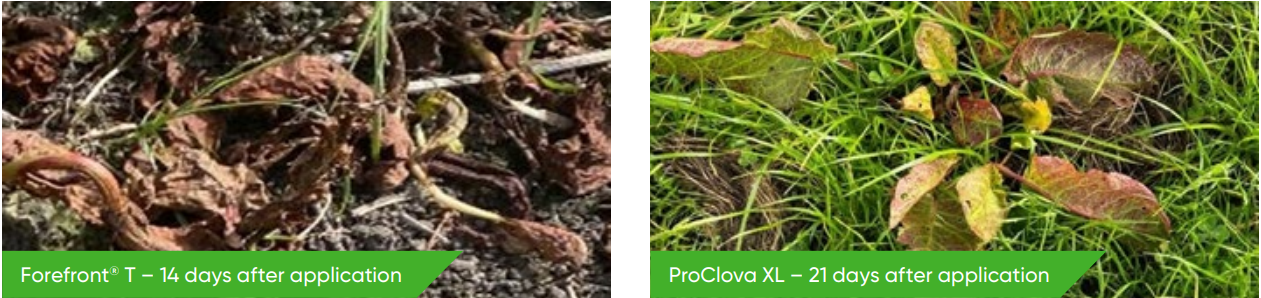
With respect to docks, this will be significantly slower with ProClova XL than other Corteva grassland products. For full results, be patient and hold on a while.
Docks emerging from root fragments
Docks emerging from the root fragments from a previous grass ley are harder to control than those emerging from seed.
Where large well-established populations of docks are present in the preceding ley, then consider an application of Doxstar® Pro.
This needs to be applied 6 weeks before sowing.

Hard water and use of water conditioners
Where it is your normal practice to add in a water conditioner then select an acidifying water conditioner when applying ProClova XL. In hard water areas, a water conditioner can soften water and prevent hard water cations “locking up” the herbicide.
Avoid ammonium sulphate types as these have additional adjuvant properties which could be detrimental to clover safety.
Dealing with larger weeds in newly sown leys
When seedling weeds that have gone beyond the optimal growth stage for treatment, or where particularly docks are re-establishing from root fragments rather than seed, then use ‘ground cover’ to assess the feasibility of making an application of ProClova XL at the higher rate of use available for established grassland. Established grassland is defined as having more than 90% ground cover or older than 1 year, whichever comes first.
The ground cover measure in the grassland weed control section of the Forage App can help assess this.