
Country Selector
OSR Insights with James Wombwell, Rectory Farm, Cambridgeshire
Featuring James Wombwell and Farmacy agronomist Rory Kissock
J D Wombwell & Son farm approximately 900 hectares of owned, rented and contract-farmed arable land in Cambridgeshire, alongside livestock grazing enterprises based at Rectory Farm, Ickleton.
Over the past season, we visited James Wombwell and his agronomist, Rory Kissock of Farmacy, to discuss their approach to growing oilseed rape, the challenges facing the crop, and the practical steps they are taking to maximise establishment, resilience and profitability.
Through a series of on-farm visits, we saw how Pioneer® oilseed rape varieties and Corteva herbicide programmes are performing in a commercial farming environment, while gaining valuable insights into the realities of growing OSR today. Just as importantly, these discussions helped us better understand the challenges and opportunities facing growers, and how we can continue to support successful OSR production in the years ahead.
This year marks a major milestone for the Wombwell family, who are celebrating their 100th harvest at Rectory Farm. The occasion coincides with Pioneer also celebrating its centenary year, making it a fitting opportunity to reflect on the role of innovation in supporting the future of UK oilseed rape production.
We would like to thank James and Rory for their time, openness and willingness to share their experiences and insights as contributors to this article.
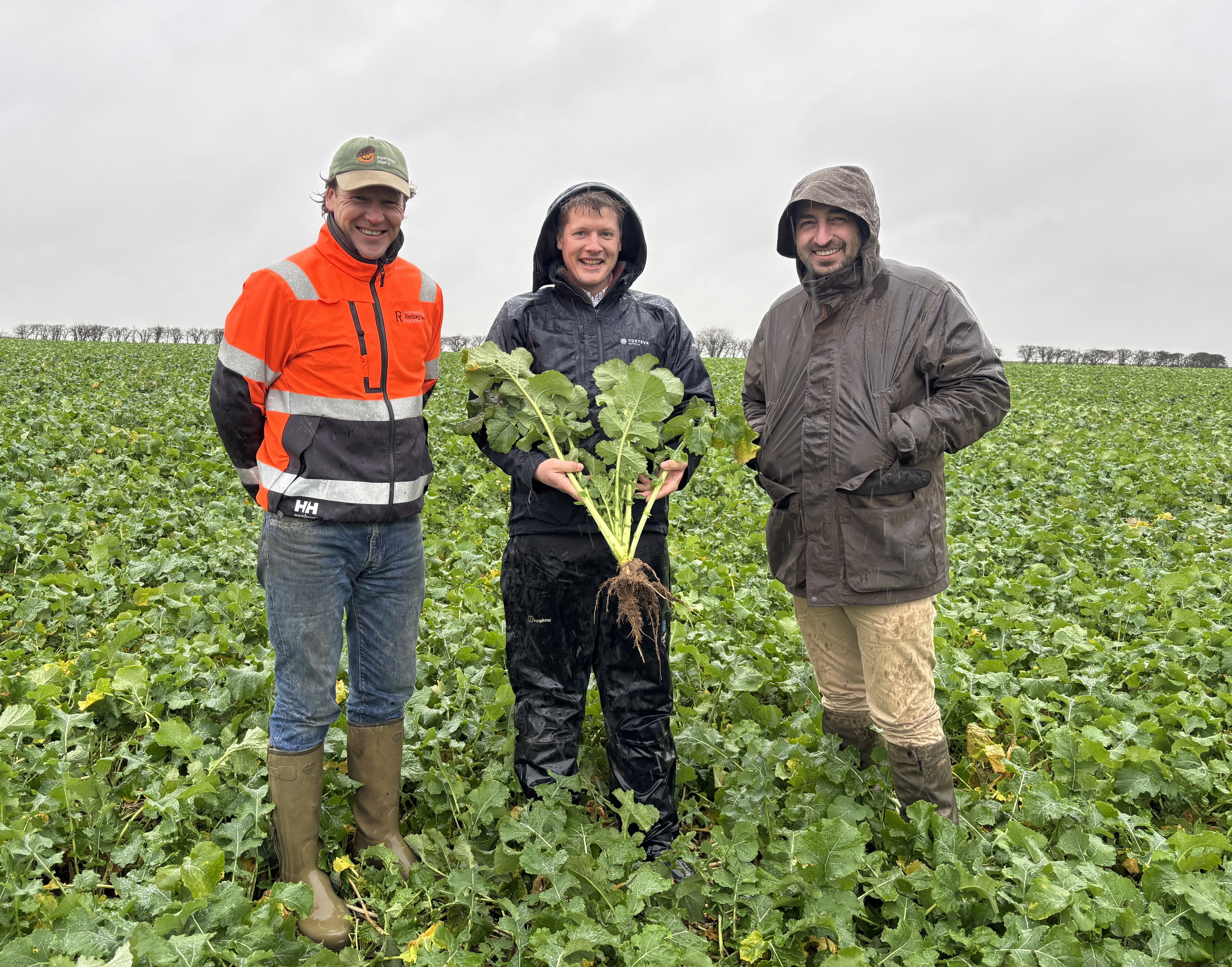
A field of Pioneer PT303 with LaDiva applied: James Wombwell (Rectory Farm), Tom Rouse (Corteva Area Manager), Rory Kissock, (Farmacy agronomist), December 2026
Growing OSR Today
How have you found growing OSR over the last few years?
Finding a consistent and reliable variety such as Pioneer® PT303 and, more recently, PT312 has made things easier. Cabbage stem flea beetle (CSFB) isn't the only major concern for crop success; varying weather patterns also make establishment difficult.
Has your OSR area changed in recent years?
The area reduced, as it did for many growers, when CSFB pressure increased. Since finding PT303 and utilising digestate, the area has grown again to around 100ha annually.
What other crops do you grow in the rotation?
Wheat, oats, barley, potatoes, sugar beet and grass.
Do you see any future headwinds for OSR?
Not at present. However, the success of many OSR crops is still reliant on the weather at drilling. More importantly, it's the rain that follows which keeps the very small cotyledons supplied with sufficient moisture. Having a resilient variety helps with this.
What impact has CSFB had on your OSR establishment, and what countermeasures have you adopted?
Previously, when we had neonicotinoid-treated seed, the crop was established using a seeder unit on a subsoiler. Now, fields are subsoiled, then secondary cultivated if required, before being drilled with a Horsch Sprinter and rolled down tightly afterwards.
Do you still see OSR as a viable break crop?
Yes. If you can achieve a rolling five-year farm average of 4.5-5.0t/ha, the crop can deliver good net margins. The oil bonus received, which PT303 and PT312 both regularly achieve, is also helpful.
Variety Choice and Establishment
What traits do you value most in Pioneer OSR varieties?
Good autumn and early spring vigour, together with strong resilience to stress from weather and CSFB damage. It's amazing what they can grow back from.
Do you use Lumiposa® Seed Applied Technology? How does SFI fit into your farming business, and has it affected your OSR area?
Yes, Lumiposa is on the seed when purchased. We have SFI options on the farm, but only on very unproductive areas. A good gross margin from OSR compares favourably with even the best SFI options. SFI will not impact our OSR area in the future. We should be growing food, not flowers.
Weed Control Strategy
What is the main weed spectrum on your farm?
Poppies, cleavers, chickweed, charlock, hedge mustard, speedwell, thistles, blackgrass and ryegrass.
What makes you choose Corteva OSR herbicides?
The research and trials undertaken give you a good understanding of what does and doesn't work with the products available, paired with honest advice and knowledge. The introduction of LaDiva has made things much easier. It's a very good product which provides flexibility around propyzamide timing, something that is particularly helpful in the mild winters we have experienced recently.
Belkar is also a very good product and still has a place in the market where aminopyralid is not required. Astrokerb and Kerb Flo 500 remain the mainstay of many all-round herbicide programmes. It also allows you to follow up in the spring if required, should anything escape the Astrokerb application.
The range of herbicides available from Corteva provides flexibility in both OSR establishment and weed control strategies.
September 2026 update:
Looking back on the 2026 season, how would you assess the performance of your OSR crop, and were there any key lessons learned?
Given the season, the OSR performed well. The late frosts in April and early May certainly impacted the flowering period, as we had more blind pods than normal. The gross margin on OSR, with the exceptional oil content of the Pioneer varieties, still netted the highest return of our combinable crops.
Have you established your 2027 OSR crop yet, and what gives you confidence going into the new season?
Yes, all is in, and the Pioneer varieties' quick-out-of-the-blocks vigour has given them the best start.
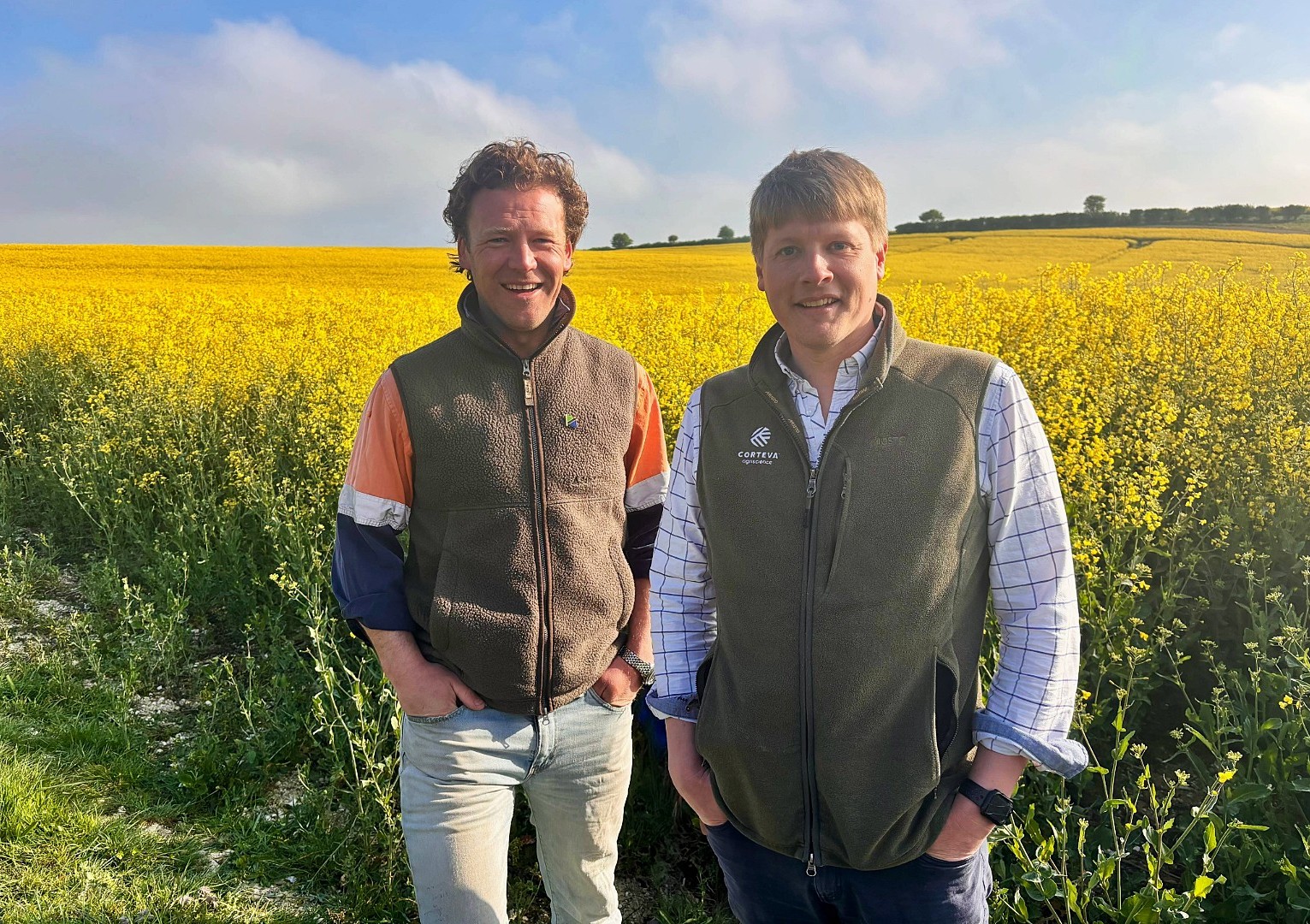
James Wombwell (Rectory Farm) and Tom Rouse (Corteva Area Manager, April 2026
Further reading: As Rectory Farm celebrates its 100th harvest, James Wombwell reflects on a century of change, resilience and progress. Featured in the latest edition of Rural Scene, the article explores how the business has evolved through changing technologies, markets and generations, while looking ahead to the opportunities and challenges facing the next century of farming. Read the full story here.