
Country Selector
Answers to help advance cereal farm productivity
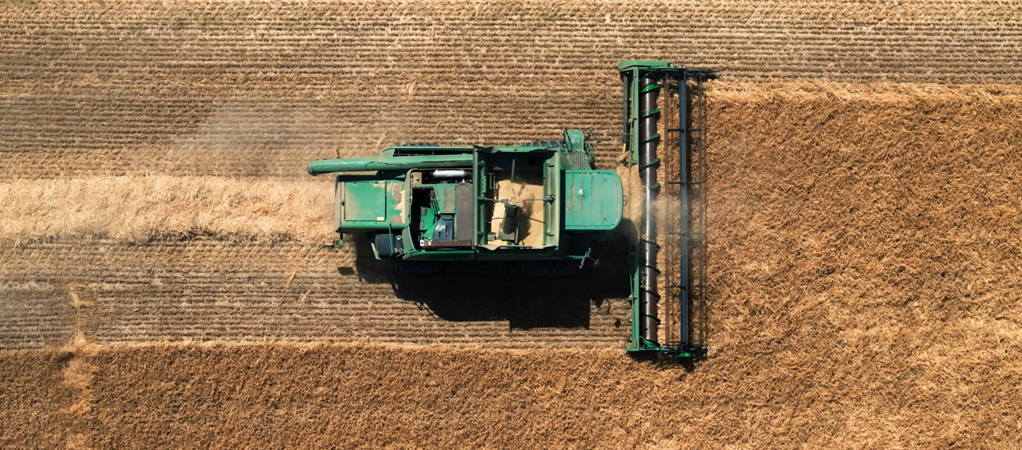
It has perhaps never been more challenging to make a living as a cereal farmer in Europe. While the EU continues to lead the world in wheat production, yields have been virtually stagnant over the past decade and input costs are rising.1,2,3
Many farmers feel themselves hitting a ceiling for yield improvement. Europe’s per-hectare wheat productivity continues to be among the world’s best — 5.4 vs. 3.6 metric tons/ha globally3 — but issues such as resistant weeds, diseases and extreme weather are constantly chipping away at yield potential. Growers need innovative solutions that help them address these concerns today while setting them up for a future where yield can grow alongside input efficiency.
“Growers are under tremendous pressure,” notes Tony Trullinger, Crop Protection Pipeline Development Leader at Corteva Agriscience. “Everything we can do to simplify, streamline and think about application utility will make it better for the grower.”
“Farmers in Europe — and around the world — need effective solutions. They need reliability and consistency in the products they use,” says Mauricio Morell, Global Pipeline Development Leader, Herbicides, Corteva Agriscience. “We look at what farmers are missing and what challenges they face. Our products are designed with the goal of addressing their different situations.”
“Everything we can do to simplify, streamline and think about application utility will make it better for the grower.”
Tony Trullinger Crop Protection Pipeline Development Leader, Corteva Agriscience
Corteva is combining its global R&D resources with a strong regional footprint to support cereal farmers. Success requires patience and commitment. “Most new active ingredients are developed over 10 to 15 years from discovery to launch. There’s a lot of research and data that goes behind that,” says Mark Fairfax, Field Scientist, Corteva Agriscience.
Data comes from a series of regional trials testing products in the same conditions in which they will eventually be used. Through this process, Corteva has developed a set of solutions designed for cereal farmers that includes fungicides, herbicides, insecticides, seed applied technology and biologicals. As Fairfax explains, “All of this together helps a farmer grow a high-quality, high-yielding crop — and that helps grow his business.”
Controlling difficult weeds
Corteva Agriscience has provided herbicide solutions for Europe’s cereal farmers for decades and is the name behind many familiar brands including Pixxaro™ and Starane™ herbicides.
That track record of innovation is continuing with researchers like Cécile Richet, Principal Biologist, Corteva Agriscience. Richet used to be a field scientist, working with farmers on product trials. “That gave me a lot of insights into what are the farmers’ issues? What is difficult for them? What is working well?”
She still spends plenty of time in the field and sees serving farmers as the primary goal of her work. “Most of the time, the shoes I’m wearing are boots,” she says.
“We’re looking at efficacy on the targeted weeds. Are we delivering a highly efficient product?” Richet says. “We also have to ensure crop safety. And we’re even looking at whether there are any effects on processing of the wheat after harvest.”
The active ingredient Arylex™ active is an example of a newer herbicide developed to help take on farmer issues. It was designed to be versatile and easy to use to expand farmer options.
Morell explains, “In herbicides, we have a strong pipeline and are working to bring new solutions, including differentiated or new modes of action, into the market in the short- to mid-term. The goal is to help growers continue maintaining productive and profitable operations.”
With stagnant yields and rising input costs, innovations in crop protection will be vital to a profitable future of cereal farming in Europe.
Preventing and curing fungal diseases
Fungal diseases are especially challenging because they can develop resistance quickly if fungicide programs are not carefully managed. New modes of action used under judicious application schedules are a must. A few years ago, Inatreq™ active was introduced against Septoria in wheat. Products containing Adavelt™ active are also expected to gain approval for use in European cereals in the near future. Adavelt products expand on the capabilities of Inatreq, acting at the same novel target site but on a broader range of pathogens and crops. It helps farmers prevent fungal diseases and offers some curative action in early stages of infection.
Andy Leader, Global Fungicide Leader for Corteva Agriscience, understands the disease challenges facing cereal farmers. “My role is to develop new fungicides for farmers to use in the future, and also to maintain the tools available today,” he says.
Trullinger adds, “Inatreq is an amazing product for Septoria, which is one of the most important pathogens European cereal growers face. When Adavelt is available, it’s going to give farmers an alternative in their fungicide program to grow high-value wheat and barley.”
Giving seed a strong start
Protecting seed at planting is vital to ensuring yields and harvest and protecting farmers’ investment in what is an increasingly costly input. “When the farmer plants that seed, they need to get at least 30 days out of the seed treatment to really give that plant a good start,” says Trullinger. “Seed treatments are critical for getting good germination and really protecting the plant until it gets out of the ground.”
Cereal seed treatments such as Ympact® growth nutrition seed treatment help optimise metabolic processes in the seed that contribute to more uniform stand establishment and plant vigor. Healthier young plants are better able to withstand early season threats and grow to reach more of their yield potential, helping farmers get more out of their seed investment and avoid replants.
Improving plant resilience
Recent heat waves in Europe have affected cereal production, interfering with grain fill and costing millions of metric tons of yield.4 Many farmers are making their crops more resilient by using biological solutions alongside conventional crop protection. Crop protection products prevent and treat pests, weeds and diseases, while Corteva Biologicals solutions can help plants perform natural processes more effectively, leading to a variety of plant health benefits.
Veerle Van Damme, Corteva Project Leader for Cereal and Oilseed Rape Herbicides, has seen how a combination of biological solutions can work together. For example, stress mitigation products like Bio-Forge® help plants maintain balance in critical metabolic processes during times of stress. “Products like these are helping the plant to be more resilient,” Van Damme says. “If you then add a biostimulant, that not only helps make plants more tolerant to stress, but also helps them recover more easily from that stress.”
Solutions like these help crops reach more of their genetic potential so farmers can keep boosting yield per hectare. “Some of our biological solutions can help the plant stay green with longer photosynthetic activity,” Van Damme says. “As a result, farmers can have bigger yield.”
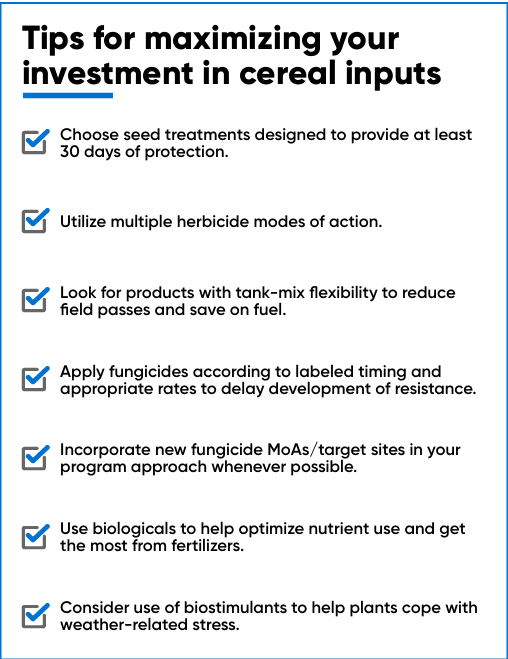
Integrated solutions available to cereal farmers today and new options in the pipeline will be critical to helping farmers break the yield ceiling and continue the strong tradition of European cereal farming.
“Farmers and everyone who produces food are foundational,” Morell observes. “If there are no farmers, there is no food. That is why we need to help farmers continue producing and being out in the field, helping humanity continue to grow.”
1 U.S. Department of Agriculture, Foreign Agricultural Service, “Wheat Production Data, Top Producing Countries,” accessed July 13, 2026, https://www.fas.usda.gov/data/ production/0410000.
2 U.S. Department of Agriculture, Foreign Agricultural Service, “European Union Annual Area Harvested 2016 - 2025,” accessed July 13, 2026, https://www.fas.usda.gov/data/production/e4.
3 COPA COGECA, “EU Cereal Crisis: The scissor effect crushing EU farmers,” posted April 9, 2026, YouTube, 4 min., 20 sec., https://www.youtube.com/watch?v=ReagmM1ScZQ.
4 Susan Reidy, “Heat Wave Drops Grain Production Estimates in EU, UK,” World Grain, July 10, 2026, https://www.world-grain.com/articles/22968-heat-wave-drops-grain-production-estimatesin-eu-uk.
Arylex™ active and Inatreq™ active are registered active ingredients. Registration is being sought for Adavelt™ active. This is not an offer for sale.
Bio-Forge®, Bofix™, Eledura®, Mustang™, Pixxaro™, Starane™, Ympact® and Zoral™ are not registered for sale or use in all countries. Contact your local regulatory agency to determine if a product is registered for sale or use in your area. Always read and follow label directions.
Many factors contribute to crop performance and return on investment. Corteva Biologicals products are intended to complement sound agronomic practices. Results may vary.