
Country Selector
Please enter a valid location
Bringing the Prairie Back to Life

Russell Blew of Blew Partnership on the Nichols Ranch in south-central Kansas
Growing up on a diversified farm and ranch that included crop production and running cow-calf pairs, Russell Blew always enjoyed the cattle side of the operation the most. But early on in his career, pasture management wasn’t as big a focus.
“I didn’t discover range management to be necessarily a passion in my life until about 15 years ago,” Blew said. “The opportunity arose, and I’m so happy to have the chance to do that.”
Today, Blew operates Blew Partnership with his family across multiple counties in south-central Kansas, where they specialize in raising Red Angus cattle. In the last 10 years, Blew Partnership has put more emphasis on cattle and less on crop production. Farming acres have now transitioned to cover crops and to crops that can also be grazed, such as winter wheat.
“We don’t own a combine anymore,” Blew said. “The main purpose of any crop acres that we have is to graze cattle.”
A key part of the business Blew manages is Nichols Ranch, a predominantly native prairie grass property leased in Barber County. The ranch is more than 16,000 acres of red clay and sandy soil in the Gypsum Hills, home to the operation’s cow-calf herd and replacement heifers. Since starting to manage the ranch in 2012, Blew has worked to improve pasture conditions.
“Most of the ranch, if not all the ranch, was in some form of disrepair as far as the plant community,” Blew said. “It was certainly in poor condition from years of overgrazing and poor management.”
Immediately, Blew implemented strategic grazing practices to restore the forage biodiversity. These practices included rotational grazing, stocking rate management and prescribed burning.
“The land resource is our foundation,” Blew said. “Without a healthy and stable land resource, we can’t be in business. Healthy rangeland equals healthy cattle for us and a healthy business.”
Reclaiming the prairie
Nichols Ranch is in the mixed grass prairie region of Kansas, which includes both tall and short warm-season grasses. The predominant grass is little bluestem. Other key native grasses include sideoats grama grass, blue grama and buffalograss.
Despite the rich forage biodiversity, undesirable woody invasive species also require regular management to keep the mixed grass prairie thriving. Buckbrush and sumac are two woody invasives that cause the most issues, along with eastern red cedar, cottonwood and Chinaberry.
“Every property is different. Every ranch is different. Every pasture is different regarding reclamation,” Blew said. “A lot of these places are 20 to 30% canopy with woody invasives.”
Typically, reclamation of a new property starts with destocking pastures for two seasons and mechanically removing large trees. During this time, forage is stockpiled, and a prescribed burn occurs after two years. Herbicide treatment is held off until the fourth year so the bare soil from mechanical removal can recover. Grazing occurs for shorter durations starting in Year 3, and it takes four to five years for many pastures to be ready for full stocking.
Blew estimates it has been as long as 80 years since prescribed burning has been used on many of the pastures the ranch has acquired. This has led to an overgrowth of eastern red cedars in some areas, which requires mechanical removal and fire to keep at bay.
“We use prescribed fire extensively on the ranch to control woody invasives,” Blew said. “We’ll target woody invasive species and control them as best we can with prescribed fire.”
For the best control of the leafy woody invasive species, Blew looks to herbicide.
“To restore that pasture to a grassland, that’s where we pull herbicide out of the toolbox,” Blew said.
Herbicide protocol in action
This past grazing season, Blew saw some pressure from woody invasives in some reclaimed pasture. He contacted his custom aerial applicator to get their thoughts and was referred to Katie Koenig, a Range & Pasture Specialist with Corteva Agriscience.
“Historically, aerial spraying on Nichols Ranch is done a few sections at a time with the guidance of the Blew Partnership crew,” Koenig said. “This was an odd job because it was a newly acquired acreage and we knew there was a heavy infestation.”
Koenig came to the ranch to scout the pasture with Blew in the spring. Upon inspection, it was agreed that a wide variety of woody invasives and weeds needed to be dealt with as soon as possible.
Blew and Koenig selected Surmount® herbicide for its outstanding broad-spectrum control of broadleaf weeds and brush. Aerial spraying with Surmount occurred around Memorial Day and achieved good burndown of sumac and cottonwood trees along the pasture hillsides within a month.
“Leading up to the application, it was pretty dry, and we were going back and forth whether or not it was a good idea to make the application,” Koenig said. “The timing was ideal, but we were in a drought. Fortunately, we got perfect moisture right after application.”
The moisture also helped grass growth, and with the leaves burned down on the sumac, forage was growing beneath the canopy where it wouldn’t have otherwise. Blew was able to graze some cattle across the pasture in the fall, capitalizing on that forage growth.
“We will defer on any mechanical remediation of the brush for 12 months so that herbicide has a chance to settle in on those woody invasives,” Blew said. “But we will be looking toward doing a prescribed fire in the spring.”
The warm-season grasses have responded so well that Blew is optimistic that the pasture can be fully stocked for grazing a year postapplication, or, at the very least, two years.
“The long-term goal is to get these pastures to a point where we can just let the cattle do their job, and we’ll manage as needed with spot spraying,” Koenig said. “I’m really excited to see what it’s going to look like down the road.”
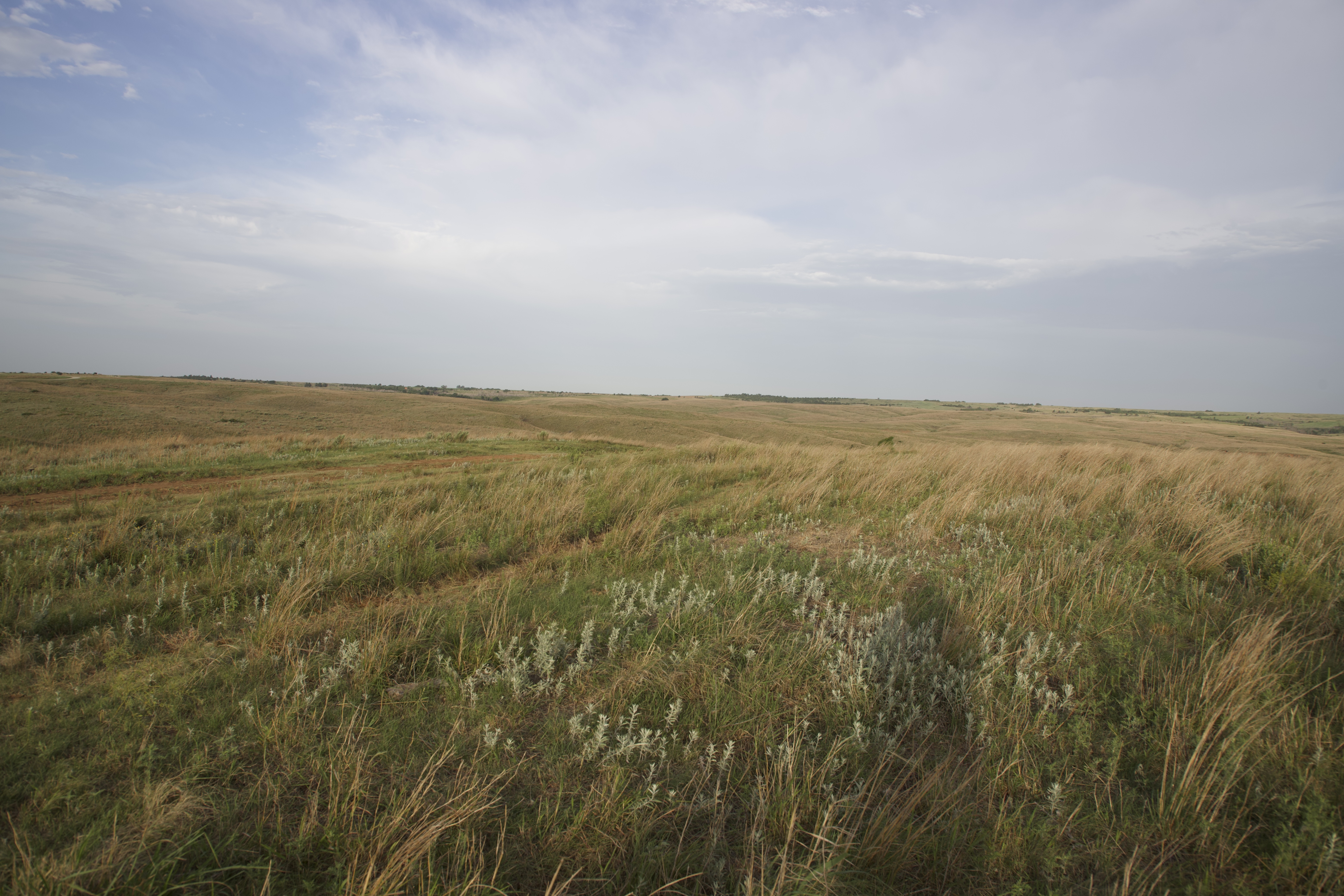
Land stewardship is vital for longevity on the Nichols Ranch near Medicine Lodge, Kansas.
ROI of stewardship
The multipronged approach to range management by Blew Partnership can take years to start showing results. Implementing pasture reclamation requires a lot of faith and patience in the process before a return on investment is realized.
“When we start talking about ROI, we really have to figure out the loss. What’s the loss out there if we are continually losing acres of rangeland every year to diminished productivity?” Blew said. “To do nothing, then obviously that loss is going to be extreme, and the range will diminish.”
Using the combined methods of mechanical removal, prescribed burning, targeted grazing and herbicide spraying has helped Blew improve grazing across the board.
“Delaying or deferring any management of woody invasives is putting you years behind,” Blew said.
The work by Blew Partnership hasn’t gone unnoticed. In 2019, Blew Partnership was recognized for the work they’ve put into range management and named a regional winner in the National Cattlemen’s Beef Association’s Environmental Stewardship Award Program (ESAP) for Region VII. Corteva has been the proud sponsor of the ESAP awards for more than 30 years.
“We were very humbled to receive that award,” Blew said. “Acknowledgment is always nice, but my true reward is being able to apply the conservation to the land.”
“I’m a steward, a conservationist and a caretaker. That’s what I am,” Blew added. “I’m grateful for the opportunity to witness it and be part of it.”
To keep reading producer stewardship stories, visit RangeAndPasture.com/Steward.
Surmount® is a Restricted Use Pesticide. Always read and follow label directions.