
Country Selector
Please enter a valid location
When to Watch for Southern Rust in Corn
Southern rust (also known as Polysora rust) is favored by high relative humidity and high temperatures and therefore tends to be confined to tropical and subtropical regions more than common rust. In seasons with higher than average temperatures, southern rust can spread into temperate regions where it can impact corn yield.
Timing
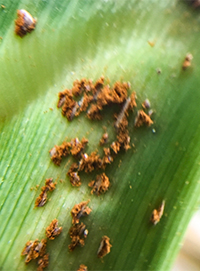 In North America, southern rust usually occurs later in the growing season and is more prevalent in the southern states. Southern rust does not occur as often from year to year as common rust, but it is usually more severe when it does occur.
Management tips
Scout corn for disease two weeks before tasseling up to two weeks after tasseling to detect disease early. Record scouting notes and field observations to serve as a historical record of location, severity and time of outbreaks.
Apply a fungicide to reduce southern rust pressure and protect yield potential. Forcivo™ fungicide, backed by a novel SDHI, helps protect your crop with up to 30 days of residual control, giving you a powerful disease management tool that bolsters plant health and yield potential.
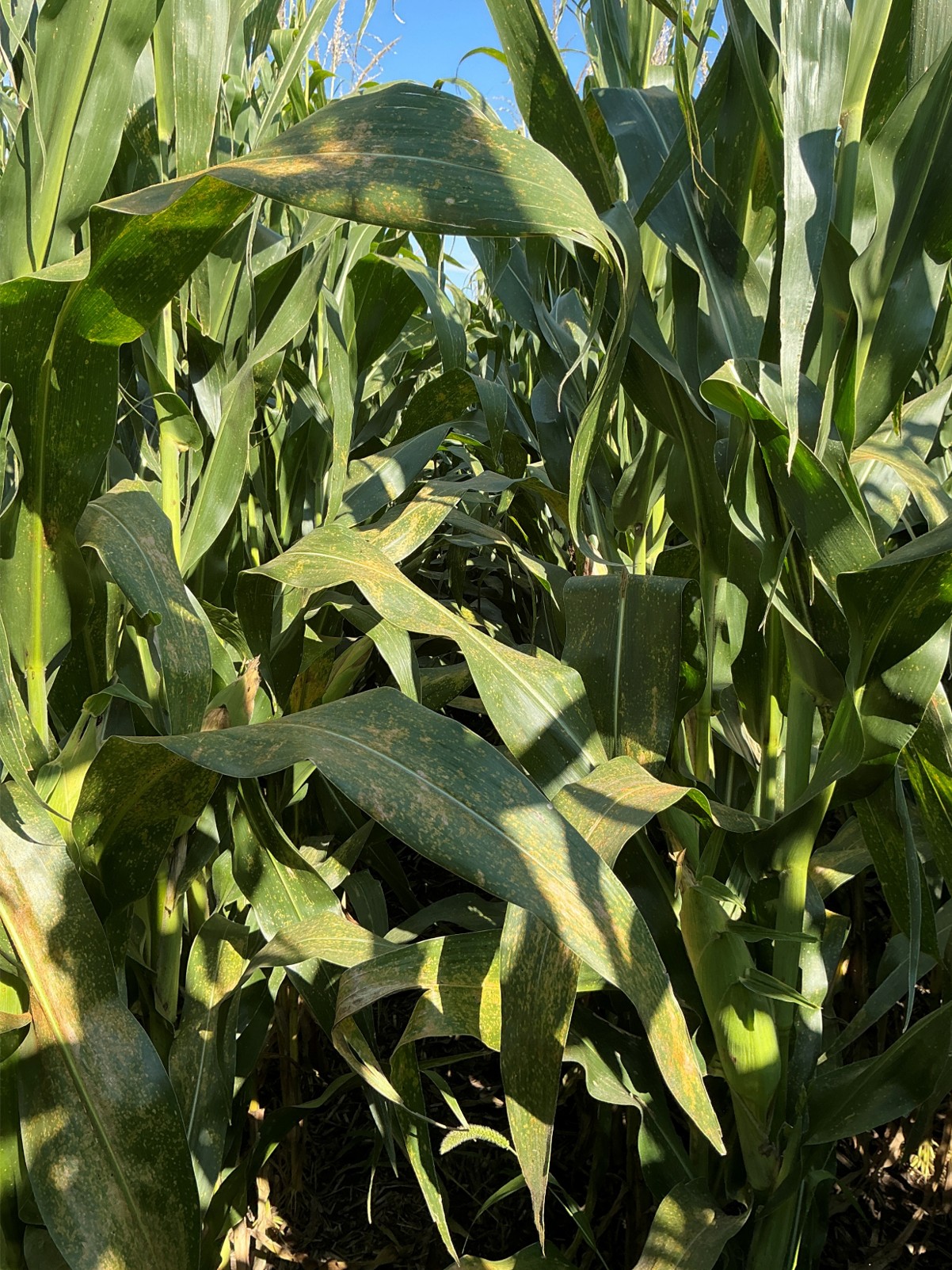
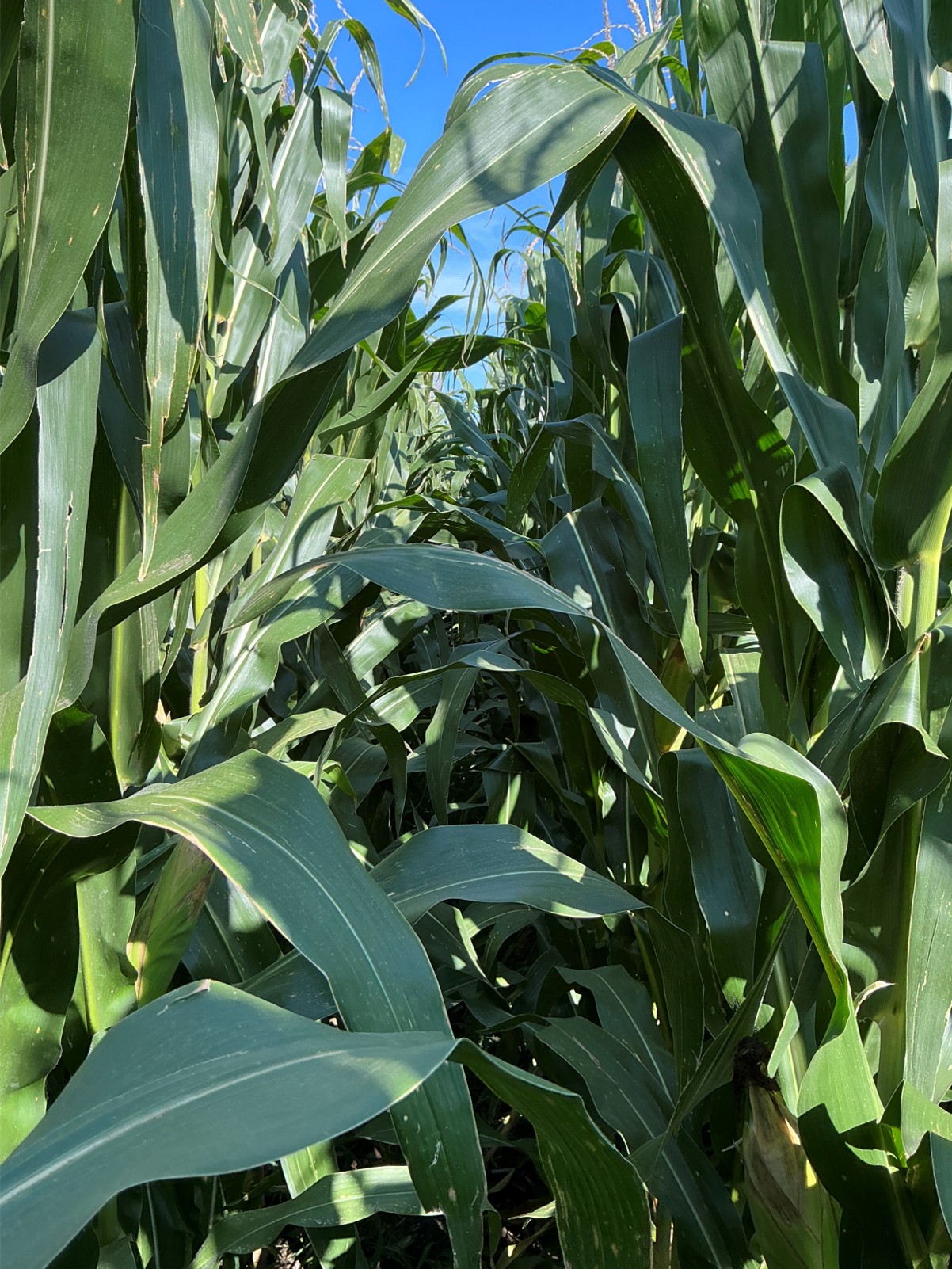
See the Forcivo difference observed in a 2025 Corteva Agriscience Nebraska field demonstration with pictures taken 30 days after treatment.
 |  |
Impact on yield
Both rust diseases of corn can cause substantial yield losses under severe disease pressure; however, southern rust generally poses a greater risk to corn yield than common rust. Yield loss due to rust depends on timing of infection, amount of leaf area damaged, and location of damaged leaves on the plant. If significant damage to upper leaves occurs early in the life of the hybrid, yield losses will be higher. If damage is confined to lower leaves of the corn plant or occurs in the later reproductive stages of development, little economic loss would be expected. Consequently, the latest-planted corn in an area is at higher risk for yield loss due to leaf diseases.
Common rust usually does not reach levels in the Corn Belt that would justify a fungicide application; however, severe infections can occur under conditions favorable for disease development. Such conditions were experienced in several Midwestern states in 2009, a growing season that was characterized by lower than normal temperatures throughout much of July and August (Lutt et al., 2016). Pioneer fungicide research trial locations in Illinois and Indiana experienced intense common rust pressure in 2009. At one research location in Indiana, the average yield response to fungicide treatment was over 22 bu/acre (Jeschke, 2017). Yield response to fungicide treatment varied greatly with common rust pressure at the research locations and hybrid genetic resistance to common rust.
Symptoms
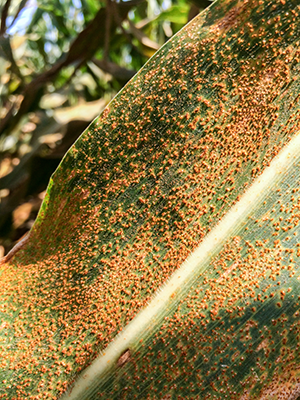
Southern rust looks very similar to common rust, but several characteristics distinguish the two. Southern rust pustules are usually confined to the upper leaf surface, while common rust is found on both upper and lower surfaces. Southern rust is more orange or reddish-orange in appearance, while common rust is red or cinnamon-brown. Southern rust pustules have a circular appearance, while those of common rust have an elongated, jagged appearance.
Conditions for development
Southern rust is favored by warm temperatures over 77°F and high relative humidity. Spores travel northward with weather systems. When conditions favorable for disease development persist for an extended period, severity can quickly reach epidemic levels.
Forcivo™ is not registered for sale or use in all states. Contact your state pesticide regulatory agency to determine if a product is registered for sale or use in your state. Always read and follow label directions.