
Country Selector
Please enter a valid location
Nuisance or Threat? Managing Japanese Beetle in Corn and Soybeans

The Japanese beetle, a member of the scarab family was accidentally carried into the U.S. on nursery plants brought over by Japan for the 1916 World's Fair. Today, it can be found in at least 28 states. Often a sporadic, field-edge pest, the Japanese beetle can nevertheless reduce yield in both corn and soybeans without effective scouting and control methods. What does it look like? When does it become an economic threat? How should farmers manage it? Let’s take a closer look.
Identification
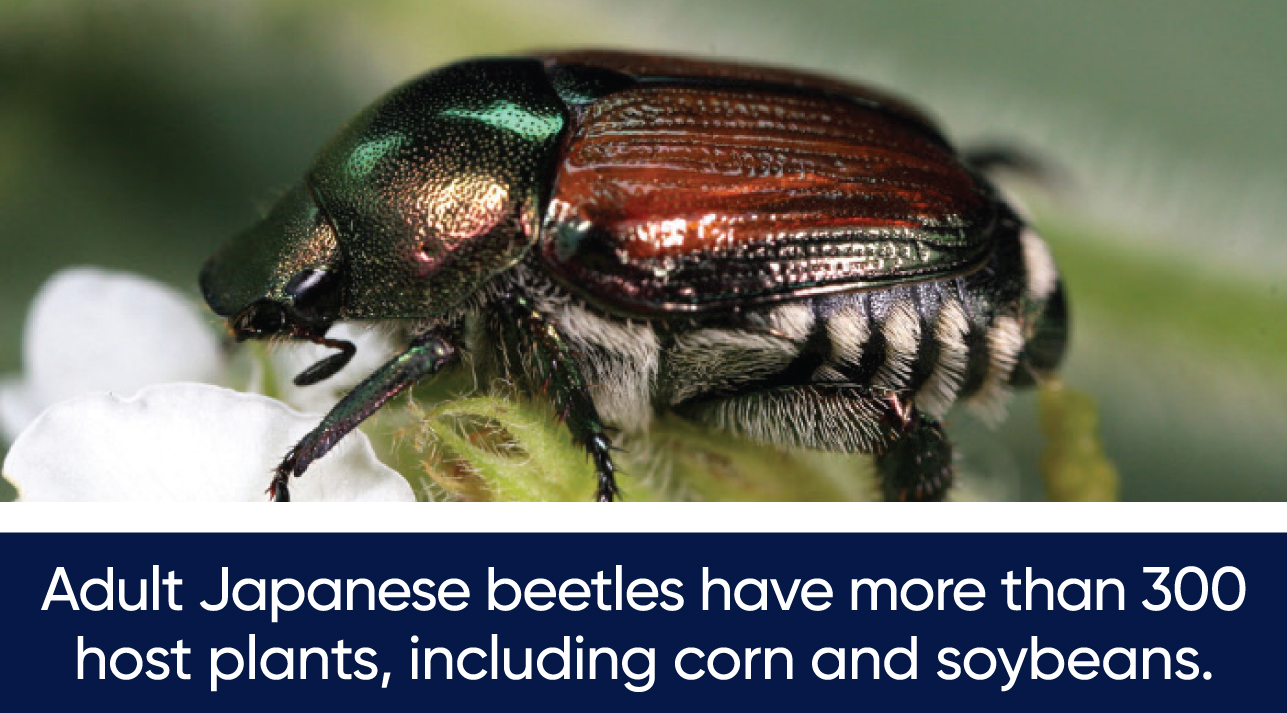
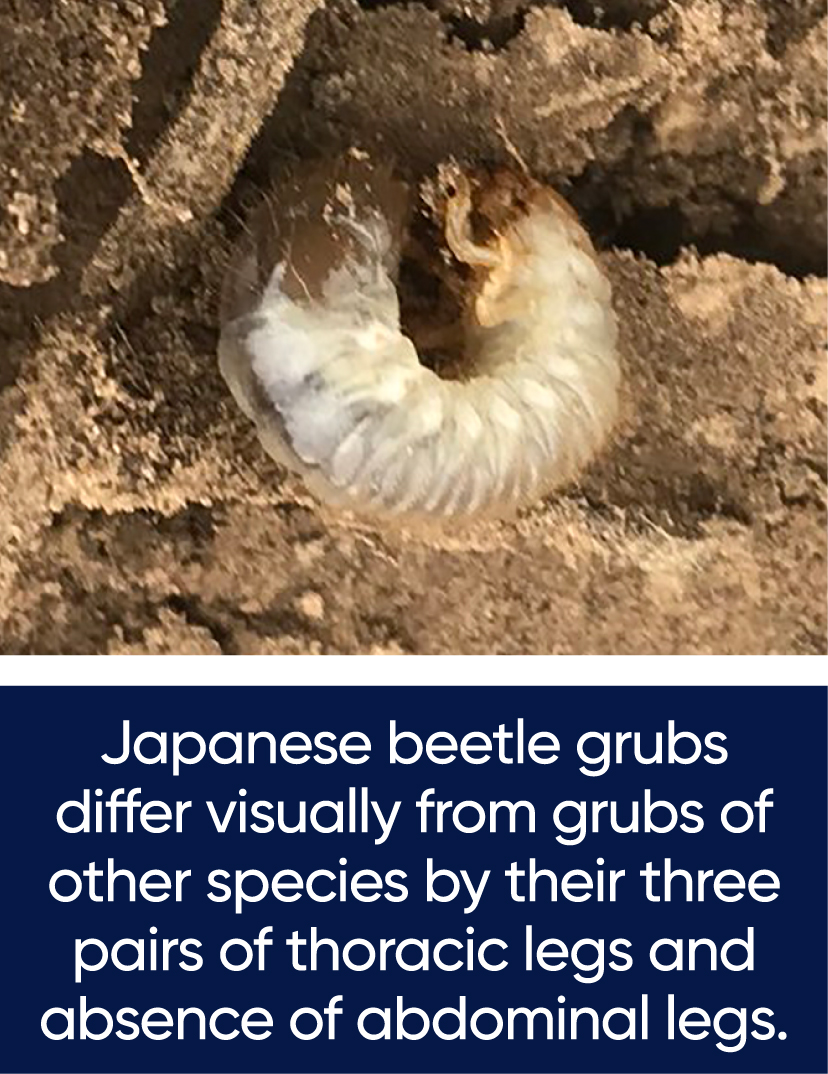
Adult Japanese beetles measure approximately 5/16-inch long. They’re fairly easy to identify by the metallic green body, clubbed antennae, bronze forewings and abdomen lined with six tufts of white hair on each side. Males exhibit large spikes on their forelegs while females have spoon-like paddles. Eggs of the Japanese beetle are 1 mm-2 mm across with a creamy white color and are generally laid singly in soil. Grubs (larvae) are C-shaped and off-white, with an orange-brown head and dark-colored abdomen. They can be distinguished from other beetle grubs by two rows of six or seven hairs arranged in a V. Japanese beetle grubs have three pairs of thoracic legs but no Adult Japanese beetles have more than 300 host plants, including corn and soybeans. abdominal legs. Pupae resemble adult beetles. Their creamtan bodies measure roughly 1/2-inch long and 1/4-inch wide and turn metallic green before they emerge.
Biology
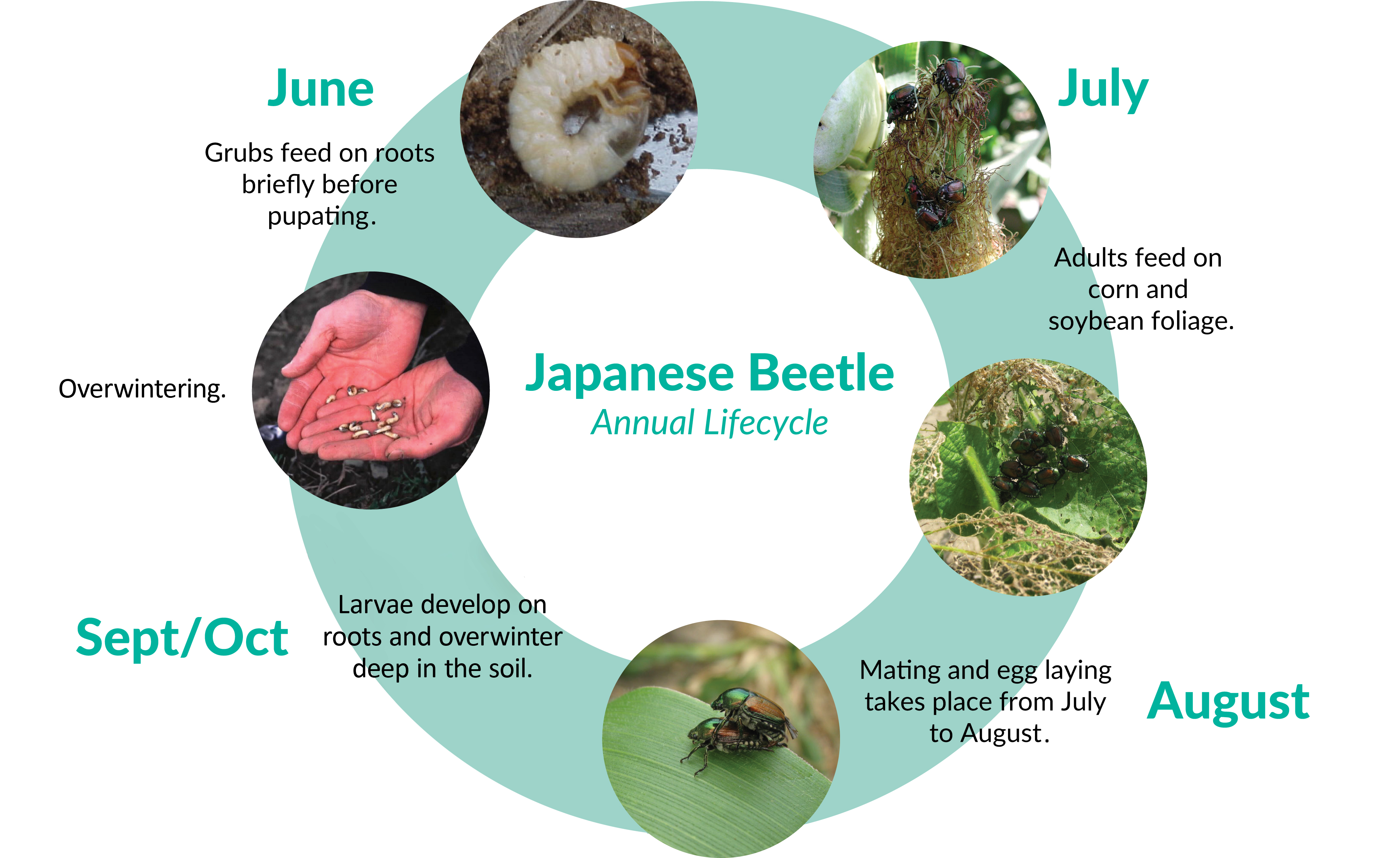
With more than 300 host plants consisting of everything from fruit trees to weeds, the Japanese beetle thrives partly due to its wide and varied diet. Thoroughly established east of the Mississippi River, it ranges widely across the U.S., including in most corn- and soybean-growing states. Its life cycle consists of one generation per year. Japanese beetle grubs overwinter in the soil, becoming active once temperatures rise above 50°F. Adult beetles emerge in late June to feed and then mate in July and August. Females lay eggs singly 2-4 inches deep in the soil. They hatch into small grubs after approximately two weeks. These grubs feed on roots until late fall when cooling temperatures cause the now nearly full-grown grubs to burrow six inches deep into the soil to wait out the winter.
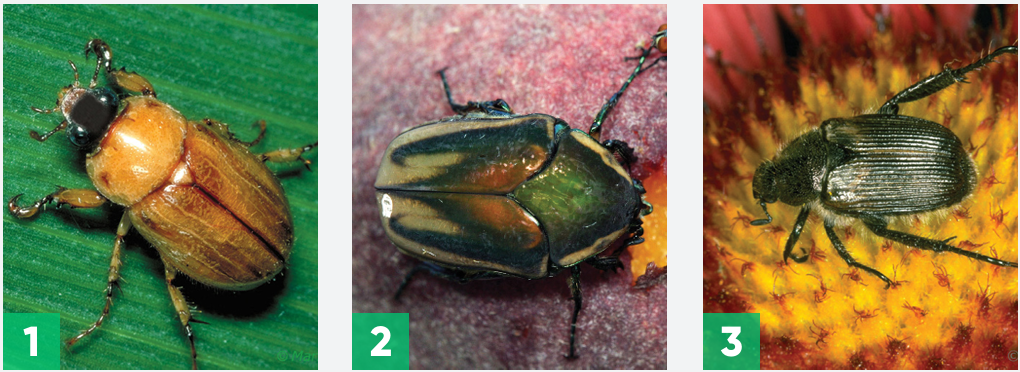
Beware of imitators! Watch out for these similar species which may be confused with the Japanese beetle.
- Masked chafer – Lighter and more golden in color than the Japanese beetle.
- Green June beetle – Approximately twice as large as the Japanese beetle and lacking tufts of white hair on the abdomen.
- False Japanese beetle/sand chafer – Has a dull metallic appearance rather than shiny and has no white abdominal hair.
Scouting
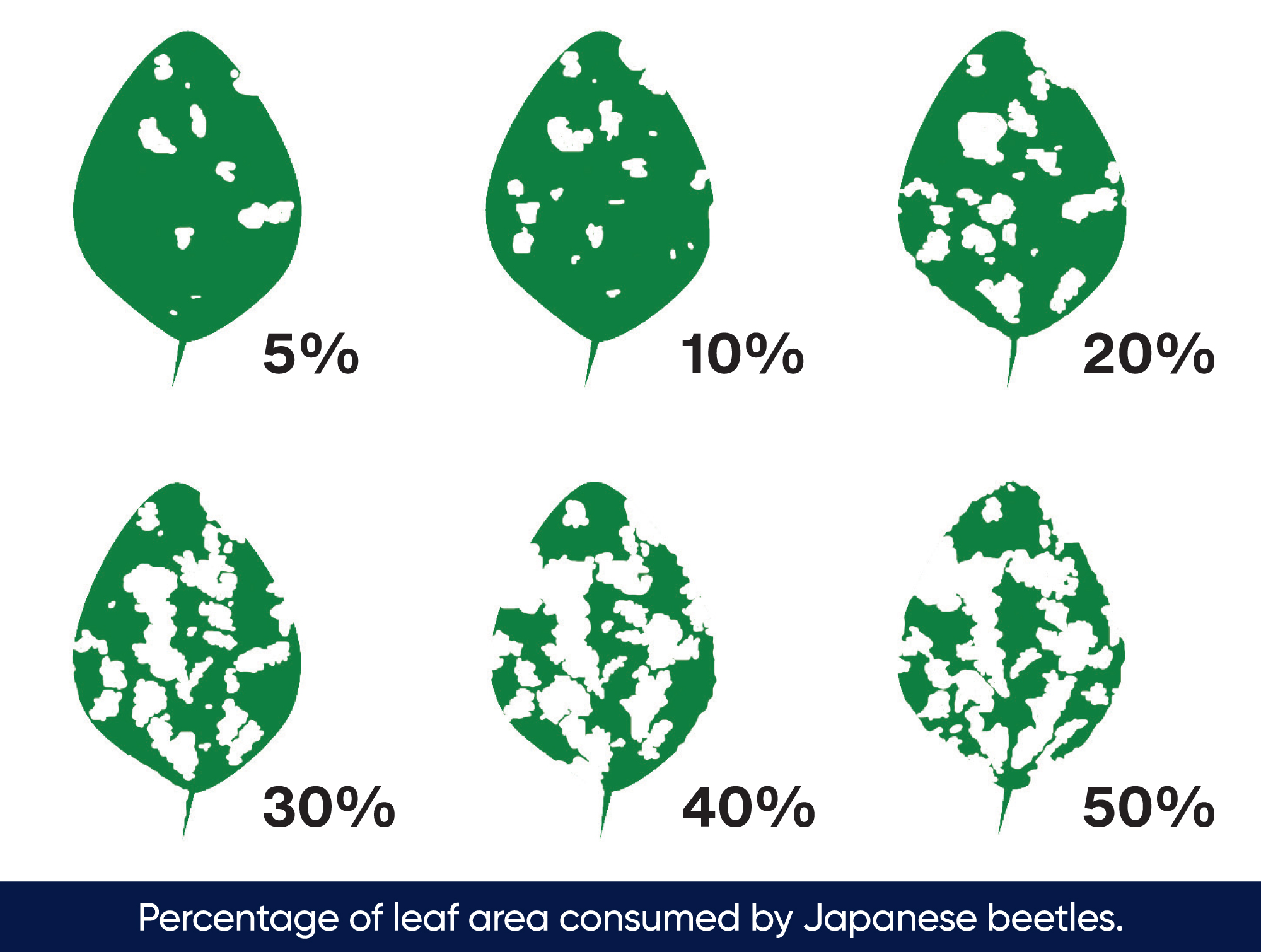
Japanese beetle infestation can appear severe, even when there is actually little economic effect. Thorough scouting to assess if infestation meets economic thresholds is critical, so farmers don't waste resources on unnecessary treatments. Corn scouting should begin in July and August, and soybean scouting in August.
Economic threshold for corn:
- Beetles are present and feeding.
- Silks are clipped to within 1/2-inch of the ear tip.
- Less than 50% of plants are pollinated.
Economic threshold for soybeans:
- Up to V7, the threshold is 40%-50% defoliation.
- During flowering, pod development and pod fill, the threshold is 15%-20% defoliation.
- From pod fill to harvest, the threshold is greater than 25% defoliation.
Management
Challenges:
- No significant natural enemies in the U.S.
- No transgenic or native gene resistance currently available in soybeans or corn
- Trapping is NOT recommended, as traps tend to attract an overabundance of beetles, worsening the problem
Cultural risks:
- Weeds: Upon emergence, adults seem to favor smartweed and evening primrose
- Habitat: Field edges and corridors near uncultivated land • Cover crops: Adults prefer to lay eggs in ryegrass and clover
- Soils: Females prefer moist soil and soils with high organic matter for egg laying
Chemical control:
Japanese beetles respond to chemical control methods. Ridgeback® insecticide is one such option. With two active ingredients, bifenthrin and the novel active ingredient Isoclast® active, Ridgeback is effective against not only Japanese beetles, but a host of other pests as well, including bean leaf beetles, soybean aphids and spider mites. Working via both contact and ingestion, Ridgeback stops feeding within hours of application. Be aware that, no matter the insecticide used against Japanese beetles, they are a very mobile pest that may reinfest fields even after an application.
While Japanese beetles are present in both corn and soybeans, their damage can often be managed successfully. Careful scouting and an understanding of economic thresholds enable farmers to make informed management decisions, avoid unnecessary treatments and maintain effective control of this pest, reducing the risk of severe damage.
™ ® Trademarks of Corteva Agriscience and its affiliated companies.
Ridgeback® is not registered for sale or use in all states. Contact your state pesticide regulatory agency to determine if a product is registered for sale or use in your state. Isoclast® is a registered active ingredient. Always read and follow label directions. © 2026 Corteva. 037787 LC (07/26)
