
Country Selector
Please enter a valid location
On the Frontlines: Battling Red Crown Rot in Soybeans

Red crown rot (RCR), a fungal disease of soybeans, has been a yield-reducing threat in the southern U.S. for decades. Recently, however, alarms have been sounding in the Midwest as it bears down on northern fields with both breadth and speed of movement. In 2018, RCR was confirmed in Illinois, later spreading to Indiana, Kentucky and Missouri. Illustrating the disease’s troubling expansion, three new states — Minnesota, Ohio and Wisconsin — confirmed their first cases just this past year. The methods of its spread in the Midwest aren’t completely understood, though it’s theorized that the exchange of used equipment containing contaminated soil has sped up the process. With possible yield losses ranging from 25% to 70% and no known rescue treatments, one thing is certain — RCR demands serious attention.1
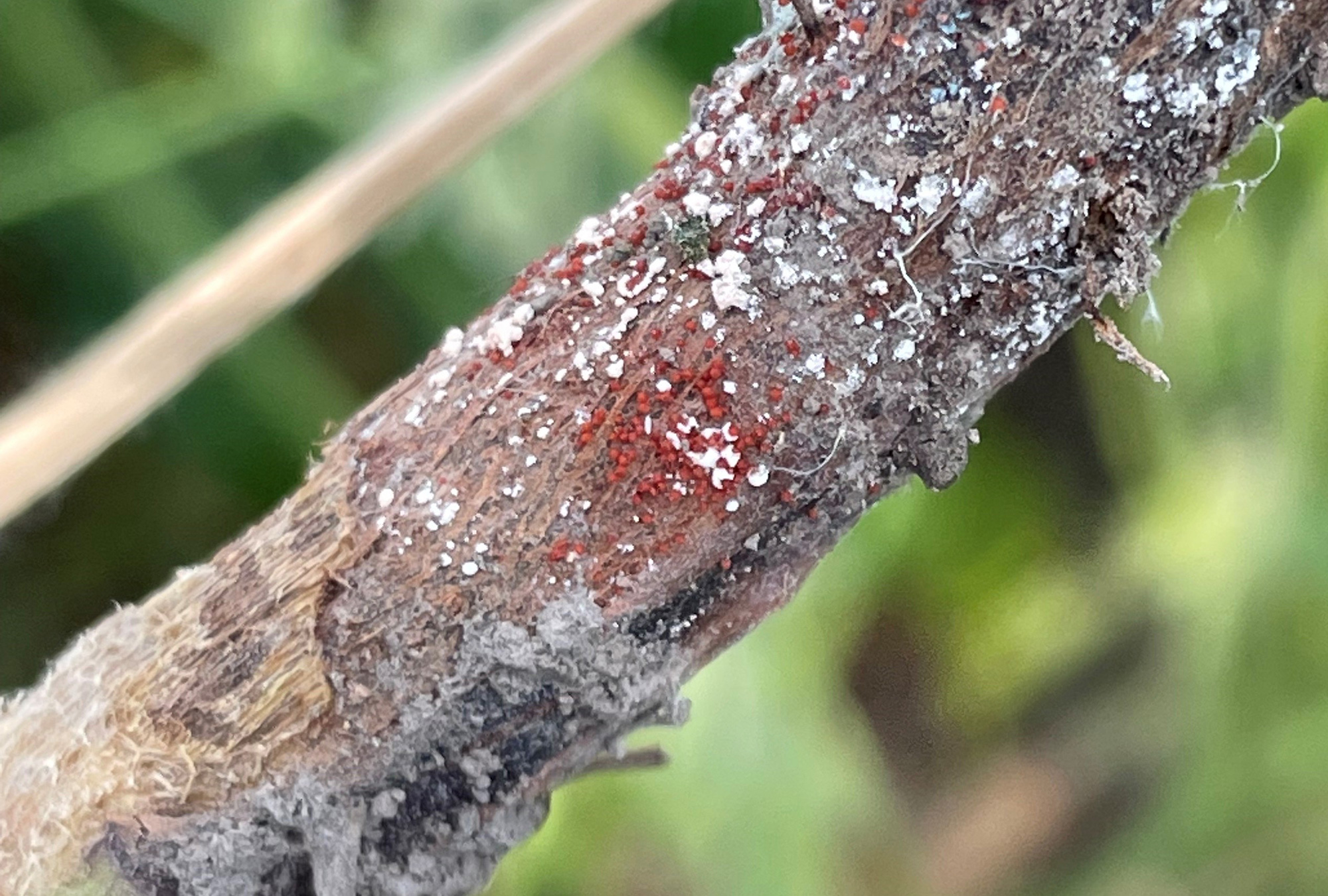
Red crown rot in soybeans is best identified by its perithecia — the characteristic tiny red balls — that form on the crown and stem of the plant near the soil line.
Spotting the threat: Symptoms and confirmation
Farmers can identify RCR by its signature tiny, red, ball-shaped fungal structures, called perithecia, that form on the plant crown and roots, giving off a scarlet appearance. Under wet conditions, these perithecia can reach above the soil line on the stem. White, thread-like f ilaments called hyphae may also grow on an infected plant, and the pith of the crown may look grayish in color. This stealthy, soilborne threat deteriorates the stem and roots, meaning RCR infection often goes undetected until after the R3 stage when plant leaves yellow and wilt. In severe cases, plants wilt and die prematurely while the leaves remain attached. However, root and stem rot can occur without affecting leaf appearance at all, making it tough to spot. RCR often shows up in the field on single plants or in small, infected patches spaced randomly throughout the field. Soybeans with severe root rot can be easily pulled up, and they may be infected by more than one pathogen.
Misidentification of RCR may hinder efforts to control it. Not only do its telltale leaf symptoms often “hide” until later in the plant’s life, but when they do show, they mimic the look of sudden death syndrome (SDS). In addition, other factors can cause reddish stem discoloration of soybeans. “Eyeballing it” from a distance won’t do the job. The plant’s crown and roots must be examined closely to confirm the presence of the fungus.
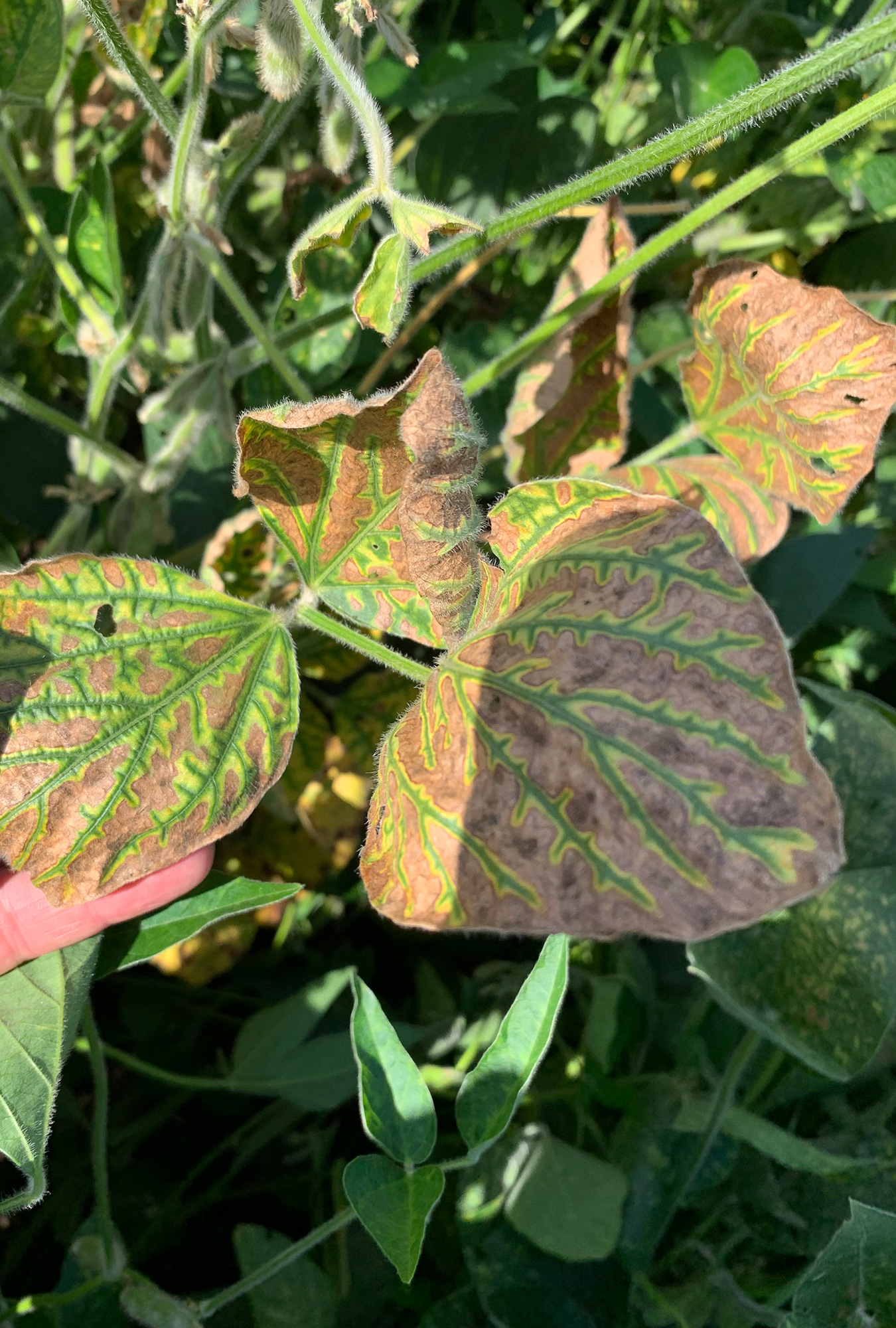
Resembling SDS, red crown rot causes interveinal chlorosis — a yellowing pattern of the leaves with the veins remaining green. Necrosis follows. Stem and crown inspection are needed to correctly identify the cause.
Tracking the danger: Infection and Spread
RCR favors warm, wet conditions, with the disease preferring soil temps between approximately 77°F and 86°F. Wet conditions following planting encourage its growth, particularly in low-lying and poorly drained areas. Severity of infection can increase with the presence of pathogenic nematodes which damage plant roots, providing the fungus with additional entry points. RCR overwinters in the soil as microsclerotia — capable of surviving several years in the absence of a host crop. Microsclerotia spread via plant debris and infected soil, often transported by wind, on farming equipment or on livestock. Secondary spreading can occur during the growing season via spores ejected from the fungus and distributed during rains by runoff and splashing.
Battling back: Management Strategies
RCR is a formidable foe, especially since rescue treatments don’t exist. Current management techniques focus on reducing the opportunities for RCR to take hold. Avoiding late-planted and double crop soybeans is one tactic, since warmer earlygrowth soil temps during these situations can increase the possibility for RCR infection. Rotating crops helps diminish the microsclerotia load in the soil, while appropriate soil drainage can decrease the possibility of infection.
Another method focuses on controlling pathogenic nematodes to help decrease the severity of RCR by using tools like Lumialza® nematicide seed treatment. A biological nematicide seed treatment, Lumialza protects against key crop-damaging nematodes for up to 80 days or longer. By creating a large, living bio-barrier of protection around an expanding area of root growth, Lumialza provides safe and effective protection to vulnerable seedlings through reduction of nematode injury and increased root biomass.
As red crown rot continues its expansion across the Midwest, proactive management remains your customers’ best defense. Integrating cultural practices like crop rotation and soil drainage with tools like Lumialza nematicide seed treatment can meaningfully lessen the disease’s impact. While there’s no cure-all for this disease, providing these strategies to your customers can help them protect stands and sustain their productivity.
1 Rhonda Brooks, “Red Crown Rot Rising: What Every Soybean Grower Needs to Know For 2026,” Farm Journal AgWeb, November 18, 2025, https://www.agweb.com/news/crops/soybeans/red-crown-rotrising-what-every-soybean-grower-needs-know-2026.
