
Country Selector
Please enter a valid location
Southern Rust in Corn: Are Farmers Ready?

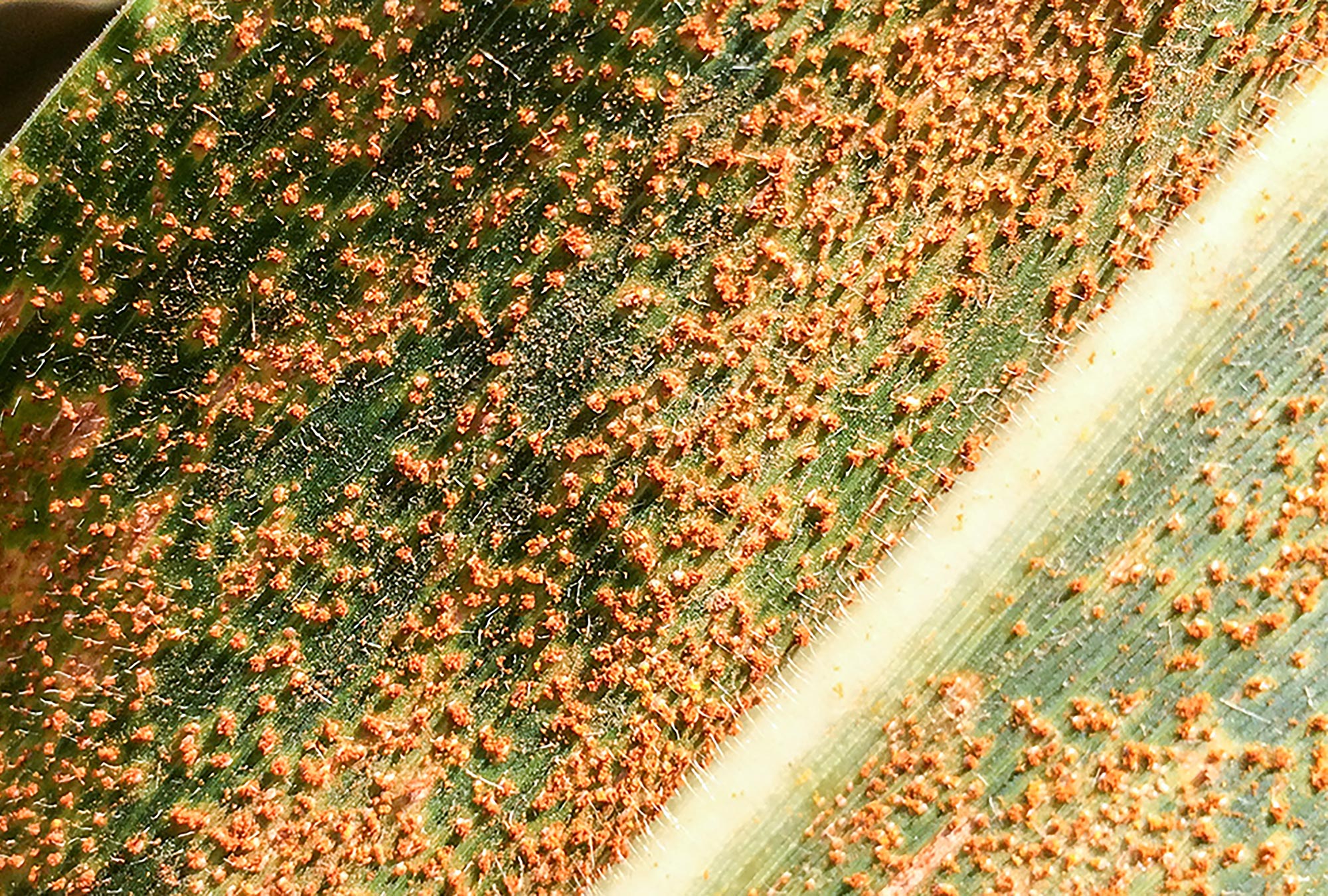
Southern rust is not new to the Corn Belt, but in 2025, it arrived earlier, farther north and more aggressively than most farmers had seen before. Record overnight lows, high dewpoints and strong southerly winds in June and July created near-perfect conditions for the disease to move north from the Gulf States and spread rapidly upon arrival.
Mark Jeschke, Agronomy Manager, and Carl Joern, Pioneer Field Agronomist, from Corteva Agriscience shared their takeaways on a recent “Farming the Details” podcast. Both work directly with Midwest farmers and witnessed the 2025 outbreak firsthand.
Why southern rust spreads so fast
Southern rust cannot overwinter in the Corn Belt. It must blow up from southern states every year, which means farmers in the Midwest have historically had limited exposure to it and limited experience managing it. When conditions are right, that unfamiliarity becomes a problem, fast.
The disease has a latent period of only six to 10 days, compared with two to three weeks for gray leaf spot. It is also polycyclic, meaning each infection cycle produces new spores that spread further through the canopy. In severe cases, it can cost around 30 bu/A to 40 bu/A by shutting down photosynthetic tissue and forcing the plant to draw carbohydrates from the stalk to complete grain fill.
How to tell it apart from common rust
Early identification matters because the window to act is short. Common rust produces pustules on both sides of the leaf. Southern rust typically stays on the upper surface. Joern said even he initially misidentified his first southern rust field in 2025, and notes that early in the season, the symptoms can look similar enough to fool an experienced agronomist.
He outlined the management practices he would prioritize for next season.
- Plant early — Earlier-planted corn is further along in its growth cycle when the disease typically arrives. Less time at risk means less exposure if conditions turn favorable for southern rust.
- Budget for fungicide — Not every fungicide controls southern rust equally. Farmers should confirm their product of choice specifically addresses this disease before relying on it. When the disease is on the move, you may pencil out that lower-cost generics that return one to two bushels will be enough. Knowing which products address southern rust is the first step in making that call.
- Know your hybrid ratings — Later-maturity hybrids generally carry southern rust resistance ratings. Many earlier-maturity hybrids do not, simply because the disease has not historically been a threat in northern environments. Jeschke said farmers should review the ratings for what they are planting and factor that into their fungicide decisions.
- Scout consistently — In 2025, many farmers were not scouting for disease when southern rust appeared. They were checking on pollination. Joern said the disease showed up and smacked them in the face when they were not looking for it.
Monitoring the progression of southern rust from the Gulf States northward by using university extension tracking tools gives farmers a head start on whether the threat is worth watching each year.
What is coming from the breeding pipeline
Corteva scientists are developing multi-disease resistant corn, using gene editing technology to stack multiple disease resistance genes into a single location in the corn genome. The initial version targets southern rust, northern corn leaf blight and gray leaf spot. The concept is modular, meaning resistance genes can be added or updated as new threats emerge or as existing resistance genes lose effectiveness over time.
Jeschke said test plot results have been dramatic, with a significant increase in resistance scores for southern rust. Both agronomists see this as a breakthrough for farmers who need protection against diseases that may not show up every year but can be devastating when they do.
