
Country Selector
Please enter a valid location
Understanding and Managing Tar Spot Risk

It’s been more than a decade since tar spot made its way to the Midwest, spreading through corn fields and bringing the potential for major yield loss. In 2021, tar spot reduced corn yields by 231.3 million bushels — costing American farmers almost $1.25 billion.
Seed companies are actively seeking solutions, working to develop more tolerant hybrids and, eventually, hybrids with genetic resistance to tar spot. Corteva Agriscience has been a step ahead on this issue for many seasons, with multiple hybrids demonstrating stronger tolerance in the field during some of the earliest tar spot outbreaks in the Corn Belt. We’re building on this success by bringing forward even more tolerant hybrids enabled by our diverse pool of germplasm.
These advances are promising, but the tar spot challenge is far from solved. As the disease moves into new geographies, you can help your customers mitigate risk by understanding how tar spot spreads, what it looks like and how to take action to protect yield.
Where did tar spot come from?
Tar spot is a foliar disease caused by the fungus Phyllachora maydis. It was first identified in Mexico in 1904 and was limited to Latin America for over a century, appearing in cool, humid areas at high elevations. When tar spot appeared in the U.S. and Canada in 2015, it seemed to be a minor, cosmetic disease. But in 2018 and 2021, tar spot became a major concern, with outbreaks in multiple states that caused serious economic damage. Anecdotal reports put yield losses as high as 50%.
While tar spot has continued to spread across the country, it hasn’t necessarily gotten more severe. That’s because tar spot needs specific weather conditions to spread. P. maydis is now often present in U.S. corn fields and residues. Early in the season, it’s not uncommon to see the early markers of tar spot, called stroma, on corn leaves. However, the disease won’t progress unless the weather turns cool and wet, especially late in the season. This makes outbreaks extremely difficult to predict. The Corn Belt hasn’t experienced a cool, wet August in a few years, but that doesn’t mean tar spot couldn’t come roaring back when conditions are right.
It’s not entirely clear what caused tar spot to spread farther north after it was confined to southern regions for so long. Researchers think it may have been carried in by people or plant material, then a changing climate helped it take hold. Shorter and warmer winters mean P. maydis fungus can overwinter, while wetter growing-season conditions allow it to thrive. Because tar spot had not previously been an issue in this region before, many U.S. hybrids were highly susceptible when the disease arrived.
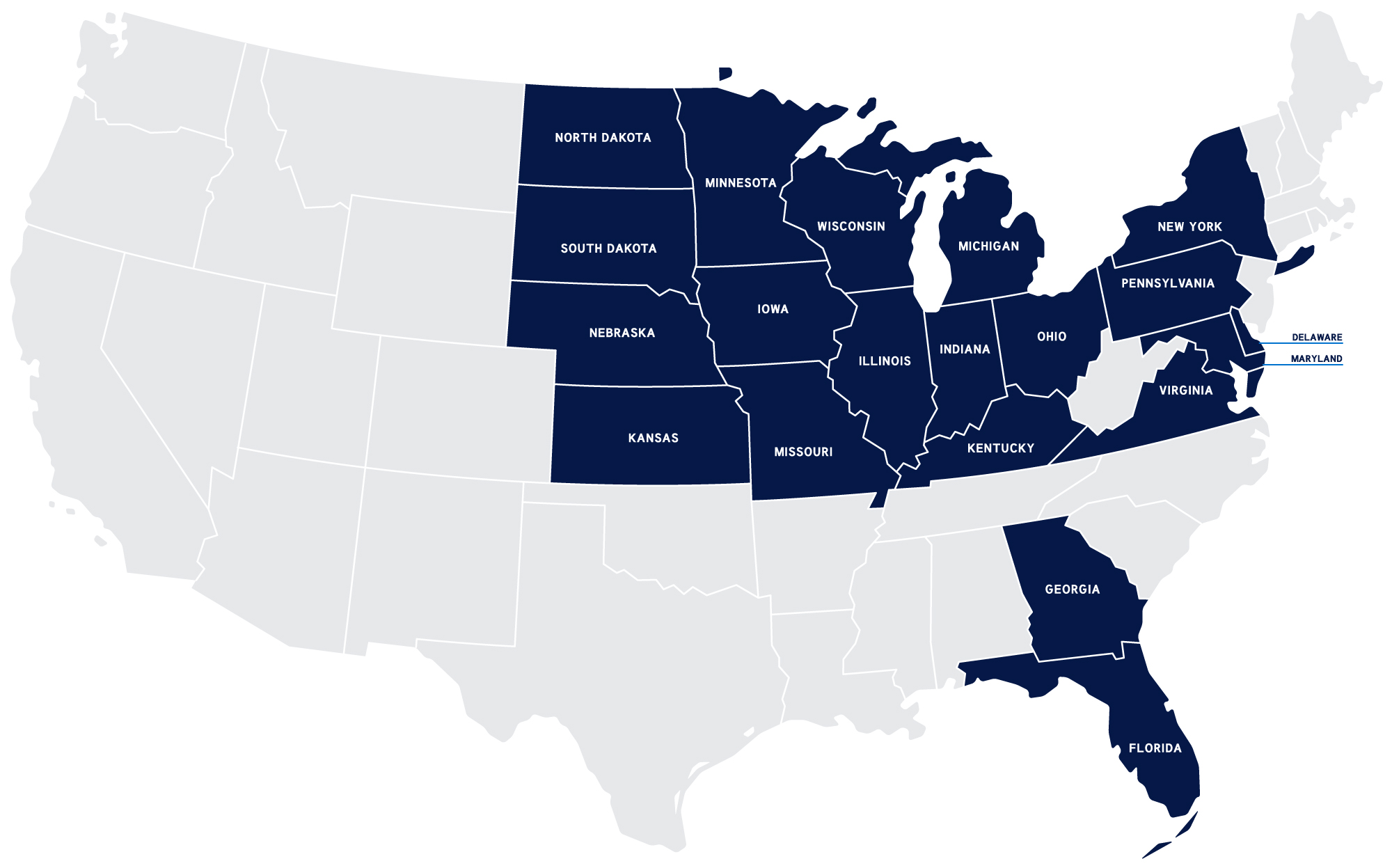
States where tar spot has been confirmed, 2015-2024.
What does tar spot look like?
Tar spot is characterized by small, raised black lesions that resemble specks of tar on leaf surfaces. These round or oval specks are the fruiting bodies (or pustules) of the P. maydis fungus, and they give leaves a bumpy texture. These spots are what release the fungus and allow it to spread. Spots spread from lower to upper leaves, eventually infecting corn husks.
Tar spot is easy to confuse with other fungal diseases, especially common and southern rust, which also produce pustules on leaves. The easiest way to tell rust and tar spot apart is to scrape a fingernail across a leaf. Rust spores will come off, but tar spot will not.
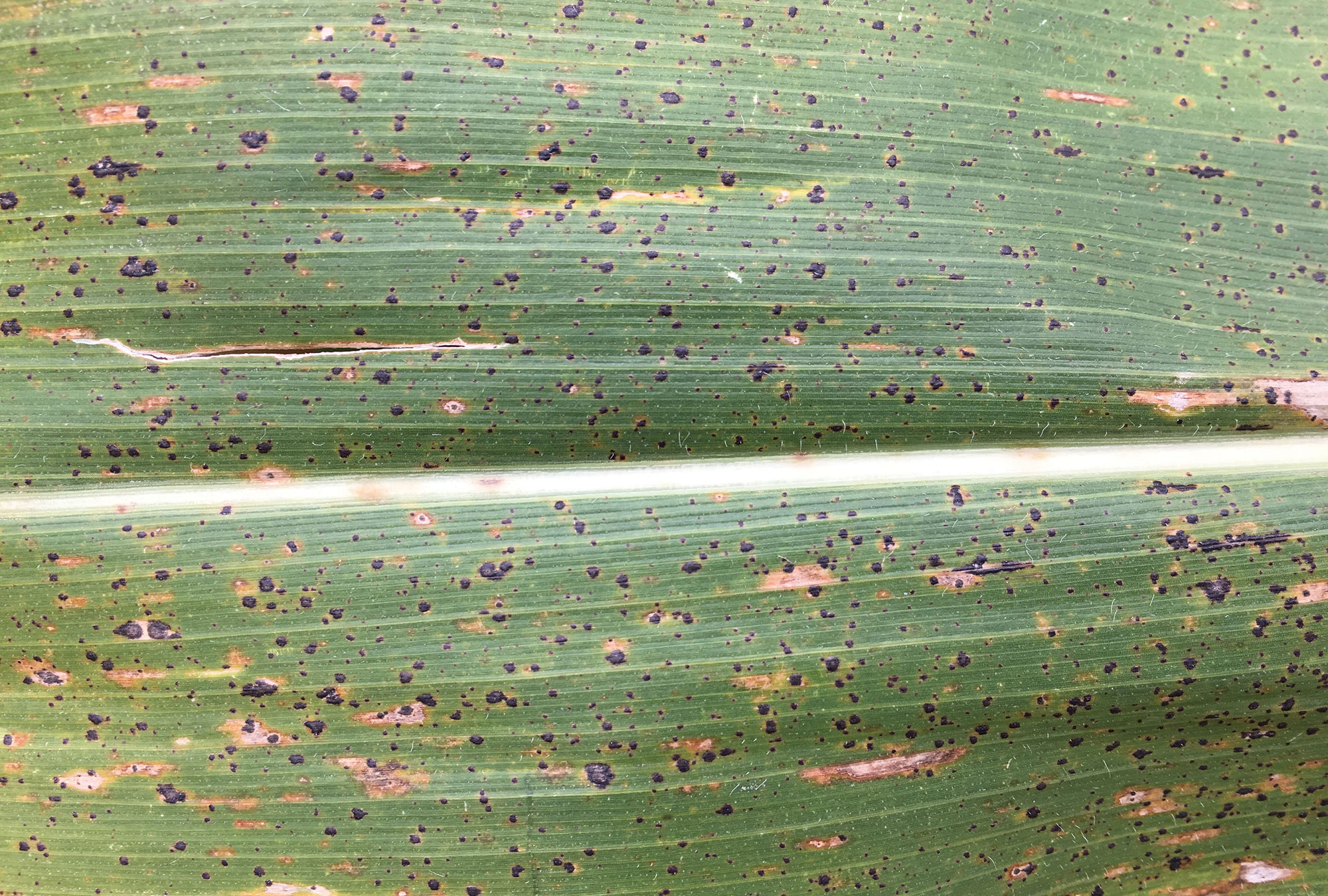
Corn leaf with tar spot symptoms. Unlike rust diseases, tar spots don’t rub off.
How does tar spot hurt yield?
Tar spot reduces yield by interfering with photosynthetic activity and causing premature leaf senescence. Severe infestations can hurt stalk quality. Infected plants will also launch a stress response, diverting energy away from kernel fill and leaving the plant potentially more vulnerable to other infections, such as soil-borne pathogens that can lead to stalk rots and lodging.
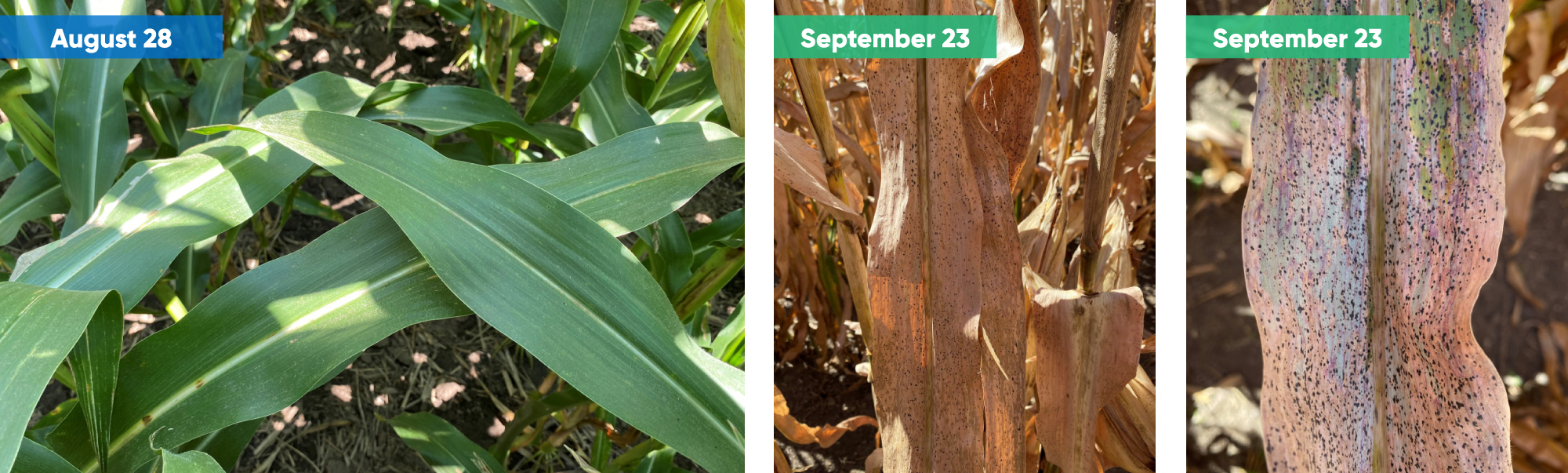
Tar spot infection can take hold quickly, as seen in these images from the same corn field in 2021.
How can farmers mitigate losses?
While commercial hybrids with full genetic tolerance to tar spot haven’t arrived yet, farmers can still take action to combat this disease.
CHOOSE HYBRIDS WITH A FAVORABLE PROFILE
Agronomists at Corteva have been carefully studying hybrids that have performed well under tar spot pressure, and you will now find tar spot ratings included for key hybrids, especially those selected for high pressure areas like the Midwest. Our agronomists have also identified some other common characteristics. Hybrids with a high staygreen rating seem to maintain more healthy, photosynthetic tissue under tar spot pressure. Longer-maturity corn seems to be more susceptible to tar spot, so customers may want to consider mixing in lower maturity hybrids.
APPLY FUNGICIDES
Studies show that fungicide treatments that incorporate multiple modes of action (MOA) can be effective against tar spot. Because tar spot has a rapid rate of reinfection, timing is important and multiple passes are recommended. In one study, applications of Aproach® Prima fungicide (two MOAs) at VT/R1 reduced tar spot symptoms.1 The same study showed incorporating three MOAs significantly improved yield.1 New Forcivo™ fungicide delivers three powerful MOAs with up to 30 days of residual activity to give your farmers peace of mind through their crop’s critical growth stages. A University of Wisconsin study showed a 41.1 bu/A advantage over untreated acres under tar spot disease pressure.2
MANAGE FOR RISK FACTORS
The jury is out on how much agronomic practices may influence tar spot severity, but there are some management factors that appear to increase risk. Tar spot shows up earlier in the season on corn-on-corn acres, so consider earlier scouting in these fields. Moisture is a major contributor, so some farmers are trying nighttime irrigation to reduce the time leaves stay wet. Tar spot also seems to favor high-yielding fields, indicating there may be a connection between high nitrogen rates and tar spot severity.
While research continues to develop hybrids with genetic resistance to tar spot, help your customers remain vigilant against this disease. Seed selection is the most important tool in helping them reduce risk, and each year, Corteva strives to bring forward new hybrids with better tar spot tolerance profiles. As you consult with customers on plans for next year, help them work greater genetic diversity into their fields, and encourage them to look at other agronomic factors, such as staygreen, that indicate better performance under tar spot pressure. As corn fields ripen this year, help customers stay on top of scouting and encourage proactive fungicide sprays that incorporate multiple MOAs and two passes. With a combination of knowledge, seed selection and management, you can help them hold the line against this advancing yield threat.
1 Darcy E. P. Telenko et al., “Fungicide Efficacy on Tar Spot and Yield of Corn in the Midwestern United States,” Plant Health Progress 23, no. 3 (2022): 281–287, https://apsjournals.apsnet.org/doi/10.1094/ PHP-10-21-0125-RS.
2 Wisconsin Field Crops Pathology Fungicide Test and Disease Management Summary 2023 https://crawford.extension.wisc.edu/files/2024/02/Fungicide-Test.pdf.
*Forcivo: Adastrio was tested in place of this product given no state registration.
™ ® Trademarks of Corteva Agriscience and its affiliated companies.
Aproach® Prima and Forcivo™ are not registered for sale or use in all states. Contact your state pesticide regulatory agency to determine if a product is registered for sale or use in your state. Always read and follow label directions.
© 2026 Corteva. 034065 LC (05/26)
Tar spot quick facts
- Fungal disease caused by P. Maydis
- First appeared in the U.S. in 2015
- Characterized by small, raised black dots on leaves
- Spreads under cool, wet conditions:
- 60F-70F
- >75% relative humidity
- Frequent cloudy days
- 7+ hours of dew at night
- Best methods of control:
- Choose tolerant hybrids
- Apply a fungicide with multiple MOAs
