
Country Selector
Please enter a valid location
Wireworms: Safeguard Corn and Soybean Stands

Wireworms can pose a sneaky threat to soybean and corn seedlings. Initial infestations often go unnoticed, and identification of existing issues can be tricky. While they're often overlooked until damage appears, neglecting control over these pests can lead to stand losses as high as 80%.1 Read more to get the facts that can help farmers be prepared to protect against these buried yield robbers.
Basic facts
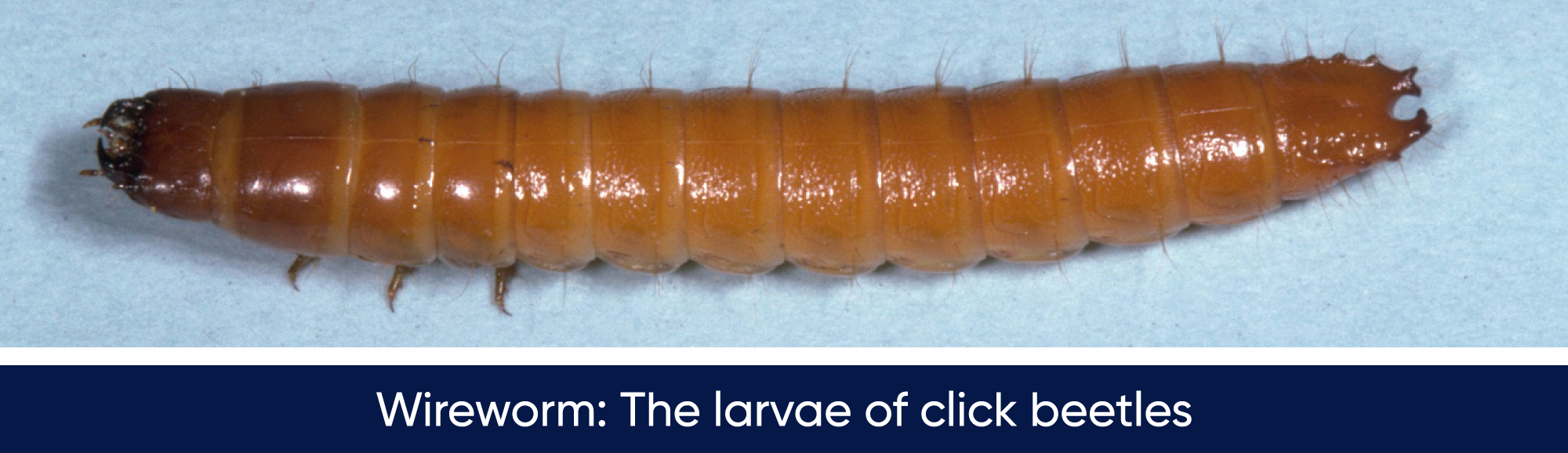
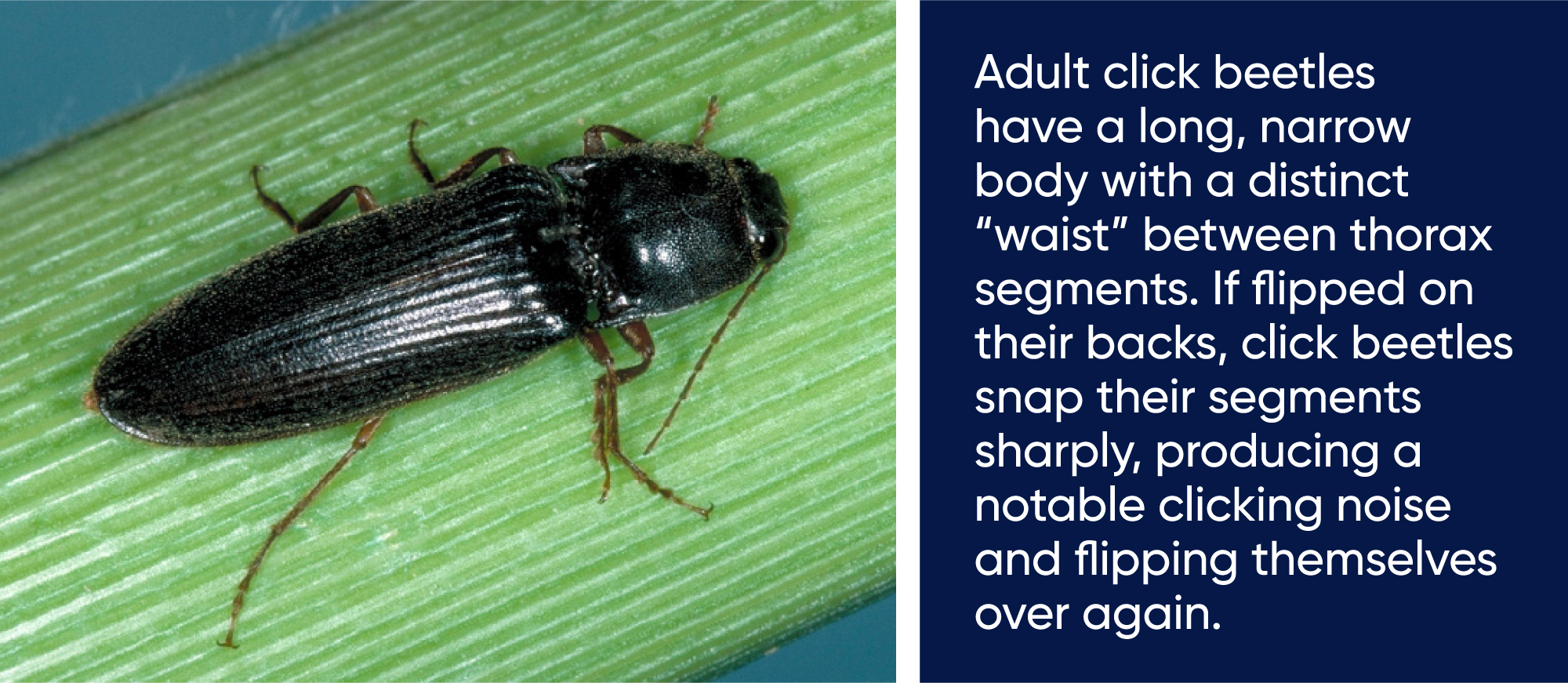
Wireworms, the larvae of click beetles, are reddish-brown soil dwellers that measure between 0.5 and 1.5 inches long. They have a wire-like hard, cylindrical, segmented body with three pairs of short legs near the head. Adults click beetles lay tiny, white, spherical eggs, usually near the roots of grasses. While first-year larvae cause little damage, they can remain in the larval stage for four to seven years, with damage increasing as infestation progresses. Generations of wireworms can overlap if left unaddressed, exacerbating issues. They tend to be a greater issue in midwestern and southeastern states.
Conditions inviting trouble
There are currently no effective rescue treatments against wireworms. What, then, can farmers do to protect their crops? With wireworms, prevention is critical, and it starts with understanding the conditions that help them gain a foothold. Any of the following scenarios can present an opportunity for these subterranean assassins:
- Fields left fallow with uncontrolled weeds or grasses
- Planting in cool, moist soil, such as during early planting
- Cropland with decomposing organic matter in the top two to three inches of the soil layer
- Acreage previously planted with sod, pasture or small grains
- Well-drained soils, ridges and hilltops
Destruction details
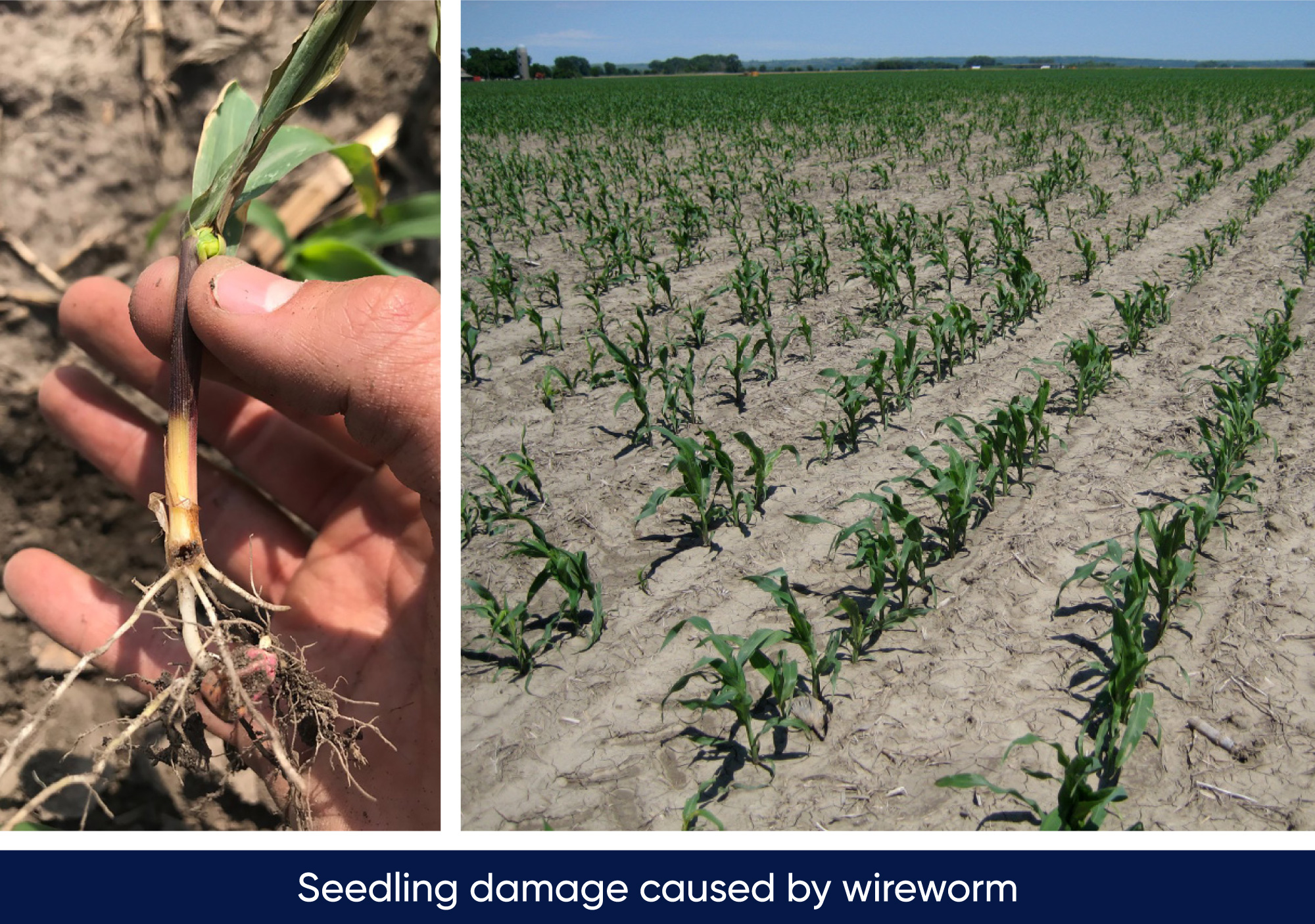
Wireworms generally cause injury to crops by feeding on seeds, roots and shoot tissue. Visible evidence commonly appears as a lack of emergence, reduced stands or wilted plants.
The damage often occurs in patches, resulting in uneven stands. Farmers should be aware that these symptoms may resemble seedling blight or nutrient stress. Thorough scouting is recommended to confirm suspected wireworm infestations.
Scouting
In addition to understanding favorable wireworm conditions, scouting is an important part of thwarting attacks. Two main methods can be implemented for wireworm scouting:
- Bait trap – It is recommended that bait stations be established two to three weeks prior to planting. Baiting involves burying a handful of untreated seed six inches deep in five randomly selected areas of the field. Black plastic is secured over the station to heat up the soil. The bait is exhumed after two to three weeks and checked for the presence of wireworms. An average of one live wireworm per bait station indicates that control methods may be needed.
- Soil sampling – Approximately 10 days before planting, dig five areas in the field, each measuring two feet long, one foot wide and six inches deep. After placing the soil on black plastic or cloth, count the number of live wireworms in the soil sample. An average of one live wireworm per soil sample signals a possible call for control measures.
Management
Without any rescue insecticides available to treat wireworms, it is most important that farmers practice diligent scouting and watch for favorable conditions to help keep ahead of infestations. An additional management practice includes shallow tilling in spring. This practice helps to reduce populations in fields with high wireworm density. Another option is raising seeding rates 10%-15% to offset loss in fields prone to stand reduction. A good seed treatment can provide an effective method of management, such as Lumisure® insecticide seed treatment, with fast-acting, proven protection for corn against not only wireworm, but a broad range of early season chewing and piercing pests. Soybeans can benefit from C-2023FI and C-3023FI premium seed treatment blends available from Corteva Agriscience, which contain Phalanx™ insecticide seed treatment to protect against wireworms and guard plant health during seedlings' most vulnerable growing period.
Being proactive with wireworms is important, especially since initial infestations often go undetected. Preemptive management hinges on early identification through spring scouting plus awareness of favorable conditions. Staying vigilant in high-risk situations helps farmers protect yields from these pests before little problems become big ones.
1 Stanley Gessell, Dennis Calvin, “Wireworms as Pests of Field Crops,” Penn State Extension, updated April 14,2023, https://extension.psu.edu/wireworms-as-pests-of-field-crops.

™ ® Trademarks of Corteva Agriscience and its affiliated companies. The foregoing is provided for informational use only. Please contact your Corteva sales professional for information and suggestions specific to your operation. Product performance is variable and depends on many factors, such as moisture and heat stress, soil type, management practices and environmental stress as well as disease and pest pressures. Individual results may vary. Not all products are registered for sale in all states. Contact your state pesticide regulatory agency to determine if a product is registered for sale or use in your state. The information presented here is not an offer for sale. This is not intended as a substitute for the product label for the product(s) referenced herein. The information contained in this technical document is based on the latest to-date technical information available to Corteva Agriscience, and Corteva reserves the right to update the information at any time. Components of Corteva seed treatments are applied at a Corteva Agriscience production facility, or by an independent sales representative of Corteva Agriscience or its affiliates. Not all sales representatives offer treatment services, and costs and other charges may vary. See your sales representative for details. Seed applied technologies exclusive to Corteva Agriscience and its affiliates. Always read and follow label directions. © 2026 Corteva. 034062 LC (04/26)
