
Country Selector
Please enter a valid location
Integrated Vegetation Management Helped Contain California’s Park Fire

In the summer of 2024, Northern California’s Park Fire quickly became one of the largest in the state’s history. It showed just how quickly a wildfire can spread and how long it can take to contain it. But vegetation management played an important role in ensuring the fire was not far worse. It has become a case study in how integrated vegetation management (IVM) can be a vital tool in protecting communities from wildfires.
News stories about wildfires raging out of control are becoming all too frequent as the risk of wildfires grows across the U.S. and climate and weather conditions elevate fire threats.
In the summer of 2024, Northern California’s Park Fire quickly became one of the largest in the state’s history. It showed just how quickly a wildfire can spread and how long it can take to contain it. But vegetation management played an important role in ensuring the fire was not far worse. It has become a case study in how integrated vegetation management (IVM) can be a vital tool in protecting communities from wildfires.
IVM uses a combination of practices to control vegetation and reduce fire risk:
Mechanical/manual — mowing, lopping, cutting, mastication
Cultural — introducing desirable native vegetation, mulching
Biological — grazing animals, planting desirable vegetation
Chemical — use of selective herbicides
Prescribed burns — strategically planned for fuel removal
One of the most successful tactics for controlling fires is creating and maintaining shaded fuel breaks by thinning low-growing vegetation to give fires less fuel to feed on. These breaks help slow fire spread and provide entry points for firefighters to access the burn area as they work to control a fire’s behavior. IVM can be valuable in creating and maintaining shaded fuel breaks, like those used when the Park Fire broke out in Northern California in the summer of 2024.
The Park Fire case study
The Park Fire was the fourth largest wildfire in California history, burning 429,603 acres across Butte and Tehama counties. It started July 24, 2024, from an act of arson in a Chico, California, park, then weather and climate conditions caused it to spread rapidly. It quickly grew, threatening forest and wilderness areas, along with thousands of people and hundreds of homes in the Sierra Nevada foothills. It took more than two months to fully contain the fire, with an estimated cost of at least $350 million. More than 700 structures, including many homes, were destroyed, but fortunately, there was no loss of life.
It might have been a different story if not for prior IVM work done by the California Department of Transportation (Caltrans). Despite its rapid spread, a coordinated approach to ROW vegetation management and shaded fuel breaks stopped the Park Fire in its tracks, protecting homes and infrastructure.
A Caltrans fuels reduction effort that began in 2021 created shaded fuel breaks near roadways, including a 15-mile stretch of Highway 32. The project included creating a bare ground fire prevention strip and a shaded fuel break, removing downed trees and using masticators and herbicides to clear vegetation. The resulting fuel break stopped the Park Fire’s spread, as seen in the photos below, protecting homes, natural areas and Caltrans infrastructure like guardrails and signage.
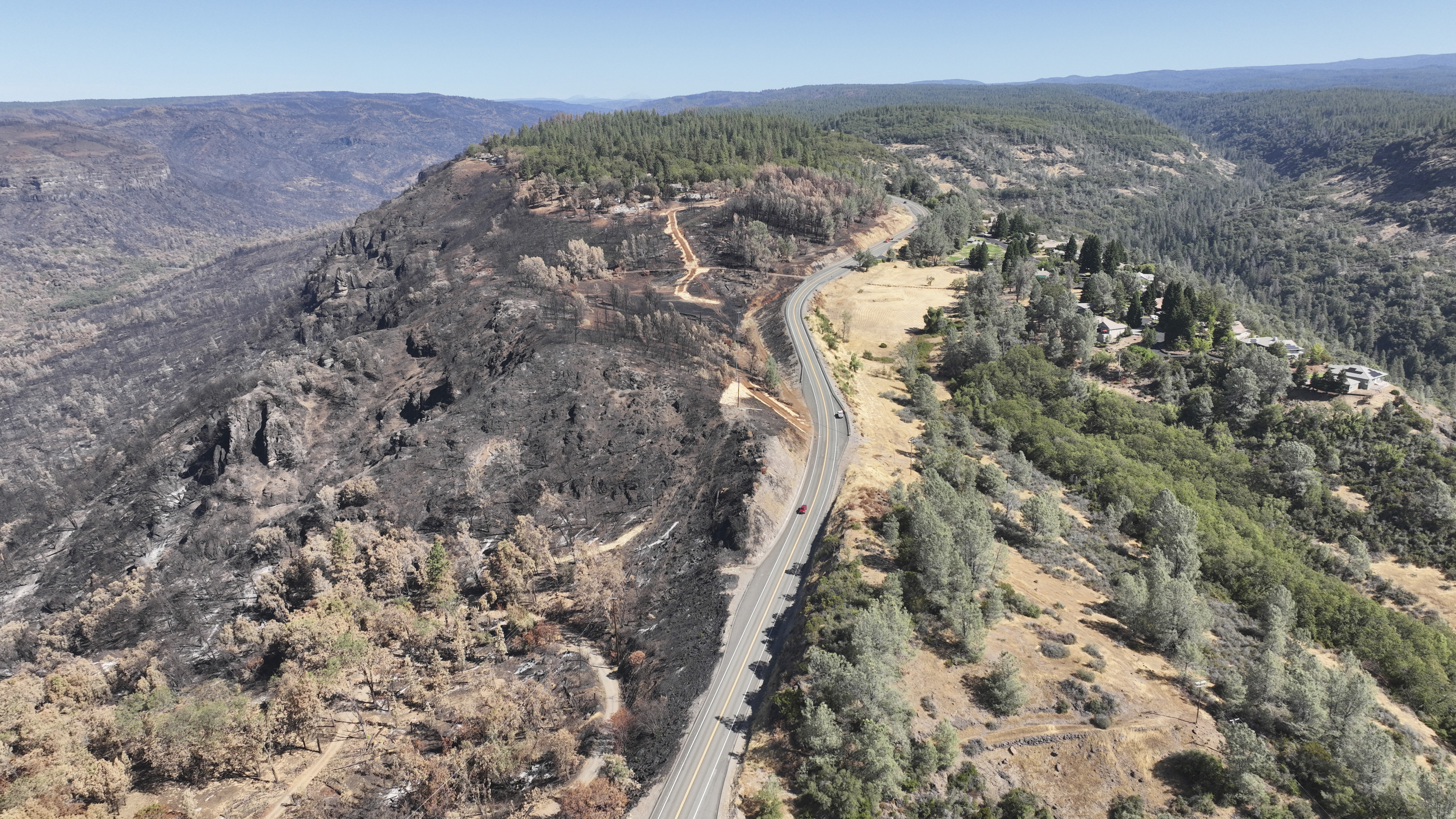
This view of California Highway 32 in Butte County shows the shaded fuel break on the left that stopped fire spread from the Park Fire in 2024. (Photo courtesy of Caltrans.)
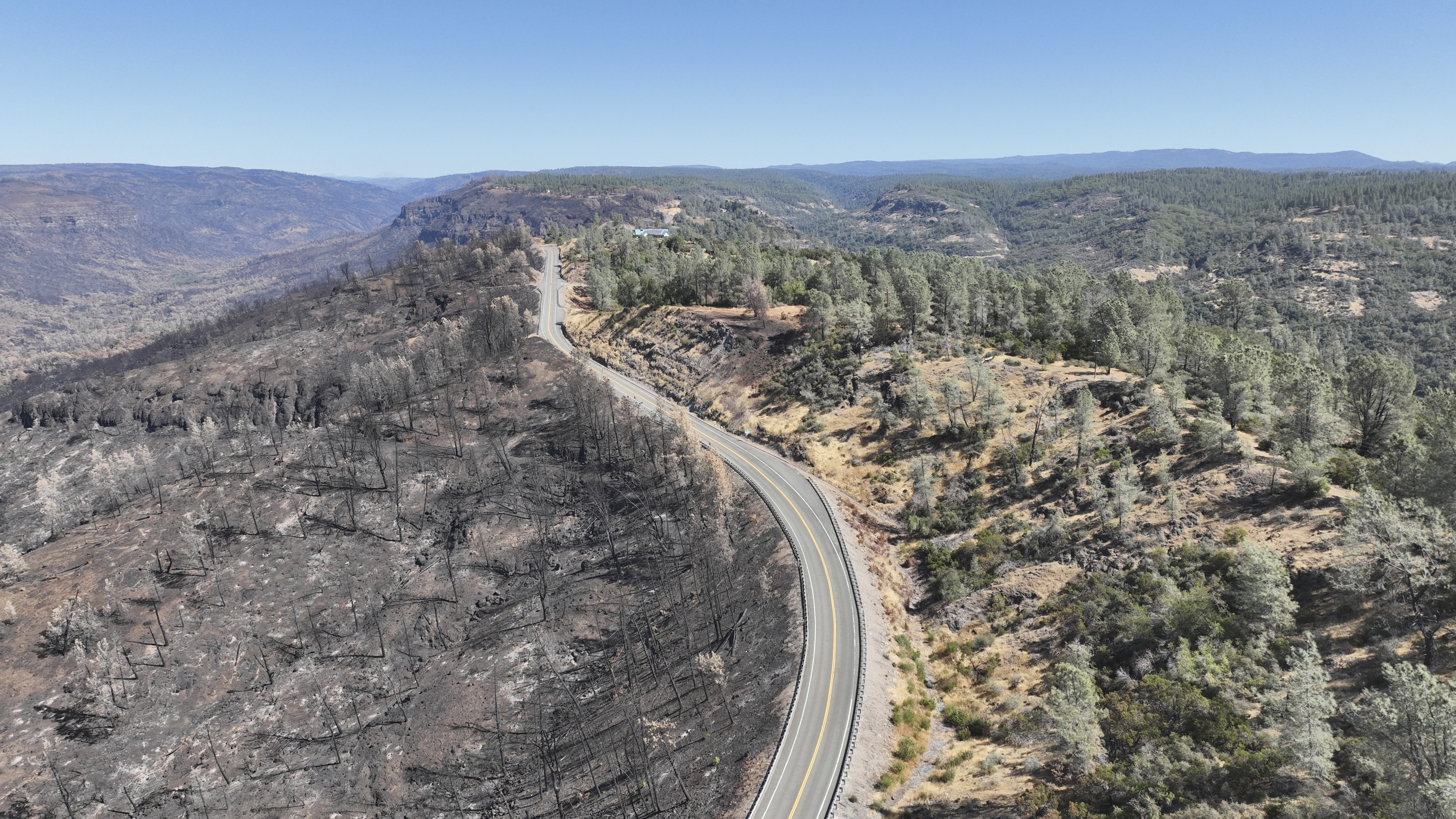
A fire break along this road clearly delineates land that was decimated by the Park Fire (left) from the landscape (right) that was left unscathed. (Photo courtesy of Caltrans.)
Caltrans has expanded its shaded fuel break efforts further since the Park Fire. A multi-agency effort works to identify ROWs and critical evacuation routes at high risk for fire. Then IVM for these areas – including fire prevention strips and shaded fuel breaks – becomes a priority.
Lessons from the Park Fire
Caltrans District 3 Vegetation Manager Kris Mitchell oversaw fuel reduction projects completed prior to the Park Fire. She came away from the experience with some best practices for creating a ROW IVM and fire mitigation program:
- Help teams become IVM experts, since not everyone on a ROW team has a vegetation management background. Make sure everyone understands the IVM goals: maintenance, landscape architecture, environmental science and others.
- Appoint vegetation management plan leaders who see the big picture and can balance operational, safety, aesthetic and fire prevention goals.
- Get input from area foresters on fuel management. They can advise crews on what to look for and offer tips on thinning and maintenance.
- Partner with other area stakeholders, share information about the benefits of shaded fuel breaks, work together to improve fire mitigation.
- Share knowledge between government entities, private companies, researchers and others to identify helpful mitigation techniques or products.
IVM can be an integral part of helping reduce damage and loss in the event of a wildfire. The Park Fire showed how proactive management, including shaded fire breaks, can help contain the spread of the devastation.
To learn more about mitigating wildfire risk or read the Park Fire case study:
Mitigating Wildfire Risk in Rights-of-Way with Integrated Vegetation Management
1 Virginia Iglesias, “LA fires: Why fast wildfires and those started by human activities are more destructive and harder to contain,” PreventionWeb, January 13, 2025, https://www.preventionweb.net/quick/92047.
2 “Wildfires and Acres,” National Interagency Fire Center, accessed March 26, 2026, https://www.nifc.gov/fire-information/statistics/wildfires.
Vistas®
For over 30 years, Vistas® has covered strategies, trends and stories from across the Vegetation Management industry.