
Country Selector
Please enter a valid location
Adaptively Managing Forages, Cattle and Risk During Drought

Clay Burtrum is a resourceful cattle producer. He relies on lived experience, technology and management tools to be successful and sustainable in his businesses. He understands preparedness and knowledge are essential to surviving difficult weather patterns like drought.
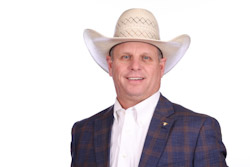 Burtrum runs Burtrum Cattle, a cow-calf and stocker operation in north-central Oklahoma. The operation maintains multiple production herds that yield high-quality calves, and it purchases local calves to graze wheat and grass pastures. Burtrum also owns Farm Data Services, an agricultural risk management and consulting firm that helps producers navigate crop insurance options and drought programs.
“Whether you’re talking about a product or a management practice, we really know the numbers,” Burtrum said. “Our operation is critical on numbers, dollars and knowing how that affects us.”
Building a resilient grazing system
Burtrum has been developing a rotational grazing program to maximize usable forages for over 25 years. He looks at stocking rates, pasture size, water availability and grazing seasons to develop a plan. He also has implemented new virtual fencing practices to further extend grazing capabilities.
“Rotational grazing is key to running more cattle on a pasture, which is more return on your investment and a better return out of the whole operation,” Burtrum said. “We rotate cattle to let native grasses grow during the growing season, so we can decrease the amount of hay usage in the winter months.”
Without timely rain, Burtrum adapts the grazing program to fit the nutritional needs of his cattle. He uses field mapping technology to guide his decisions based on forage and water availability — a strategy he relates to playing chess with cattle.
“One of the worst things you can do is not spray a pasture for weeds, because you’re inhibiting that grass from growing.”
— Clay Burtrum, Burtrum Cattle
Much like setting up the perfect move, weed control is essential to Burtrum’s management strategy because of the power it has in his pastures. He prioritizes scouting and applies GrazonPD3™ herbicide when it’s the most economical and advantageous for his operation. GrazonPD3 controls more than 70 weeds, including ragweed, buttercup, blackberry and thistle, and suppresses select brush species.
“One of the worst things you can do is not spray a pasture for weeds, because you’re inhibiting that grass from growing,” Burtrum said. “Especially if it’s those heavily grazed areas where you’re trying to grow forage. If you do not apply herbicides, all you’re going to have is a pasture full of weeds.”
Always up for testing innovative methods, Burtrum also has used the impregnated fertilizer method for weed control with UltiGraz℠ Pasture Weed & Feed on his operation. UltiGraz combines a soil-active herbicide, such as DuraCor® herbicide, with dry fertilizer, enabling producers to apply both inputs in one pass to their pastures, saving both time and money.
Focus on nutrition and herd health
His strong emphasis on herd health and nutrition becomes amplified during drought conditions. Burtrum uses multiple consulting veterinarians to evaluate the whole herd health program at least twice per year. He provides medicated mineral supplements and fly control year-round to mitigate insect pests and to prevent disease.
“We prepare, have timelines and want to meet all the criteria in our program, but a drought can severely affect that,” Burtrum said. “You may be planning to wean early, but you have to consider if you have supplemental forage in pastures to carry them. Or are you just adding more expense to that calf?”
He evaluates stocking rates and proactively supplements with additional nutritional sources as necessary to maintain body condition on the cattle. He can see the return in the productivity of the cattle.
“If you wait for the cattle to show you indications of needing additional supplementation, you’re probably too late,” Burtrum said.
Managing risk beyond the pasture
During dry conditions, drought insurance can mitigate the amount of risk producers face when it comes to growing forages and managing input costs. Burtrum purchases drought insurance to protect his investment in input costs, specifically on pastures with Bermuda grass and wheat. Premiums vary, so he develops a cost analysis to determine which pastures he insures. Burtrum works with a weather consultant for long- and short-term planning on his operation and considers growing grass just like any other crop.
“We are farming grass; it’s just like a crop of corn, soybeans or wheat,” Burtrum said.
Unafraid to try new methods and technology, there’s another thing Burtrum would never discount: historical knowledge and advice from fellow producers. He relies on previous landowners, Extension services and other producers for input and advice on how to get through a drought.
“So many of our older producers, they’re getting fewer and farther in between,” Burtrum said. “They have lived through droughts, so they are really good resources that can help younger producers or even us older ones too.”
GrazonPD3™ is a Restricted Use Pesticide.
GrazonPD3 is not for sale, distribution or use in Nassau and Suffolk counties in New York state. Under normal field conditions, DuraCor® is nonvolatile. DuraCor has no grazing or haying restrictions for any class of livestock, including lactating dairy cows, horses (including lactating mares) and meat animals prior to slaughter. Label precautions apply to forage treated with DuraCor and to manure and urine from animals that have consumed treated forage. DuraCor is not registered for sale or use in all states. Consult the label for full details. UltiGraz℠ with fertilizer is available for use with specific herbicides in the states of AL, AR, CO, FL, GA, HI, IA, ID, IL, IN, KS, KY, LA, MN, MO, MS, MT, NC, ND, NE, NV, OK, OR, PA, SC, SD, TN, TX, UT, VA, WA, WI, WV and WY. Contact your state pesticide regulatory agency to determine if a product is registered for sale or use in your state. Always read and follow label directions.
Stay Connected With Us
Connect with Range & Pasture:


Connect with Range & Pasture: