
Country Selector
Please enter a valid location
Keeping It Simple: Lessons in Southeast Pasture Management

“We don’t pay attention to trends,” says John Starnes. “We look for animals that can get it done on Southeastern forages.”
From the offices and pastures of Tennessee River Music (TRM), high on the Lookout Mountain plateau above Fort Payne, Alabama, you might not be able to see the farm’s namesake river, 30 miles to the west. But like a slow, steady 3/4 waltzing beat, the flow of the river exerts a subtle, but powerful, influence over the pace and quality of life on the farm. It’s an influence that manifests as a matter-of-fact approach to problem-solving and an unbending commitment to its seedstock customers.
That steadfast dedication to operational simplicity and to delivering a quality product is reflected in TRM’s motto, tagline and promotional language.
“Do it with passion or not at all.”
“Stout, sound, functional Angus and Hereford bulls.”
“TRM cattle are bred [to] perform in real-world environments.”
“We stay [in the] middle of the road and let the extremes pass us on both sides.”
John Starnes, who runs TRM with his wife, Randa, and in-laws, Randy and Kelly Owen, explains what that philosophy means in day-to-day terms.
“What we mean by ‘middle of the road’ is: We don’t pay attention to trends,” Starnes says. “Cattle get bigger. They get smaller. They’re bred for this trait or that. But, for us, we have the ability to grow forage, so they’ve got to be able to do as much as they can with that forage. We’ll supplement when we need to, like during the winter. But I think about it like a race car. If you go to the gas station and put 87-octane gas in a race car, you’re not going to get the performance you want. But we look for animals that can get it done on Southeastern forages, so we can use that 87-octane gas and still get the herd to perform.”
Here on the southern end of the Cumberland Plateau, that 87-octane gas is tried-and-true fescue. The pasture standard performs well in conditions that can range from summer drought to an icy winter mix.
“Ask anybody in the southeastern U.S., and they’ll say, ‘We’re grass farmers,’” Starnes says. “We’re no different. Our crop is grass, and our primary forage is fescue. We’ve improved some varieties, but during the last bad drought we had back in 2016, our pastures looked like dirt roads. And, unfortunately, what survived and came back was good ol’ Kentucky 31. So that does present some challenges.”
Those challenges include shedding and the ever-present threat of fescue toxicosis. But simple solutions and a reliance on the cattle to do the hard work help mitigate the threats and allow the herd to flourish.
“We run a good mineral program,” Starnes says, “we keep our pastures clipped, and our culling criteria is pretty strict. So I wouldn’t call our cattle fescue-tolerant, but they can absolutely handle what we have here on Lookout Mountain.”
Weeding and Feeding
To help keep those pastures clean and green, Starnes has to fight off a familiar list of weeds, including old favorites like thistles, horsenettle and dogfennel, along with the occasional pigweed.
“We try to do a good job of staying on top of the weeds,” he says. “We want to get the thistle early, when the days get warm enough and it’s time to do that first fertilizer application on some of the winter grazing ground.”
UltiGraz℠ Pasture Weed & Feed helps put valuable nutrients into the ground while controlling some of the most damaging pasture weeds.
“We’ve been doing that for a couple years now,” Starnes says. “We’ll coat the fertilizer with DuraCor. And as long as we can keep those thistles small and it gets on those rosettes, we’ve had good luck with that. We’ll also use Remedy on some of the woody, brushy plants.”
Regenerative — On Their Own Terms
And while TRM’s practices may not fit the classic definition of “regenerative,” sound stewardship has a heavy influence on daily decision-making — and on the results. Turkey, deer and other wildlife flourish at TRM, even as wildlife officials note countywide declines in populations.
“Whether or not we’re ‘regenerative’ or ‘sustainable’ depends on how you define them,” Starnes says. “We and everybody else who are in this business have had to figure out how to do more with less. To me, that’s true sustainability.”
As for pasture management, Starnes says, TRM may not hold to the traditional practices of rotational grazing, but neither does it let cattle graze the grass to the ground.
“When you talk to people who are serious about rotational grazing, they’ll talk about moving tape fences or dropping gap panels every day,” he says. “That’s not what we do. But we do rotate pastures every week. We want to keep grass under the cattle and then move them off and let it grow.”
Yet despite TRM’s commitment to simplicity and no-nonsense operations, it’s not beholden to outdated beliefs or practices. While Starnes admits TRM may not be the most technologically advanced operation, neither is it afraid to change course and adopt new technology when it makes sense to do so.
“Technology has impacted every facet of what we do,” he says. “As a result, we’re seeing less herbicide use, increased average daily gains — I love being able to incorporate new technology and new thinking where it makes sense.
“In this business, we tend to dislike change. We say things like, ‘Granddad did it this way 70 years ago, and that’s how we’ve always done it.’ But you have to be honest with yourself and admit when things aren’t right and to be open to other ways of working.”
Under normal field conditions, DuraCor® is nonvolatile. DuraCor has no grazing or haying restrictions for any class of livestock, including lactating dairy cows, horses (including lactating mares) and meat animals prior to slaughter. Label precautions apply to forage treated with DuraCor and to manure and urine from animals that have consumed treated forage. DuraCor is not registered for sale or use in all states. Consult the label for full details. UltiGraz℠ with fertilizer is available for use with specific herbicides in the states of AL, AR, CO, FL, GA, HI, IA, ID, KS, KY, LA, MN, MO, MS, MT, NC, ND, NE, NV, OK, OR, SC, SD, TN, TX, UT, VA, WA, WI, WV and WY. Contact your state pesticide regulatory agency to determine if a product is registered for sale or use in your state. State restrictions on the sale and use of Remedy® apply. Consult the label before purchase or use for full details. Always read and follow label directions.
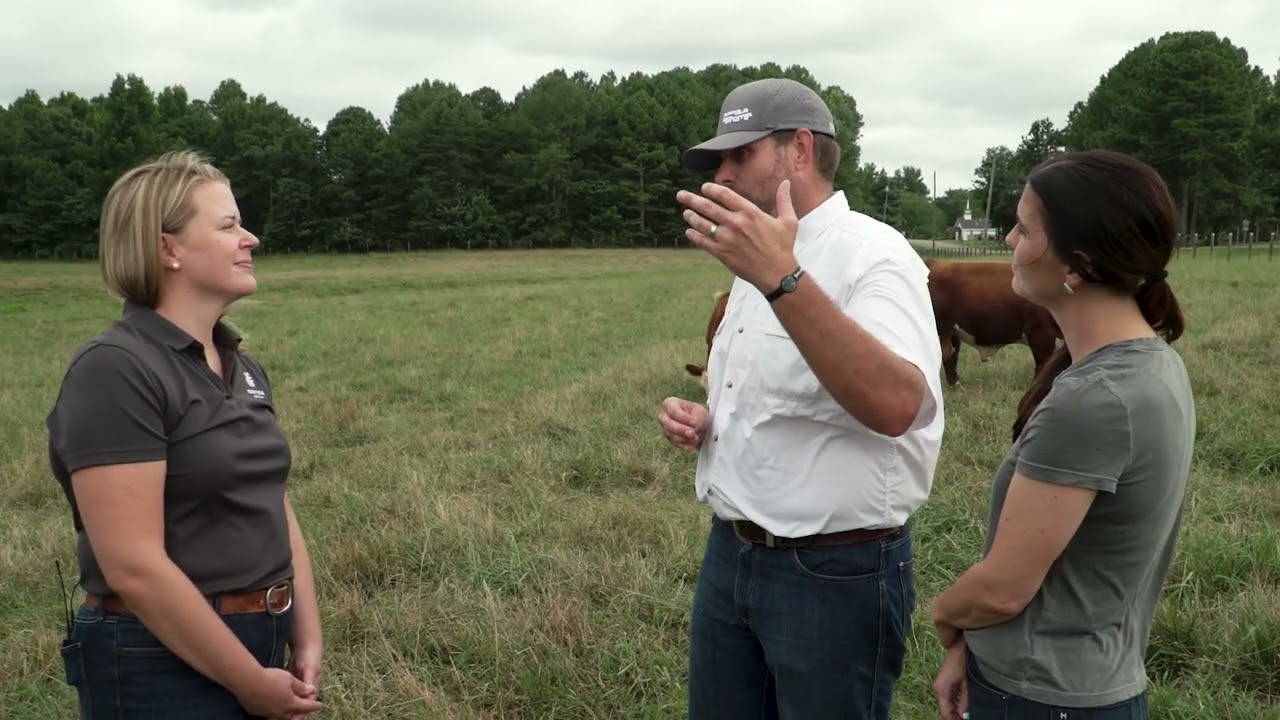
Cruising with Corteva: Tennessee River Music
Join Cruising with Corteva on an entertaining trip to Tennessee River Music ranch. John and Randa Starnes take us “backstage” at this unique cattle operation with a special connection to one of the biggest acts in country music.
Cruising with Corteva: Tennessee River Music
Join Cruising with Corteva on an entertaining trip to Tennessee River Music ranch. John and Randa Starnes take us “backstage” at this unique cattle operation with a special connection to one of the biggest acts in country music.
Stay Connected With Us
Connect with Range & Pasture:


Connect with Range & Pasture:
More images from Tennessee River Music

