
Country Selector
Time to consider weed control options
May is the perfect time to control weeds across the farm. British Dairying reports
Perennial weeds, such as docks, thistles, buttercups and nettles are now growing actively out in pastures, competing with grass and clover for space, light, nutrients and water.
At a time when maximising home-grown feed on dairy farms has to be the priority, weed control is one area that needs to be tackled and not ignored.
“Different weeds grow in different situations and flourish where conditions particularly suit them,” explains Ryan Came-Johnson, field technical manager with Corteva.
“Dairy farmers need to assess the weed problems on their cutting and grazing ground, in their new sown leys and on their maize land separately and then plan according to field history and what they can see.
“It is no good giving weed treatments a miss, as they will be back stronger and with even bigger root systems next year.”
Silage fields
Docks are often the main problem weed in silage ground. They significantly reduce the dry matter (DM) yield of the grass, lower the nutritional value of the resulting forage and hinder fermentation in the silage clamp.
They thrive in compacted, high nitrogen soils, with a single plant producing 60,000 seeds that remain viable for up to 80 years. Their large tap root can reach down as far as 1.5 metres and plants can regenerate from root fragments.
“It may be too late to spray before first cut now,” says Ryan. “But a herbicide application between cuts offers a good opportunity, as docks will be at the ideal treatment stage two to three weeks after mowing. Best control is achieved when they show fresh growth and are at the rosette stage, from 150mm to 250mm across or high – or dinner-plate sized.
“Doxstar® Pro has been the go-to product for treating docks for many years – but ProGrass™, a new herbicide launched last year, is even better. It kills not only docks but also a wider spectrum of weeds, including buttercup, dandelion, common nettle, cow parsley and common hogweed.
“A more concentrated formulation means it has a dose rate of 1.5 litres/ha compared to 2 litres/ha for most other dock control products. This means farmers need to buy and use less, and there is less packaging to dispose of.
“It is also faster acting, with just a seven day window between spraying and cutting. This means it is ideal for using in multi-cut silage regimes, where grass is cut every four to five weeks.”
Grazing ground
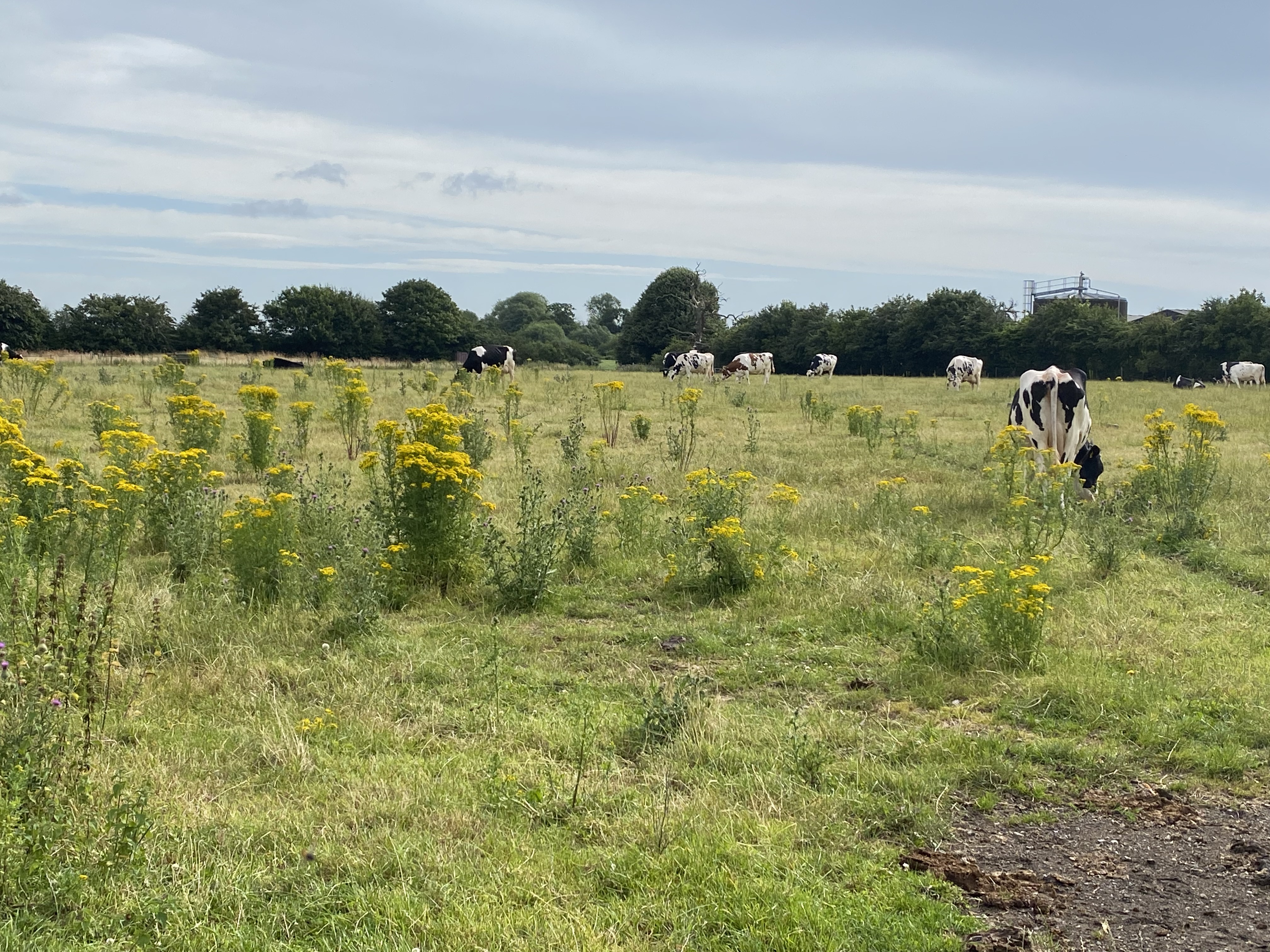
A wide range of perennial weeds grow in paddocks that are grazed. Docks, thistles, nettles, ragwort, chickweed and buttercups can all encroach in older grass leys or those that have been poached or compacted.
“Forefront® T gives the highest level of control of weeds growing in grazing pastures,” says Ryan. “For optimum root kill, they must be sprayed when they are actively growing and at the correct growth stage. Treating them when they have reproductive stems and are flowering will result in less control. If they have gone beyond the ideal stage, they may need topping and the young regrowth sprayed.
“Forefront T has a short seven-day, post-treatment stock exclusion interval. However if ragwort is present, this may have to be longer as these plants need to completely die and decay before cattle can return.”
Reseeds
Any form of soil cultivation can disturb the weed seed bank, so it is important to check new leys for any signs of weed infestation soon after germination.
A wide range of perennial and annual weeds will take advantage of increasing temperatures and a moist seedbed to germinate, including docks, thistles, chickweed, shepherds purse, red shank and fat hen.
“Not all grassland herbicides can be used on new sown leys, so farmers need to check the label before purchase,” says Ryan. “Corteva now has three solutions for early use, once the grass has reached the three leaf stage.
“Leystar® will control chickweed, thistles, buttercups, dandelions, daisies, seedling docks, mayweed, charlock, chickweed and cleavers. It can be applied from 1 February to 31 August, so is ideal for spring-sown reseeds. However, legumes, including all types of clover will be killed.
“Similarly Envy®, will also clear new reseeds of many undesirable broadleaved weed seedlings. It can be applied from 1 February to 30 November – so will be useful where leys are reseeded in autumn. It has a higher dose rate that Leystar, so is suited better to situations where there were many docks in the field previously and new plants could emerge from root fragments. Again, this product kills clover.
“When clover is important, ProClova® XL, a herbicide launched last year, is the answer. This has minimal effect on clover whilst still controlling a wide range of broad-leaved seedling weeds.
For optimum results spray when overnight temperatures are forecast to be more than 8o centigrade for a period from three days before, to three days after application date. It can be used from 1 April to 31 July on new sown leys.
Forage maize
Maize is not very competitive in its early growth stages and will quickly lose out to weeds that germinate around the same time. These also compete for water and nutrients and will negatively impact both final feed quality and yield.
“It is important that fields are inspected regularly after drilling maize, to see exactly which weeds are coming through and to plan a herbicide application at the most effective time,” Ryan suggests.
“Herbicide applications in maize should be made before the 6-leaf timing to reduce stresses on the crop. This can be at any time between 1 May and 31 July.”
Principal® Forte has approval for use on both forage and grain maize and combines three active ingredients which all work by foliar action. It includes a crop safener which gives robust weed control with no selectivity concerns for the young maize crop. Susceptible plants stop growing almost immediately after application.
Herbicide selection for a maize crop needs to consider solutions that will not affect the establishment of following crops. Some products have restrictions on the type of crops that can be sown next and often cite the need to plough.
Principal Forte has very few of these restrictions – ryegrass, winter cereals and rye can all be sown in the autumn following the maize harvest without the need to plough. Similarly, spring cereals, ryegrass, maize, oilseed rape, sugar beet, potatoes, peas or beans can be planted the following spring.
Be prepared
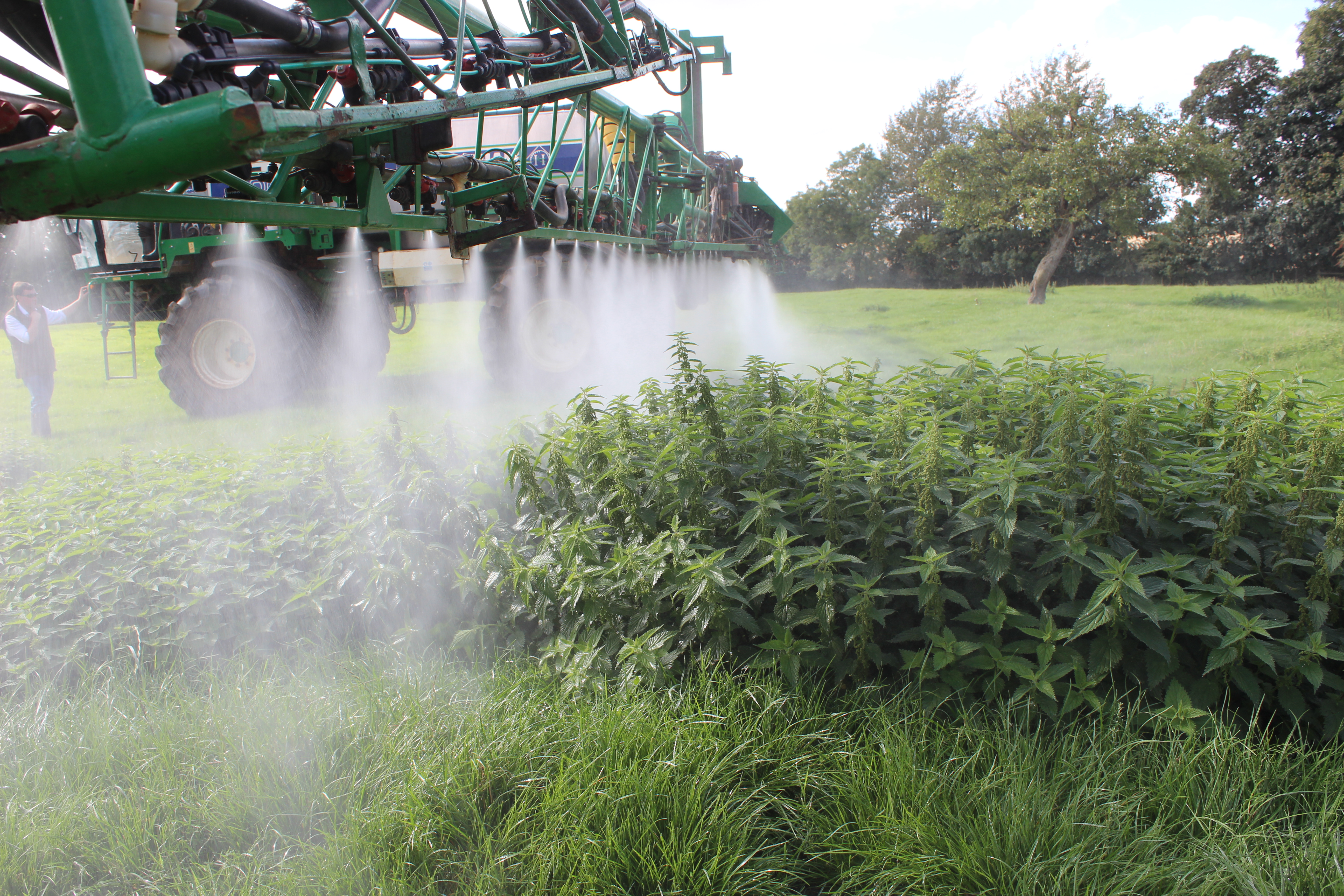
Always read the product label and follow best practice guidance, using the manufacturers’ recommended rates, water volumes and nozzles to optimise weed coverage with minimal drift.
Spraying equipment must be well maintained, clean and calibrated before use, with functional nozzles that deliver consistent and even coverage. Application with low drift technology, ie air inclusion nozzles can be a requirement of the label.
It is a regulatory requirement to reduce spray drift under sustainable use rules and to reduce off-target damage. Always consider the proximity of water courses and any buffer requirements described on the label eg LERAP categories.
“If farmers are using a contractor to carry out the spraying, make sure they are booked in good time,” says Ryan.
“Timing really matters when it comes to weed control and this will differ from year to year depending on the weather and growing conditions. Spraying weeds is important to produce high quality forage and will certainly pay for itself if it can reduce next winter’s feed bill.”
 Tractor spraying grassland
 Ragwort in dairy paddock
Note to editors
Use herbicides safely. Always read the label and product information before use. For warning signs and symbols refer to the label.
Doxstar Pro® contains fluroxypyr and triclopyr. ProGrass™ contains halauxifen (Arylex), fluroxypyr and triclopyr. Forefront® T contains aminopyralid and triclopyr. Leystar® contains clopyralid, florasulam and fluroxypyr. Envy® contains fluroxypyr and florasulam. ProClova® XL contains florpyrauxifen-benzyl and amidosulfuron. Principal® Forte contains dicamba, nicosulfuron & rimsulfuron.
About Corteva
Corteva, Inc. is a publicly traded, global pure-play agriculture company that provides farmers around the world with the most complete portfolio in the industry - including a balanced and diverse mix of seed, crop protection and digital solutions focused on maximising productivity to enhance yield and profitability. With some of the most recognised brands in agriculture and an industry-leading product and technology pipeline well positioned to drive growth, the company is committed to working with stakeholders throughout the food system as it fulfils its promise to enrich the lives of those who produce and those who consume, ensuring progress for generations to come. Corteva Agriscience became an independent public company on June 1, 2019, and was previously the Agriculture Division of DowDuPont. More information can be found at https://www.corteva.com/uk
Follow Corteva on Facebook, LinkedIn, Twitter and YouTube.
™ ® ℠ Trademarks and service marks of Corteva Agriscience and its affiliated companies.
Media Contact:
Sara Gregson
Sara Gregson Marketing Communications
t: 01799 530934 m: 07768 764062 e: sara@saragregson.co.uk