
Country Selector
Please enter a valid location
Keeping the ranch intact is about sustainability … and succession

For Bob McCan, keeping the McFaddin Ranch in Victoria, Texas, intact is just as much about stewardship and sustainability as it is about family heritage and a desire to pass the land on to the next generation.
“Large tracts of land are also large tracts of habitat. Any time that’s divided up into smaller tracts, you lose that contiguous habitat,” he said. “I’m also the fifth generation of my family to manage the property. They cared for the land a little bit differently than I would, but for the time, they had a very good idea of what they needed to do to keep the property in good condition.”
McCan, great-great-grandson of James Alfred McFaddin, is a co-owner and general manager of McFaddin Enterprises, Ltd., the family’s operating company. Today, McFaddin Ranch encompasses 13,000 acres of native coastal prairies. Additionally, McFaddin Enterprises, Ltd. owns and manages another 6,400 acres of rice-based farmland and native pastureland, where the ranch develops all its replacement heifers for the operation, and leases and manages another 55,000-acre ranch in Bee and Refugio counties.
“As the ranch administrator, I must constantly consider each decision against the question, ‘Is this going to be a sustainable endeavor for the land, the environment and the family,’” McCan said. “And, keeping the land intact is one of my biggest responsibilities for those future generations.”

Ruminations from the pasture: History of McFaddin Ranch
Ruminations from the pasture: History of McFaddin Ranch
Surviving the threat of urban sprawl
Encroachment of urban sprawl on farmland is nothing new for farmers and ranchers around the United States, and especially in Texas where the population has almost doubled since 1990 to 30.5 million. For McFaddin Ranch, while they are protected from sprawl in the short term, Victoria is the county seat and the largest city in their vicinity. From 1990 to 2023, Victoria County grew from 74,361 residents to 91,065 – a 22% increase.
“The value of ranchlands has escalated, and being able to prove a return on investment for this value is a challenge that becomes greater every year,” McCan said. “We have a well-valued asset and if we’re not getting enough return on it, then we must look at how to maximize it. If we’re not able to achieve appropriate returns, then some family members may begin to think that agriculture is not the land’s highest and best use and may consider selling it. We’ve had one family partition [in the late 1980s] and we never want another.”
Although there is currently no solar or wind energy infrastructure on the family property, McCan recognizes that future generations may need to evaluate these resources as potential revenue sources to maintain ownership of the land. And, with the ranch situated across the Guadalupe River from an industrial zone, offers have already been extended to explore alternative energy opportunities.
Succession planning critical to stability
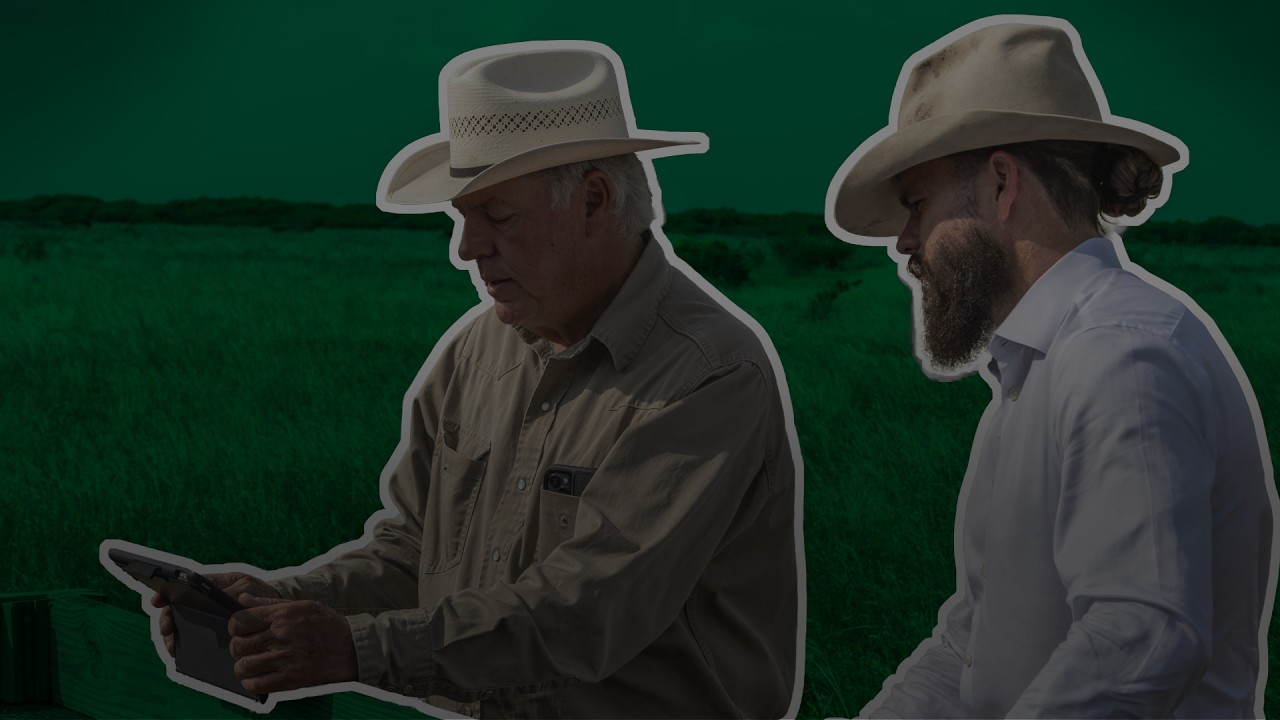
With his son, Robert August “Augie” McCan, currently active on the ranch, Bob is keenly aware that succession planning is important for ensuring the long-term stability of the McFaddin Ranch. Establishing a succession plan can help address the needs of both current and future family members. In family businesses, clear succession planning provides guidance for future transitions and can help prevent the need to sell the property or business.
“Good succession planning takes good leadership. We think of succession planning as another aspect of stewardship,” McCan continued. “We’ve actively involved younger family members in our discussions because it doesn’t make sense to make decisions without the input and buy-in from the people who will live with the consequences of them.”
McCan, along with the other family heirs, including the next generation of owners and managers, has formalized the concept of sustainability and used it as a guiding principle for the family properties.
“We have to have a sound, profitable enterprise because it is essential to keeping the land intact and the family on it,” McCan said. “We consider economics as just one leg of the three-legged “sustainability stool” that has been embraced by our family as an overarching model to guide our decision-making. The other two legs are environmental and social.”
Ruminations from the pasture: Succession of McFaddin Ranch
Ruminations from the pasture: Succession of McFaddin Ranch
Supporting sustainability through environmental efforts
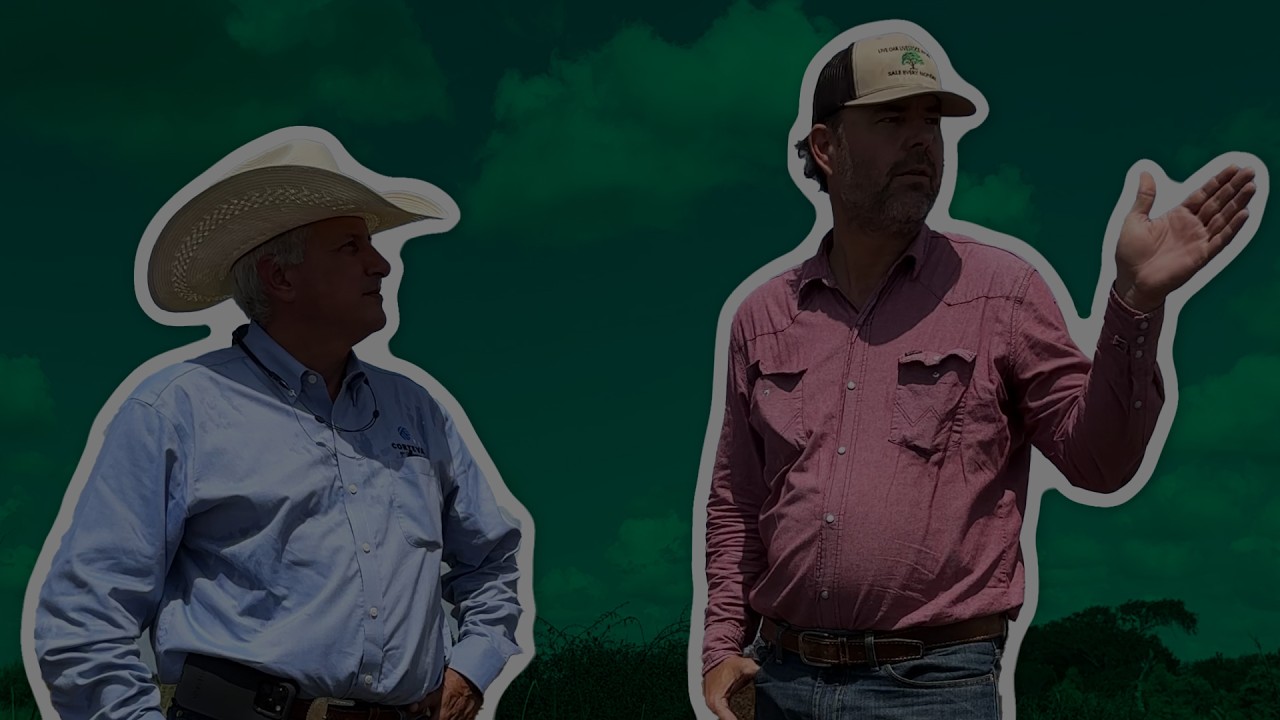
The environmental leg of the sustainability stool includes the rotational grazing system that McCan put in place in 1990. To help cover the cost of the necessary infrastructure, the family engaged in its first cost-share program. Over the years, they have partnered with the U.S. Department of Agriculture (USDA), the Natural Resources Conservation Service (NRCS), Texas Parks and Wildlife Department (TPWD), U.S. Fish and Wildlife Service (FWS), the Sam Houston Research and Development Council, and many more.
The grazing system is a one-herd, multi-paddock system; one herd, numbering between 200 and 300 cows, is rotated through six to eight pastures ranging in size from 500-750 acres twice each year. Each pasture has at least three, and up to five, reliable water sources. Troublesome species like Macartney rose are treated with MezaVue® herbicide; GrazonNext® HL herbicide provides general broadleaf control along with suppression of huisache, one of South Texas’ most prolific invasive species.
Ruminations from the pasture: Partnership with McFaddin Ranch
Ruminations from the pasture: Partnership with McFaddin Ranch
Since its inception, the grazing program at McFaddin Ranch has helped to both reinvigorate native grasses and improve soil conditions.
“When we started our rotational grazing system, I think any NRCS range professional would have characterized our range condition as fair,” McCan said, noting the 'bounce back' after extreme weather is noticeably improved. “Now, across the properties, we’re probably in low- to highexcellent condition.”
Striking a balance between livestock and wildlife is also an important part of the ranch’s long-term sustainability.
“Our goals for the wildlife enterprise are integrated with our goals for the livestock enterprise,” he continued. “Before we undertake any management activities, whether it's grazing or applying herbicides, we ask ourselves, ’How will this affect the livestock and the wildlife?’ We want to ensure that every action is complementary not counterproductive.”
Diversification vital to McFaddin Ranch sustainability
McFaddin Enterprises is primarily a cow-calf operation focused on raising Victoria Brafords, a three-fourths Hereford and one-fourth Brahman commercial breed, developed by McCan’s grandfather, Claude K. McCan Sr. in the 1930s.
“The Brahmans survive so much better in the harsh environments, and their heat tolerance is so much better,” Bob says. “But my grandfather realized we needed a better meat-producing breed, so they started crossing with Hereford.”
The resulting breed combined all the necessary traits of the hearty Brahman with the taste and quality of the Hereford. By the 1940s, the herd had reached both the composition and the numbers Claude wanted, and the herd was closed to outside breeding. Today, the ranch maintains a herd of F-1 Brahman/Hereford crosses, which are bred to Hereford bulls to arrive at the target balance; the family sells about 80-85 commercial bulls and 300-400 commercial Victoria Braford heifers.
In addition to the livestock operation, the ranch operates a recreational hunting enterprise for all game species, including whitetail deer, waterfowl, quail and wild turkey.
“My father was very interested in wildlife, so we’ve always tried to integrate wildlife management with our livestock operations, and the rotational grazing systems that we use for the cattle are highly beneficial for the wildlife populations,” McCan said. “Since we’re not grazing everything to the ground,there’s plenty of ‘wildlife chow’ left in the pastures.”
In addition, the family runs a breeding and sales program for polo ponies – a passion project for McCan, and a valuable alternate revenue stream for the ranch.
“We feel the hunting and polo pony operations provide vital economic support while also promoting land conservation and diversity,” he continued. “Hunting revenue is reinvested into habitat improvements and the polo pony breeding program enhances the ranch’s equestrian legacy and diversifies the ranch beyond livestock. These additional enterprises ensure long-term sustainability at McFaddin Ranch by blending tradition with innovation to support the land and ranching lifestyle.
MezaVue is a Restricted Use Pesticide. GrazonNext HL and MezaVue are not registered for sale or use in all states. Label precautions apply to forage treated with GrazonNext HL and to manure from animals that have consumed treated forage within the last three days. Contact your state pesticide regulatory agency to determine if a product is registered for sale or use in your state. Consult the label before purchase or use for full details. Always read and follow label directions.
Additional Images


